Category: Uncategorized

  • How to Create a Bridal Bouquet: DIY Step-by-Step Guide

    How to Create a Bridal Bouquet: DIY Step-by-Step Guide

    Want to know how to create a bridal bouquet that looks polished in photos and still feels like “you”? A DIY bouquet can be one of the sweetest parts of wedding prep. You get to choose every bloom, every scent, and every little detail in the wrap.

    This guide walks you through the full process, from buying flowers to building a secure, hand-tied bouquet. You will also learn simple florist habits that help your flowers stay fresh through the ceremony and the last dance.

    If you want a quick warm-up before you start, our guide on how to make a bouquet of flowers covers the basics that apply to any hand-tied design.

    Tools needed to create a bridal bouquet including shears, tape, wire, ribbon

    Your Guide to Crafting a Personal Bridal Bouquet

    Think of this as a home bouquet workshop. The goal is not “perfect” flowers, it is a bouquet that feels steady in your hand and looks beautiful from every angle.

    DIY is not only about cost. It is also about making something that carries meaning, because you chose it, held it, and built it yourself.

    Why Make Your Own Bouquet?

    When you create your own bridal bouquet, you control the shape, the texture, and the mood. You can pick flowers that match your story, like a bloom that reminds you of a first date or a family garden.

    Some of the biggest benefits include:

    • Personal style: You choose the colors, the ribbon, and the overall feel.
    • A memory in the making: Building the bouquet can be a calm, meaningful break from planning.
    • Budget flexibility: You can spend more on a few star blooms and keep the rest simple.

    This project is a beautiful way to slow down during wedding planning. It gives you a quiet moment to make something real for the day you will remember forever.

    Gathering Your Floral Design Essentials

    Before you touch a single stem, set up your space and supplies. A clean setup saves time, helps flowers last longer, and keeps the process calmer.

    Clear a large table. Cover it with paper or a wipeable cloth. Keep two buckets of cool, clean water nearby, one for prepped stems and one for finished pieces.

    Your Must-Have Tool Checklist

    You do not need a full florist studio. You just need the right basics, and you want them within reach.

    • Floral shears or snips: These make clean cuts without crushing stems.
    • Thorn stripper: Very helpful for roses. It removes thorns and lower leaves fast.
    • Waterproof floral tape: Green, stretchy tape that grips when pulled, great for binding stems.
    • Floral wire: Useful for extra support on delicate stems. Start with 22 or 24 gauge.

    Finishing Supplies That Make It Look Bridal

    These items help your bouquet feel like a wedding accessory, not just a bundle of flowers.

    • Ribbon or fabric wrap: Satin, silk, velvet, or even linen for a softer look.
    • Corsage pins or pearl-headed pins: These secure the wrap neatly.
    • Finishing spray: A light mist can help with moisture on long days.

    A dedicated workspace matters. Give yourself room to turn the bouquet, trim stems, and keep flowers in water while you work.

    Choosing the Perfect Flowers for Your Bouquet

    The flowers you pick set the tone. A bridal bouquet looks “designed” when it has contrast, movement, and a clear mix of large blooms, smaller blooms, and greens.

    Try to think in roles. Each stem has a job, and that makes shopping feel simpler.

    Focal, filler, and greenery roles for choosing flowers for a bridal bouquet

    The Key Players in Your Arrangement

    • Focal flowers: Your largest blooms. Examples: peonies, garden roses, dahlias.
    • Secondary flowers: Medium blooms that support the focal flowers. Examples: ranunculus, lisianthus, spray roses.
    • Filler flowers: Small, airy stems that fill gaps. Examples: waxflower, baby’s breath, statice.
    • Greenery: The frame and shape. Examples: eucalyptus, ferns, dusty miller.

    Simple bouquet recipe: For a lush, classic look, start with 3–5 focal flowers, 10–15 secondary/filler stems, and 5–7 stems of mixed greenery.

    Not sure what greens will give you the look you want? This guide to types of greenery for bouquets breaks down texture, shape, and how each one behaves in hand-tied designs.

    Matching Flowers to Your Wedding Style

    Your bouquet should match the feel of your day. Soft, round blooms read romantic. Clean lines and fewer stems read modern. Wild textures and airy fillers read garden or boho.

    If you want help building a clear plan, Fiore’s guide on how to choose wedding flowers walks through color, mood, and how to keep your choices consistent across the whole wedding.

    Here are a few style starting points:

    • Classic romance: Peonies, roses, hydrangea, and soft greens in blush and cream.
    • Garden look: Mixed blooms, soft fillers, and layered greenery with some natural “air.”
    • Modern minimal: One statement flower type, like calla lilies or anemones, with a clean wrap.

    A Quick Guide to Seasonal Flowers

    In-season flowers are usually fresher, easier to find, and kinder to your budget. They also fit the mood of the season naturally.

    If you are planning a spring wedding, this list of best flowers for a spring wedding can help you choose blooms that look full and photograph well.

    Seasonal Flower Guide for Your Bridal Bouquet

    Season Focal Flowers Secondary/Filler Flowers Greenery
    Spring Peonies, Tulips, Ranunculus Sweet Peas, Lilacs, Hyacinth Fern, Camellia Leaves
    Summer Dahlias, Garden Roses, Hydrangeas Cosmos, Zinnias, Scabiosa Eucalyptus, Olive Branches
    Autumn Anemones, Chrysanthemums Astilbe, Chocolate Cosmos, Celosia Ruscus, Magnolia Leaves
    Winter Hellebores, Amaryllis, Camellias Thistle, Waxflower, Brunia Berries Cedar, Pine, Holly

    When the season and the flower choice match, the bouquet looks natural, not forced. It also tends to hold up better, because the blooms are in their comfort zone.

    Mastering Professional Bouquet Assembly Techniques

    Now it is time to build the bouquet. The main skill you want is a stable hand-tied spiral. It helps your bouquet look rounded, full, and balanced.

    Plan to practice once with less expensive stems. That one practice round will make your wedding-day bouquet feel much easier.

    Hands demonstrating spiral technique to create a bridal bouquet with angled stems

    Prepping Your Flowers for Success

    Prep is what makes a DIY bridal bouquet last. It also makes the handle cleaner and easier to wrap.

    Start by removing thorns and stripping leaves from the lower two-thirds of each stem. Any leaf that sits under your hand or in vase water will break down and shorten vase life.

    Next, cut each stem at a 45-degree angle. Trim about one inch off the bottom with sharp shears. Put finished stems into cool water as you go.

    The Hand-Tied Spiral Technique (Step by Step)

    This technique creates internal support. Each new stem crosses the last ones at a slight angle, and the bouquet “locks” into place as it grows.

    1. Build a base: Hold 3–4 sturdy greenery stems. Cross them near the top to form an “X.”
    2. Add the center bloom: Place your first focal flower in the middle.
    3. Add at an angle, then turn: Add a new stem at the same angle across the handle, then rotate the bouquet a quarter turn in your hand.
    4. Keep building evenly: Alternate focal, secondary, filler, and greenery. Keep turning as you add.

    If your bouquet starts to look flat, add more greenery around the outside. If it looks bulky, remove one or two filler stems and check the shape again.

    Shaping and Securing Your Bouquet

    As the bouquet grows, check it from all sides. A mirror helps, especially for the profile view.

    • Bind the handle: Wrap waterproof floral tape where your hand naturally grips the stems. Wrap 5–6 times, pulling the tape so it sticks well.
    • Trim the stems: Cut the handle so it is even. Most brides like a handle about 6–8 inches, depending on bouquet size.

    If you want extra composition help, our guide on how to arrange a flower bouquet shares simple checks that make arrangements look balanced and photo-ready.

    Adding the Finishing Touches and Preserving Your Bouquet

    Now you have a secure bouquet. The last step is making it comfortable to hold and easy to photograph.

    The wrap also hides mechanics. It should look neat up close, because it will show in many photos.

    Perfecting the Bouquet Handle Wrap

    Start the ribbon at the top of the taped area. Wrap down in a tight spiral, slightly overlapping each layer. When you reach the bottom, fold the ribbon end under and pin it in place with pearl-headed pins.

    Options that look great on camera:

    • Clean satin wrap: Smooth, classic, and timeless.
    • Partial wrap: Cover only the top half of the handle and leave stems exposed for a garden look.
    • Sentimental detail: Add a small heirloom pin, lace, or a charm tucked into the wrap.

    A well-made bouquet is sturdy. Most bridal bouquets fall in the 1–2 kg range, depending on flower choice and water weight.

    Keeping Your Bouquet Fresh and Vibrant

    Once finished, place the bouquet in a vase with a few inches of cool water. Store it in a cool, dark room overnight. Keep it away from fruit, which gives off gas that can age flowers faster.

    For more care tips, Fiore’s flower care guide covers the small habits that help fresh stems last longer.

    For transport, place the bouquet in a tall bucket or vase in the car. Use towels to keep it from tipping. Keep the car cool if you can.

    After the wedding, if you want to keep your bouquet as a keepsake, read our guide on how to preserve your wedding bouquet.

    Your DIY Bridal Bouquet Questions Answered

    DIY bouquets come with a few common worries. These answers cover timing, stem counts, and the mistakes that cause most last-minute stress.

    How Far in Advance Can I Make My Bridal Bouquet?

    The best timing is the day before the wedding. You get time to work slowly, and the flowers still look fresh for the ceremony.

    After finishing, trim the stems again and place the bouquet in cool water overnight. Store it in a cool, dark room. Avoid a kitchen fridge, because produce can shorten flower life.

    How Many Stems Do I Need for a Full Bridal Bouquet?

    For a classic, full bridal bouquet, plan on 40–60 total stems. That number changes based on flower size and how airy you want the shape.

    A simple breakdown looks like this:

    • 10–12 focal flowers
    • 15–20 secondary and filler stems
    • 15–20 greenery stems

    If you use large blooms like hydrangea, you can use fewer stems. Three to five hydrangea heads can create a full base quickly.

    Buy about 20% more than you think you need. It covers broken stems, bruised blooms, or pieces that do not open in time.

    What Are the Most Common DIY Bouquet Mistakes?

    Mistake 1: Skipping prep. Leaves below the grip line break down fast and can shorten the life of your bouquet.

    Mistake 2: Holding too tight. A death grip bruises stems and can pinch off water flow. Hold steady, but not harshly.

    Mistake 3: Only checking the top view. Turn the bouquet often. Use a mirror to check the sides and back.

    When to Call in a Florist (And Still Keep It Personal)

    If you love the idea of a custom bridal bouquet but do not want the pressure, a florist can handle the build while you focus on the day. Many couples also mix DIY and pro work, like making bridesmaid posies at home and ordering a bridal bouquet from a studio.

    Fiore creates custom wedding florals in Los Angeles, including bridal bouquets and full wedding design. You can also explore coordinated bridal party flowers so every detail feels consistent in photos.

    If DIY plans change at the last minute, our Hand-tied Bouquets are a beautiful ready-made option with a natural, gathered look.

    Final Checklist Before You Walk Down the Aisle

    Use this quick list on the day-of so you do not second-guess anything.

    • Keep bouquet in water until photos begin
    • Blot wet stems before handing it to the bride
    • Pack ribbon pins and floral tape in an emergency kit
    • Assign one person to transport and hold the bouquet

    If you are planning all the wedding florals yourself, this wedding flower checklist helps you track every item, from personals to reception pieces.


    Want your bouquet to feel personal, but prefer a professional build and finish? Fiore’s team can create a bridal bouquet that matches your style and photographs beautifully. Reach out to book a wedding flower consult.

  • How to Preserve Roses: Easy Methods That Last

    How to Preserve Roses: Easy Methods That Last

    Want to keep a rose long after the petals would normally fall? Learning how to preserve roses lets you hold onto a moment, not just a flower. The good news is that you can get beautiful results at home, whether you want a rustic dried stem, pressed petals for art, or a bloom that still looks full and bright.

    Choosing a half-open rose before preserving roses at home

    Why Preserve Roses for Lasting Memories

    Roses are tied to big feelings. A single stem from a first date, a bouquet from an anniversary, or flowers from a wedding day can feel too meaningful to toss.

    Preserving roses turns something temporary into a keepsake. It can also be a calming project. You slow down, handle each petal with care, and remember what the flowers marked.

    More Than Just a Flower

    Different methods create different looks, so it helps to pick your goal first.

    • A rustic dried bouquet: Air-drying gives a vintage feel with softer, muted color.
    • A framed keepsake: Pressing works best for flat art, cards, and crafts.
    • A lifelike 3D bloom: Silica gel helps keep shape and color for display in a case.

    Preserving a flower is an act of love. You are saving a moment in time, and letting the sentiment live on.

    Color adds meaning too. If you want the message to match the memory, read our guide on what different rose colors mean.

    Choosing and Preparing Your Roses

    The final result starts with the rose you choose. A healthy bloom will keep better color, better shape, and last longer once preserved.

    Skip roses that are fully open. They are more likely to shed petals while drying. Instead, pick a rose that is just starting to open, about halfway unfurled.

    When and How to Cut Your Roses

    If you are cutting roses from your garden, morning is best. Wait until the dew is gone, then cut before the heat of the day.

    Use clean, sharp shears. Cut the stem at an angle, then place it right into cool water so it stays hydrated while you prep.

    Essential Preparation Steps

    Prep helps prevent mold and makes drying more even. Plan to spend a little time here.

    • Strip the lower leaves: Remove any foliage that would sit in vase water.
    • Check for flaws: Brown spots and bruises will look worse once preserved.
    • Re-cut the stem: A fresh cut helps the rose drink before you start.

    If you need a refresher on keeping blooms perky for a few more days, see our fresh flower care tips. That extra hydration time can make preservation go smoother.

    Your preserved rose will only be as healthy as the fresh one you started with. Begin with a clean, well-hydrated bloom for the best result.

    After prep, let the roses sit in a clean vase of cool water for a few hours, out of direct sun. Then start your chosen method.

    The Classics: Air-Drying and Pressing

    Air-drying and pressing are popular for a reason. They are simple, low-cost, and great for sentimental roses you want to keep at home.

    Both methods do best in a dry space with steady airflow. Humidity is what causes most problems, including mold.

    Air-drying method to preserve roses upside down in a dark closet

    The Art of Air-Drying Roses

    Air-drying creates that timeless, antique look. The key is the right spot. Choose somewhere dark, dry, and well-ventilated, like a closet with airflow or a dry pantry shelf.

    Bundle a few stems with twine or a rubber band and hang them upside down. Give each bloom room, so the petals do not touch.

    Drying usually takes 1 to 3 weeks. They are ready when petals feel crisp and papery.

    For extra protection, mist lightly with unscented aerosol hairspray after drying. It helps reduce petal breakage when you move or display them.

    If you want a fuller “open bloom” look, hang roses for a few days, then set them upright in an empty vase to finish drying.

    Creating Delicate Keepsakes with Pressing

    Pressing is best for framed art, scrapbooks, or keepsakes you want to keep flat. Whole rose heads are often too thick to press well, so plan to press petals instead.

    • Remove petals: Gently pluck petals from the bloom.
    • Add leaves if you like: Press a few leaves separately for detail.
    • Lay petals flat: Place them between absorbent paper, with no overlap.
    • Press and wait: Use a flower press or a heavy book with more weight on top.

    Most pressed petals take 2 to 4 weeks to fully dry. Once dry, you can arrange them in a “scattered bloom” pattern and frame them alongside a photo or note.

    If you want more options beyond these classics, this guide on how to preserve a rose forever covers additional display ideas and methods.

    Getting a “Fresh Look” with Silica Gel and Glycerin

    If you want a rose that keeps its shape, these methods are a better fit. They take a little more care, but the results can look surprisingly close to fresh.

    Pressed rose petals method for preserving roses for framed art

    Capture Shape and Color with Silica Gel

    Silica gel is a drying agent that pulls moisture out of petals while supporting the flower’s form. This is one of the best at-home ways to preserve roses in 3D.

    Pour about an inch of silica gel into an airtight container. Trim the stem down to about an inch, then set the bloom face-up on the gel.

    Slowly spoon silica gel around the flower, building support from the outside first. Once the rose is stable, sprinkle a little gel into the center and between petals. Keep going until the rose is fully buried, then seal the lid.

    Avoid dumping silica gel into the center of the rose. The weight can crush inner petals and flatten the bloom.

    Let it sit for 3 to 7 days. To remove, pour the gel away slowly, then use a soft brush to dust off crystals.

    Silica gel technique to preserve roses with full shape and color

    The Glycerin Method for Soft, Flexible Petals

    If you dislike brittle dried roses, glycerin is a great option. Instead of drying the rose out completely, glycerin replaces much of the water in the flower, so petals stay soft and pliable.

    Mix 1 part vegetable glycerin with 2 parts hot water. Stir until dissolved, then cool to room temperature.

    Make a fresh angled cut on the stem. Lightly crush the bottom inch of the stem to help it absorb the thicker liquid, then place it in the solution.

    • Time: Expect 2 to 3 weeks.
    • What you’ll notice: Petals may darken slightly and feel almost “dewy.”
    • Top off the mix: Keep the stem end covered as the rose drinks.

    For step-by-step photos and extra troubleshooting, see our full guide to preserve roses with glycerin.

    How to Store and Display Preserved Roses

    You did the work, now protect it. Preserved roses last longest when you treat them like decor, not like fresh flowers.

    Your two biggest threats are direct sun and humidity. Sun fades color fast. Humidity can soften petals, cause drooping, or lead to mold.

    This matters even more if you live in Los Angeles, where bright windows and warm rooms can speed up fading. Choose indirect light and keep roses away from kitchens and bathrooms.

    Keeping Your Preserved Roses Dust-Free

    Dust happens. Clean gently, and match your cleaning method to your preservation method.

    • Air-dried or glycerin roses: Use a soft makeup brush, or a light burst of compressed air held at a distance.
    • Silica gel roses: Skip compressed air. Use a small, soft artist brush and a very light touch.

    The easiest way to protect preserved roses is to display them in a case. It keeps out dust and helps control the air around the petals.

    Choosing the Right Display

    An enclosed display keeps roses safe from bumps, dust, and moisture changes.

    • Glass cloche: Great for a single rose or a small cluster, and it looks timeless.
    • Shadow box: Best for pressed petals, or for arranging several blooms with keepsakes.

    With stable indoor conditions, preserved roses may look good for 6 to 36 months, depending on the method used and where they are displayed.

    Turning Your Wedding Bouquet into a Forever Keepsake

    A wedding bouquet is different from a single rose. It is dense, mixed with greenery, and often wrapped tight. That beauty can also trap moisture, which makes slow drying risky.

    If you want to preserve wedding roses at home, act quickly. The first day after the wedding makes a big difference.

    Your Post-Wedding Action Plan

    As soon as you can, trim the stems and place the bouquet back into clean water. Even a few hours of hydration helps.

    If you are using silica gel, you will need to take the bouquet apart. It feels hard to do, but it helps every bloom dry evenly.

    • Take photos first: Shoot the bouquet from all angles before you remove anything.
    • Deconstruct carefully: Remove ribbon and wires, then separate flowers and greens.
    • Pick the right method: Silica gel is best for keeping 3D shape. Air-drying works better for sturdier greens like eucalyptus.

    For a full walk-through, read our guide on how to preserve a wedding bouquet.

    Considering the Professional Route: Freeze-Drying

    Freeze-drying is the top option for a museum-like result. A professional studio freezes the bouquet, then removes moisture in a vacuum so petals keep their original form.

    Freeze-drying removes moisture as vapor instead of liquid. That is why it can hold shape and color so well compared to most home methods.

    If you are planning wedding florals and already know you will want to preserve your roses, it helps to talk with your florist early. Our wedding floral design services can help you choose blooms and shapes that hold up well for both the day and the keepsake.

    Creative Ways to Display Your Preserved Bouquet

    A shadow box is a classic. It lets you add small extras like an invite, vow card, or ribbon. Resin art is another option if you want small pieces, like coasters, from a few petals.

    If you are shopping for a gift that feels personal, these creative wedding gift ideas can also spark ideas for meaningful keepsakes.


    Final Thoughts: Keep the Memory, Not the Mess

    Once you know how to preserve roses, you can save flowers from the moments you never want to forget. Pick a method that fits your goal, start with the freshest bloom you can, and protect your finished piece from sun and moisture.

    If you need fresh roses for a milestone, or you want a florist-designed bouquet that is worth preserving, our Hand-tied Bouquets are made with premium seasonal blooms.

    Have questions about preserving a sentimental bouquet, or want help planning wedding flowers with keepsakes in mind? Reach out to contact Fiore and we’ll point you in the right direction.

  • DIY Flower Garland: Easy Step-by-Step Guide

    DIY Flower Garland: Easy Step-by-Step Guide

    Before you even think about weaving your first bloom, let’s talk about setting yourself up for success. Getting all your supplies gathered and organized is honestly the most critical part of making the garland-making process feel creative and fun, not frustrating.

    A little prep work saves you from scrambling for a tool mid-project, which totally kills the creative vibe. Whether you’re working with fresh, fragrant flowers or beautiful faux botanicals, having your toolkit ready is key.

    Gathering Your Essential Garland-Making Supplies

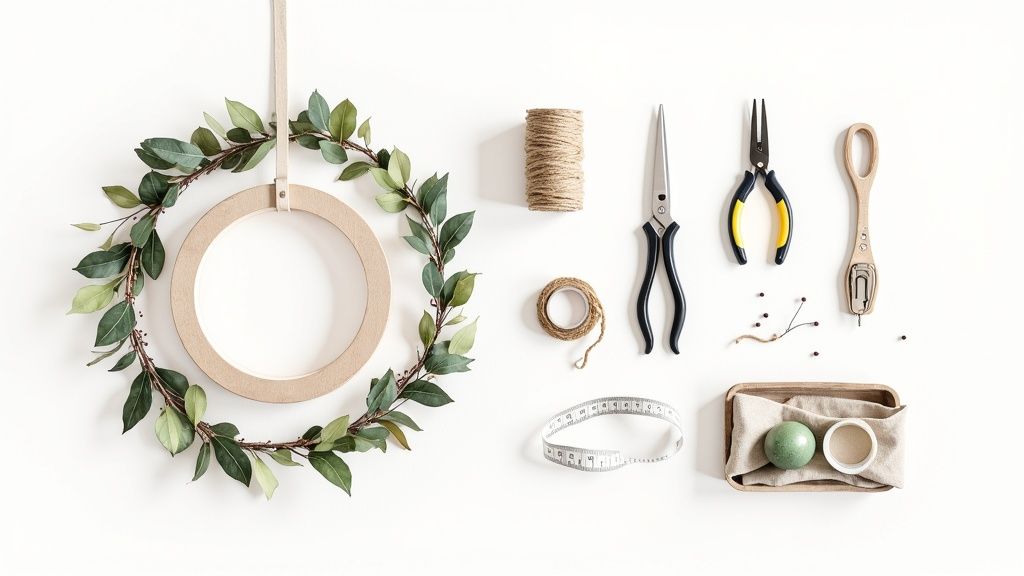
    Flat lay of crafting tools and materials for making a botanical wreath on a white background.

    Think of this as your mise en place—just like a chef lays out all their ingredients before cooking. A successful garland project starts long before you attach that first flower. It begins right here, with gathering the right foundational materials and tools for the job.

    Core Materials for Any Garland

    Some supplies are just non-negotiable. They form the literal backbone of your garland, no matter what kind of flowers or greenery you’re using. These are the items you’ll be reaching for constantly.

    • Garland Base: This is your foundation. You’ve got options here, from thick rope or rustic twine for a really sturdy, heavy garland to a simple, flexible wire for something more delicate and ethereal.
    • Floral Wire: You’ll want two kinds on hand. Paddle wire (the thin stuff on a spool) is perfect for wrapping your little bundles together, and a thicker gauge stem wire is great for giving flimsy stems some support or creating new attachment points. I almost always use a 22-gauge green paddle wire because it’s strong but disappears into the foliage.
    • Floral Tape: This stuff is magic. You give it a little stretch, and it activates a waxy adhesive that sticks to itself. It’s ideal for securing flowers to wire and covering up any sharp edges for a clean, professional finish.

    The desire to create beautiful things for our homes has absolutely exploded. In fact, the decorative garlands market is projected to hit USD 5,500 million by 2025, which just goes to show how many of us are embracing DIY projects to personalize our spaces.

    Tools of the Trade

    With your base materials sorted, a few essential tools will make the actual assembly process so much smoother and more precise.

    My absolute must-have tool is a sharp pair of floral clippers. Seriously. Trying to cut woody stems or even thick wire with kitchen scissors is a recipe for frustration and a mangled-looking garland. A good pair of clippers is a small investment that pays off immediately.

    These tools are your best friends for any kind of garland or linear floral design. Once you get the hang of it, you’ll find that many of the same skills and tools can be used to create a stunning vertical floral arrangement, too.

    Fresh vs Faux Garland DIY Supply Checklist

    While many tools overlap, your choice of fresh versus faux botanicals will change up your shopping list a bit. Here’s a quick breakdown of what you’ll need for each.

    Supply ItemRequired for Fresh GarlandsRequired for Faux GarlandsNotes
    Garland Base (Rope/Twine)A sturdy base is good for both, especially longer designs.
    Paddle WireEssential for wrapping bundles onto the base.
    Floral TapeGreat for covering wire and securing stems.
    Floral Clippers/SnipsFor trimming fresh stems and greenery.
    Wire Cutters Absolutely necessary for cutting tough faux stems.
    Hot Glue Gun Helps secure faux flowers and accents permanently.
    Water Source (Bucket) To keep fresh flowers hydrated before use.
    Protective Gloves Recommended for handling sappy or thorny botanicals.
    Spray Bottle / Finishing Spray To keep fresh arrangements looking dewy and hydrated.

    As you can see, the core toolkit is pretty similar. The main difference comes down to keeping fresh flowers alive and having the extra power (wire cutters and hot glue) to wrangle their artificial counterparts.

    Choosing and Preparing Your Flowers and Greenery

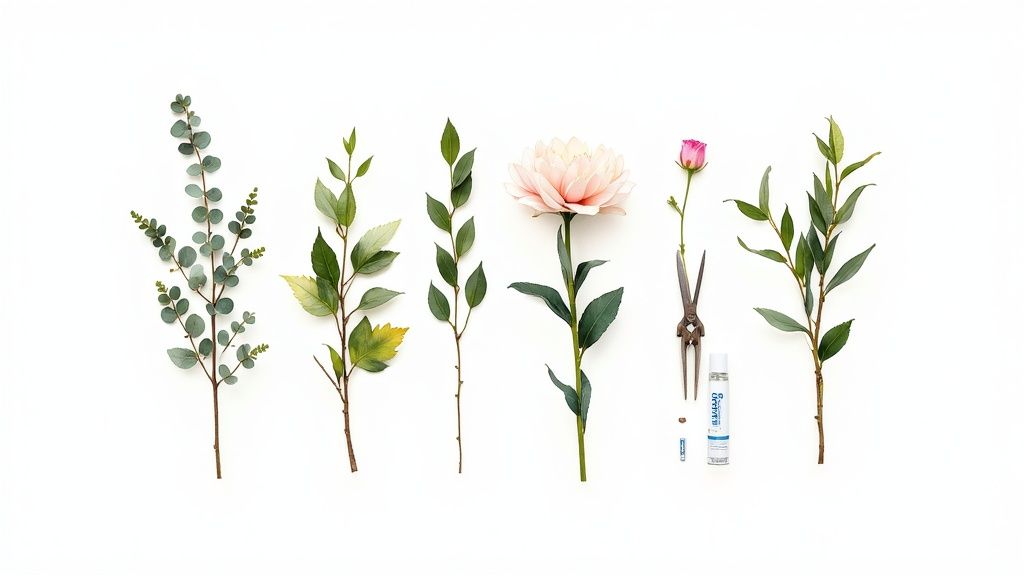
    A flat lay of various green branches, a light pink flower, a rosebud, shears, and a spray bottle on white.

    Here’s where the real artistry begins. The soul of any garland comes from the botanicals you choose—the colors, textures, and shapes that will ultimately bring your vision to life. This decision is about more than just aesthetics; it directly impacts how long your garland will last and how well it holds its shape.

    Whether you’re reaching for fresh stems or high-quality faux, the selection process is everything. For a fresh garland, you’ll want flowers and greenery that can hold their own for hours without a water source. If you’re going faux, the goal is to find pieces so realistic they could fool anyone.

    Selecting the Best Fresh Botanicals

    When you’re making a fresh garland, durability is just as crucial as beauty. You’re looking for hardy blooms that won’t immediately wilt the second they leave their water bucket.

    • Hearty Flowers: I always recommend varieties known for their staying power. Think carnations, spray roses, chrysanthemums, and wax flowers—these guys are surprisingly resilient and stay perky for a surprisingly long time.
    • Lush Greenery: Your greenery is the foundation. It creates the volume and flow of the entire piece. My personal go-to is silver dollar eucalyptus for its soft, romantic drape, but I also love Italian ruscus for its deep green hue and sturdy structure. Salal and leatherleaf fern are also fantastic, budget-friendly options that work beautifully as fillers.

    The single most important step for fresh botanicals? Conditioning. The moment you get your flowers home, snip each stem at an angle with sharp clippers and plunge them into a bucket of cool, clean water. Let them drink for at least a few hours before you even think about starting your garland.

    Proper hydration is absolutely non-negotiable if you want your garland to look stunning through an entire event. For a deeper dive into these techniques, check out our guide on how to make flowers last longer.

    Working with Faux Flowers and Greenery

    The world of faux botanicals has completely transformed. Today’s options are incredibly realistic, making them perfect for creating a permanent piece. The global artificial flower market was valued at a staggering USD 3.1 billion in 2024, and it’s on track to nearly double. That explosion in popularity tells you everything you need to know about how far these alternatives have come.

    High-quality polyester stems, which held a 34.3% market share in 2024, are my top choice for achieving that lifelike look. When you’re shopping, look for stems with subtle color variations and natural-looking textures. The real secret, though, is in the prep work. Don’t be afraid to gently bend the wired stems and fluff out the petals to remove any stiffness from the packaging—it makes all the difference.

    Estimating How Much You Need

    One of the biggest anxieties I hear about is running out of materials halfway through a project. It’s a valid fear! But you can avoid it with a simple formula. For a medium-fullness garland, I typically plan on 5-7 stems of greenery and 3-5 accent flowers per foot.

    Let’s break that down for a 6-foot garland:

    • Greenery: 6 ft x 6 stems/ft = 36 stems
    • Flowers: 6 ft x 4 flowers/ft = 24 flowers

    My pro tip? Always buy about 15-20% extra. This little buffer covers you for any broken stems, awkward pieces, or unexpected gaps you need to fill. Trust me, it’s always better to have a few extra stems on hand than to fall just short of finishing.

    A Practical Guide to Assembling Your Garland

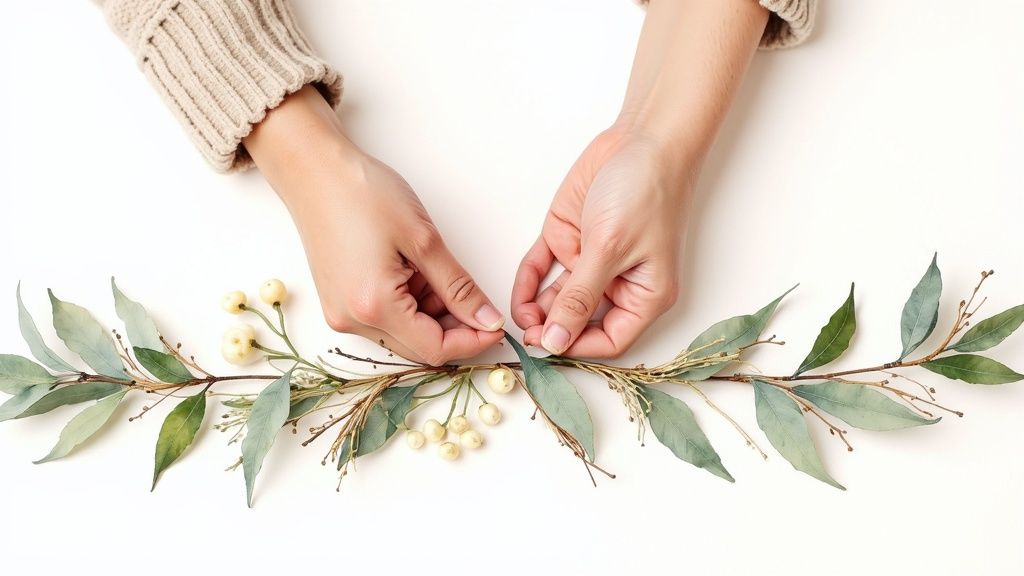
    Hands meticulously crafting a beautiful garland with natural green leaves and white berries.

    Okay, this is where the real magic happens. With all your flowers and greenery prepped and your vision clear, it’s time to bring that beautiful garland to life. This is the fun, rhythmic part of the process where your creativity takes over.

    The core technique is all about building small, layered bundles and attaching them one by one. And don’t get hung up on making every single bundle identical—the charm of a handmade garland is in its subtle, organic variations. The goal is simply to get into a consistent groove that creates a lush, cohesive look from end to end.

    Creating Your Foundational Bundles

    Here’s a pro tip: the secret to a full, professional-looking garland isn’t attaching single stems to your base. It’s all about creating mini-bouquets, or bundles, that you then secure. Trust me, this approach is the cornerstone of any great flower garland diy project.

    First, cut your greenery into manageable pieces, somewhere around 6-8 inches long. This size is big enough to create nice volume but small enough to handle easily.

    Now, start layering. Take a few pieces of greenery—I love mixing textures, like two stems of eucalyptus with a bit of ruscus—and add a focal or secondary flower right in front.

    Think of each bundle as a tiny, self-contained arrangement. The trick is to get all the stems facing the same general direction, with the flowers positioned slightly forward. This creates that clean, flowing line you want in the finished piece.

    Once a bundle looks good, grab a 4-inch piece of paddle wire and wrap the stems together tightly, about 2-3 inches from the bottom. I highly recommend making a whole pile of these before you even think about attaching them. For a 6-foot garland, you’ll probably need 20 to 30 bundles, depending on how plush you want it to be. This assembly-line method makes the next part so much faster.

    Attaching Bundles to the Base

    With a nice little mountain of pre-made bundles ready, the actual construction flies by. It’s a simple, repetitive motion, and you’ll see your garland take shape in no time.

    • Start at one end. Lay your first bundle flat against the end of your rope or twine base. Using your paddle wire, wrap it securely around both the bundle’s stems and the base. I like to wrap it 3-4 times just to be sure it’s locked in tight. And don’t cut the wire!
    • Overlap and layer. Place your second bundle on top of the first, overlapping it by about half. You want to completely hide the wire and stems of the bundle underneath. Keep all the flowers and leaves pointing in the same direction, away from where you started.
    • Keep on wrapping. Use that same continuous piece of wire to wrap the second bundle onto the base, again pulling it nice and tight. Just continue this process—layer, wrap, repeat—all the way down your base.

    This overlapping technique is what gives you that seamless, lush look. You’re essentially shingling the bundles, like tiles on a roof, so none of the mechanics are visible.

    Achieving Consistent Fullness and Flow

    As you get into the rhythm, it’s easy to zone out and end up with a few thin spots. Every foot or so, just pause, step back, and give your work a quick look.

    Do you see any gaps or bits of rope peeking through? No problem. Just make a small, greenery-only “filler” bundle and tuck it into the sparse area, securing it with a bit more wire.

    Also, double-check that all your bundles are flowing in the same direction. It’s a tiny detail, but it makes a world of difference in creating a polished, intentional design.

    When you get to the last few inches, you’ll want a clean finish. For the very last bundle, flip it around so it faces the opposite direction. Tuck its stems under the previous bundle and wire it down tightly. This gives you a beautifully finished look on both ends, which is a must for things like table runners that will be seen from all sides.

    The Finishing Touches: Pro Tips for a Garland That Wows

    This is where the real magic happens. The small details are what separate a nice DIY project from a truly stunning, professional-looking installation. It’s about learning the insider tricks that let you troubleshoot common issues before they even start and adding those final flourishes for a polished, cohesive look.

    From filling those sneaky, unintentional gaps to keeping fresh flowers vibrant for the main event, these are the steps that make all your hard work pay off. Let’s cover everything from perfect timing to smart transportation.

    Fixing Gaps and Creating Fullness

    Even the most seasoned floral designer will step back and find a few sparse spots in a finished garland. Don’t panic! This is an easy and common fix. My go-to method is to whip up tiny “filler” bundles with just a bit of extra greenery or a single small bloom.

    Instead of trying to awkwardly wire them into a finished piece, I just use a quick dab of cool-temp hot glue or a sturdy floral pin. You can tuck the little bundle right into the gap and secure it discreetly. This lets you add volume exactly where it’s needed without messing up the main structure you’ve already built.

    Take a step back—literally. Walk across the room and look at your garland from different angles and distances. This shift in perspective is absolutely crucial for spotting inconsistencies you’d completely miss when working up close. A beautiful garland has to look balanced from every viewpoint.

    Timing and Freshness for Live Events

    When you’re working with fresh flowers, timing is everything. For a wedding or a big party, you need that garland to be at its absolute peak when the guests arrive.

    • Make it 24 Hours Ahead: I always recommend making your fresh garland the day before the event. This gives you plenty of time to work without rushing, but it ensures the flowers are still incredibly fresh.
    • Keep It Cool: Once you’re done, give the entire garland a light misting with cool water. Then, find the coolest, darkest place in your house to store it—a garage, basement, or even a spare bathroom works perfectly.
    • Avoid the Kitchen Fridge: Whatever you do, don’t put it in a regular kitchen refrigerator! So many fruits and veggies release ethylene gas, which is the enemy of fresh flowers and will make them wilt prematurely.

    Adding Custom Embellishments

    This is your chance to really make the garland your own. Weaving in non-floral elements can introduce new textures and colors that tie the whole piece into your event’s theme.

    Try threading delicate silk ribbons through the greenery that match your color palette. For an evening event, intertwining some battery-operated fairy lights creates an absolutely magical glow. Just be sure to add these extras after the main construction is finished so you can place them thoughtfully and strategically.

    Transporting and Storing Your Garland

    Moving a long, delicate garland can be a bit nerve-wracking. The best method I’ve found is to gently coil it into a large, shallow box or a plastic bin. If it’s a fresh garland, give it one last light mist and loosely cover it with plastic to hold in the humidity.

    For faux garlands, proper storage is what gives them their longevity. Keep it coiled in a bin, tucked away from direct sunlight and dust, and it will be ready for its next appearance. This durability is a huge reason for their popularity. In fact, the artificial flowers market hit USD 3.25 billion in 2024, partly because crafters can save 50-60% compared to buying pre-made arrangements. With 25 million monthly views on Pinterest for garland DIYs, it’s clear this is one trend with serious staying power. You can find more insights on these artificial flower market trends on polarismarketresearch.com.

    Creative Ways to Style and Display Your Garland

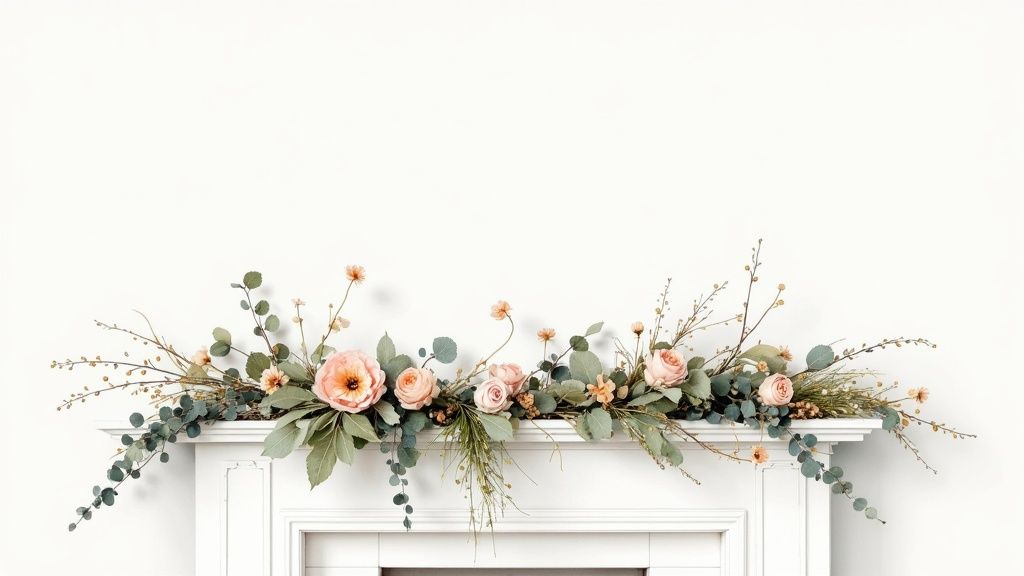
    A beautiful pink and peach flower garland with eucalyptus and branches adorning a white fireplace mantel.

    Now for my favorite part—showing off your incredible work! A beautifully placed garland does more than just decorate; it completely transforms a space, turning an ordinary corner into an extraordinary focal point. The possibilities are truly endless.

    Your finished piece is a seriously versatile bit of decor. Think beyond just tacking it to a wall. Consider how it can play off the architecture and furniture in your room to create a look that feels truly dynamic and intentional.

    Classic and Elegant Placements

    Some spots are just made for a cascading flower garland. These classic locations provide a natural canvas for your creation, bringing instant drama and elegance to any setting.

    • Fireplace Mantels: This is a timeless choice for a reason. Draping your garland across the mantel adds so much warmth and life, whether you let the ends trail down dramatically or keep it neatly contained on top.
    • Table Runners: For a dinner party or wedding reception, a lush garland running down the center of the table is an absolute showstopper. It creates an intimate, luxurious vibe that guests will talk about long after the meal is over.
    • Doorways and Arches: Framing an entryway with flowers creates such a grand and welcoming entrance. This is especially impactful for big moments like weddings, baby showers, or holiday gatherings.

    Securing Your Garland Without Damage

    Hanging your masterpiece can feel a little nerve-wracking, especially when you’re worried about scuffing walls or surfaces. Thankfully, there are plenty of reliable, damage-free options out there that I use all the time.

    My secret weapon? A collection of temporary hooks. Brands like Command make clear and decorative hooks that hold a surprising amount of weight and peel off cleanly. Just be sure to check the weight limit on the package—a fresh, dense garland can be much heavier than you think!

    For mantels or shelves, you can tuck small, weighted objects inside the greenery to anchor the ends securely. On a table, the garland’s own weight is usually enough to keep it perfectly in place. Once it’s all done, presentation is everything. For that polished, professional finish, you might want to explore these 9 Essential Tools for Crafting Displays to ensure it hangs just right.

    Styling a garland follows the same principles as building any other arrangement; it’s all about creating balance and making an impact. If you’re looking for more inspiration, check out these other fresh flower arrangement ideas to get your creativity flowing.

    Answering Your Top Garland-Making Questions

    Once you’re surrounded by a beautiful mess of stems, leaves, and spools of wire, it’s totally normal for a few questions to pop into your head. I’ve been there! Let’s walk through some of the most common things people ask me, so you can feel confident and get ahead of any little snags.

    One of the first things everyone wants to know is how long their fresh flower garland will actually last. If you’ve conditioned your flowers properly and can keep the finished piece in a cool spot, you can count on it looking gorgeous for a solid 24-48 hours. The hardy greenery, like eucalyptus or olive branches, will often hold up even longer—sometimes for a whole week.

    Common Garland Making Questions

    Another big question is about the weight. Don’t underestimate it! A long, lush garland, full of fresh flowers and greens, soaks up a lot of water and can be surprisingly heavy. My best advice is to always use hooks or supports that are much sturdier than you think you need. It’s always better to be over-prepared.

    • Can I make a garland without a rope base? Absolutely! For a lighter, more delicate look, you can build your garland directly onto a long piece of heavy-gauge floral wire. This approach is perfect for more ethereal, minimalist designs.
    • What’s the best way to attach flowers without wire? A high-quality hot glue gun is your secret weapon when working with faux flowers. For fresh blooms, though, wire is almost always the most secure and reliable choice to keep everything in place.
    • How do I keep my flowers from wilting? Besides conditioning them well from the start, give your finished fresh garland a generous spritz with a finishing spray like Crowning Glory. It’s a game-changer that seals in moisture and really extends the life of your flowers.

    Beyond just creating something beautiful, the act of working with your hands is incredibly therapeutic. The focus it takes to assemble a garland can be a wonderful escape. In fact, there’s a lot to be said about DIY for mental health and the benefits of creative projects.

    If I could give you one piece of advice, it would be this: don’t strive for perfection. The real beauty of a handmade garland is in its unique, organic feel. Those little imperfections are what give it character and charm, so just relax into the process and enjoy making something that is truly yours.

    Finally, what do you do with it when the event is over? Faux garlands can be carefully packed away and brought out again for years of enjoyment. With fresh garlands, you have a couple of lovely options: hang them somewhere to dry for a rustic, long-lasting decoration, or compost the flowers and greens to return them to the earth.


    Ready to bring your floral vision to life without the DIY? The artists at Fiore specialize in creating breathtaking custom floral installations for weddings and events across Los Angeles. Let us handle the details so you can enjoy the beauty. Discover our design services at https://fioredesigns.com.

  • Mastering the Vertical Floral Arrangement

    Mastering the Vertical Floral Arrangement

    Ready to move beyond the standard round bouquet? A vertical floral arrangement is a true showpiece. It pulls the eye up, adds drama fast, and can change how a room feels in seconds.

    These tall designs work beautifully at home when you want impact without taking over the whole table. They are also a favorite for celebrations when you want a centerpiece that reads from across the room.

    If you want more styles to try after this one, start with our fresh flower arrangement ideas.

    Watercolor diagram of a vertical floral arrangement with line and focal flowers

    The Art of Tall Floral Arrangements

    A great vertical arrangement is a lot like basic architecture. Height matters, but structure matters more. When the lines are clean and the base is balanced, the flowers look intentional, not like they were simply stacked.

    Focus on three ideas: line, form, and balance. Line guides the eye upward. Form is the overall shape you “see” from across the room. Balance keeps the design from feeling top-heavy or lopsided.

    If you are planning something larger than a tabletop design, Fiore’s event floral design services can help scale these ideas into statement pieces that still feel light and refined.

    Historical Roots of Vertical Design

    Designers have been using height in flowers for centuries. One big moment for vertical style came during the Byzantine Empire, when cone-shaped arrangements in chalices and urns were popular.

    They often used strong contrasts and structured placement. That early focus on symmetry and height still shows up in many modern rules of proportion.

    A vertical floral arrangement does not just sit on a table. It changes how your eye travels through the space, like a living sculpture.

    Why Go Vertical?

    Going tall is not only about drama. It also solves practical problems, especially when you are decorating for a group.

    • Big visual impact: Height draws attention and can make a room feel larger.
    • More table space: A narrow footprint leaves room for plates, glasses, and conversation.
    • Clean, modern feel: Strong lines often read as polished and current.

    Gathering Your Essential Tools and Materials

    Before you place a single stem, set up your supplies. Tall arrangements need support, and a little prep helps you avoid drooping flowers and a wobbly base.

    Choose tools you can trust. Clean cuts and steady mechanics will do more for your final look than any “perfect” flower choice.

    Tools and mechanics for building a vertical floral arrangement on a white surface

    The Non-Negotiable Toolkit

    You do not need a huge kit to make a vertical floral arrangement. You do need a few basics that work well every time.

    • Sharp floral clippers or a knife: Dull blades crush stems and shorten vase life.
    • Floral wire and floral tape: Great for reinforcing delicate stems and bundling light pieces.
    • Wire cutters: Save your clippers for stems only.

    Choosing Your Structural Support

    Your “armature” is the support system inside the container. The best choice depends on your vessel, the look you want, and whether you prefer reusable options.

    Floral foam is easy and holds stems firmly, but many designers avoid it because it is single-use plastic. Reusable options like flower frogs and chicken wire can work just as well once you get used to them.

    Support Options at a Glance

    Support Method Best For Pros Cons
    Floral Foam Structured designs with precise placement. Holds stems at many angles, includes water source. Single-use, not biodegradable.
    Flower Frog (Kenzan) Minimal, Ikebana-inspired designs. Reusable, clean water-only look. Limited capacity, needs a stable flat-bottom vessel.
    Chicken Wire Loose, garden-style designs with movement. Reusable, stems drink directly from the vase. Takes practice to shape well.

    Your vessel matters as much as your mechanics. A heavy base helps prevent tipping, especially once water and lots of stems are involved. For more container ideas that suit tall designs, see these ideas for vases.

    Plan for weight. Water, stems, and a tall silhouette add up fast, so start with a container that feels steady in your hands.

    Choosing Flowers and Foliage for Vertical Impact

    Good mechanics hold everything in place, but your stem choices create the height. Pick botanicals that naturally grow tall or hold a strong line.

    It helps to “cast” your flowers by role. When each stem has a job, the finished vertical floral arrangement looks balanced, not random.

    Line, focal, filler flowers and foliage selected for a vertical floral arrangement

    Line Flowers: The Tallest Stems

    Line flowers set the top of the design and create that upward pull. They are the first stems most designers place.

    • Delphinium and larkspur: Tall spikes with lots of small blooms.
    • Gladiolus: Clean, bold line for modern looks.
    • Foxglove: Soft curve and romantic garden feel.

    Focal Flowers: The Anchor

    Focal flowers give the eye a place to land. In a vertical design, they usually sit lower, near the rim, so the arrangement does not feel bare at the bottom.

    Try hydrangea, peony, or open garden roses. Limit yourself to one or two focal types so the design feels calm.

    Too many focal flowers compete with each other. One clear anchor makes the tall lines feel even more dramatic.

    Filler and Foliage: Softness and Coverage

    Filler flowers and greens add fullness, hide mechanics, and blend transitions between big blooms and tall lines. They also help you shape the “edges” of the piece.

    For airy texture, try astilbe or Queen Anne’s lace. For foliage, eucalyptus and Italian ruscus are reliable choices that add movement without overpowering.

    Seasonal stems are often stronger, fresher, and easier to find. Use this guide to plan your palette with flowers in season.

    Real-World Pairings for Different Looks

    The same structure works for many styles. Change the stems, and the mood changes too.

    • Modern and minimal: Calla lilies, bear grass, and one bold leaf at the base.
    • Lush and romantic: Foxglove, hydrangea, garden roses, plus a trailing vine.

    Building Your Arrangement From the Ground Up

    Now it is time to build. Work in layers, stepping back often. A vertical floral arrangement can look great from the front and messy from the side if you rush.

    Keep your workspace tidy, keep your water clean, and rotate the vase as you go. Those small habits lead to a cleaner final design.

    Step-by-step build of a vertical floral arrangement from mechanics to finished design

    Step 1: Establish the “Skeleton”

    Start with your tallest line flower. Place it near the center to set the top point of the design. Then add two slightly shorter line stems to create a soft triangle.

    Add a few structural greens next. This helps you “draw” the shape before you add the heavier blooms.

    A simple proportion that often looks right is 1.5 to 2 times the height of the container.

    Step 2: Green the Rim

    Add foliage around the vase opening to hide mechanics. This green collar also gives you places to tuck focal flowers so they look supported.

    If you can still see foam, wire, or a flower frog from normal viewing distance, keep adding greens until it disappears.

    Step 3: Add Focal Flowers, Then Fill

    Place focal flowers low, near the rim, and vary the depth. Push some in deeper and pull some forward to create dimension.

    Next, add filler flowers and smaller foliage. Work from large elements to small ones. This helps prevent breaking delicate stems while you are still building the base.

    • Cut stems at an angle: Fresh cuts help water uptake.
    • Vary heights: Avoid a flat “helmet” top.
    • Rotate often: Check every angle as you build.

    A Quick Look Back in Time

    Many of today’s proportion rules have historical roots. Victorian florists, for example, paid close attention to height-to-vase ratios for formal rooms and mantel displays.

    If you want a deeper overview, this history of flower arranging is a helpful reference.

    Adding Finishing Touches for a Professional Look

    Once the main flowers are in, pause. Look at the arrangement from a distance. The last five minutes of edits often make the biggest difference.

    Fix gaps, adjust angles, and edit anything that feels out of place. In tall work, one stem pointing the wrong way can distract the eye.

    Refine the Shape and Add Texture

    Check the outline from every side. Your goal is a clean silhouette with gentle movement.

    • Trailing elements: Jasmine vine or amaranthus can soften the base.
    • Sculptural branches: Curly willow or manzanita can extend the line and add drama.
    • Seasonal details: Berries like hypericum add small pops of color and texture.

    A finished vertical floral arrangement should feel intentional from top to base, with every stem placed for a reason.

    Aftercare and Transport Basics

    Care matters even more with tall designs. They use more stems, they hold more water, and they are easier to knock out of balance.

    If you used floral foam, add water daily, slowly, near the center so it soaks in evenly. For all designs, keep them out of direct sun and away from heat vents.

    For more ways to help your flowers last, follow Fiore’s flower care tips.

    For transport, place the arrangement on the floor of the car in a snug box. Wedge towels around the base so it cannot slide.

    Common Questions About Vertical Flower Arrangements

    Tall work can feel tricky at first. These quick answers solve the problems most people run into when building their first vertical floral arrangement.

    How Do I Keep Tall Flowers From Drooping?

    Start with hydration. Give stems a fresh angled cut, then let them drink in deep water for a few hours before arranging.

    For heavy or hollow stems, add support:

    • Staking: Hide a thin green stake behind the stem.
    • Wiring: Thread fine floral wire through hollow stems or wrap it gently on the outside.

    What Containers Work Best?

    Choose a vessel with a heavy base. Trumpet vases, tall cylinders, and sturdy ceramic urns are popular because they do not tip easily.

    A helpful ratio is to keep the container at least one-third of your finished height, so the design looks and feels stable.

    Can I Make a Vertical Arrangement Without Floral Foam?

    Yes. Chicken wire inside the vase is a classic reusable option, and it works well for airy garden styles. A flower frog (kenzan) is another great choice, especially for clean, minimalist lines.

    You can also make a tape grid across the vase opening for light stems, or use a nest of twigs as a natural support.


    If you want a ready-made statement piece, Fiore’s Designer’s Choice arrangement is a beautiful option for a tall, artful look.

    For large-scale moments, Fiore also creates wedding floral installations with strong lines, clean mechanics, and a polished finish.

    Need help planning a custom vertical floral arrangement for your home or an event in Los Angeles? contact Fiore and share your date, color palette, and the height you have in mind.

  • Ideas for Vases: 10 Fresh Picks 2025

    Ideas for Vases: 10 Fresh Picks 2025

    The right vase can turn a simple bouquet into something that looks styled on purpose. It is not just a water holder. It sets the mood, works with your room, and helps your flowers look their best. If you have ever stood in front of a shelf of glass cylinders and ceramic jugs and felt stuck, these ideas for vases will help.

    This guide shares 10 creative, practical ways to style flowers in 2025. You will see options for small spaces, big entryways, modern homes, and cozy vintage corners. Some ideas use one perfect stem. Others are all about texture and volume.

    You will also learn small tricks that make a big difference, like how tall stems should be, how to keep water clear in glass, and how to group small vases so they look like a set. Pick one idea, try it this week, and then mix a few styles once you feel confident.

    Minimalist tall vase with a single calla lily, one of the best ideas for vases

    1. Minimalist Tall Vases with Single Statement Flowers

    Minimal styling is one of the simplest ideas for vases, and it often looks the most expensive. You use a sleek tall vase, then feature one flower type, or even one dramatic stem. Clean lines and open space do the work.

    This look fits modern and transitional rooms where you want calm, not clutter. It is also great when your flowers are already stunning, like a big peony or a thick hydrangea head.

    How to Achieve the Look

    Focus on proportion. Your stem should be about 1.5 to 2 times the height of the vase so it looks balanced.

    • Best vase choices: Clear glass cylinders, matte ceramic columns, or stone-textured vessels with a narrow opening.
    • Ideal flower stems: Peonies, hydrangeas, king protea, delphiniums, gladiolus, or branches like magnolia and curly willow.
    • Pro tip: Set out two or three tall vases at different heights. Add one matching stem per vase for a clean, gallery-style cluster.
    Vintage bottles filled with wildflowers as cozy ideas for vases

    2. Wildflower Garden Arrangements in Vintage Vessels

    If you want your home to feel warm and lived-in, try a wildflower look in collected vessels. Think old milk bottles, jars, and small pitchers. The goal is a loose “just picked” mix that looks a little untamed.

    This style is perfect for farmhouse spaces, cottage-inspired homes, and casual parties. It also works well on a budget because it looks great even when everything is slightly mismatched.

    How to Achieve the Look

    Think variety. Mix shapes, textures, and heights so the arrangement feels like a small garden in a vase.

    • Best vase choices: Amber glass bottles, ceramic pitchers, mason jars, vintage jars, and even teacups.
    • Ideal flower stems: Cosmos, Queen Anne’s lace, cornflowers, daisies, lavender, plus foliage like eucalyptus or fern fronds.
    • Pro tip: Use odd numbers of stems in each vessel, like 3, 5, or 7. Then group several small vases together for a full tablescape.
    Monochromatic blush bouquet in glass vase for modern ideas for vases

    3. Monochromatic Color Block Arrangements

    Monochromatic color blocking is one of the boldest ideas for vases because it uses one color to create a big impact. Fill the vase with flowers in a single shade. When color stays consistent, texture and shape become the star.

    This look reads modern and polished. It is a favorite for events, entryways, and anywhere you want a clear statement without a lot of visual noise.

    How to Achieve the Look

    The secret is variety within the same color. Combine different flower shapes so the arrangement still feels layered.

    • Best vase choices: Neutral clear glass, white ceramic, black stone, or any simple shape that will not fight the color.
    • Ideal flower stems: For white, try hydrangeas, roses, and spray carnations. For blush, mix peonies, ranunculus, and tulips. For deep tones, calla lilies and anthuriums photograph well.
    • Pro tip: Add tone-on-tone greens, like eucalyptus with soft pink, or dusty miller with white, for depth without breaking the color story.
    Oversized floor vase with pampas grass, a long-lasting idea for vases

    4. Oversized Statement Vases with Dried Flowers and Pampas Grass

    Large floor vases filled with dried botanicals are popular for a reason. They last for months, need little care, and add height to a room. Pampas grass, dried palms, and preserved stems bring texture without needing weekly water changes.

    This idea works well in corners that feel empty, entryways, and open-plan living areas. Neutral dried pieces also fit almost any color palette.

    How to Achieve the Look

    Start with tall items for height, then layer in medium stems, then finish with small textures. Keep the shape loose, not packed tight.

    • Best vase choices: Large terracotta, matte ceramic, textured stone, or heavy resin floor vases. Narrow openings help hold stems upright.
    • Ideal dried botanicals: Pampas grass, dried palm leaves, bunny tails, dried eucalyptus, bleached ruscus, lunaria, cotton stems, preserved ferns.
    • Pro tip: Shake pampas outside before bringing it in. A light mist of hairspray can reduce shedding and help plumes hold their shape.

    5. Bud Vases and Vignettes: Small Clusters of Multiple Vessels

    Bud vases prove that small stems can still look special. Instead of one big bouquet, you group several small vases, each with one or two blooms. Together, they look curated and detailed.

    This is one of the best ideas for vases in small homes, because you can spread flowers across a shelf, desk, or nightstand. It is also a smart way to use a few leftover stems.

    How to Achieve the Look

    Your goal is “collected on purpose.” Choose vases that share something in common, like similar color, shape, or material.

    • Best vase choices: Small ceramic bud vases, colored glass minis, and clear bottle shapes in different heights.
    • Ideal flower stems: Ranunculus, spray roses, cosmos, anemones, waxflower, eucalyptus sprigs, lavender.
    • Pro tip: Set the whole cluster on a tray or a stack of books. It makes the display feel like one piece and is easy to move for cleaning.
    Bud vase cluster on a tray showing small-space ideas for vases

    6. Floating Flowers and Water Vases with Submerged Elements

    Floating flowers turn a simple bowl of water into a centerpiece. You can float blooms and petals, add candles, or submerge stones and branches in a tall cylinder. Clear water, light reflection, and simple shapes make it feel calm and intentional.

    This look is popular for spas, dinner parties, and modern weddings. It is also a great option when you want something different without buying a lot of flowers.

    How to Achieve the Look

    Clarity matters most here. Use clean glass and fresh water so your design stays crisp.

    • Best vase choices: Wide, shallow glass bowls for floating designs, and tall clear cylinders for submerged looks.
    • Ideal flower choices: For floating, use sturdy blooms like gardenias, dahlias, roses, or plumeria. For submerging, orchids, calla lilies, and tulips hold shape well.
    • Pro tip: Use distilled water to reduce cloudiness. For evening events, mix floating flowers and floating candles for warm light.

    7. Seasonal and Textured Arrangements with Mixed Botanicals

    Seasonal arranging keeps your space feeling fresh all year. Spring bulbs, summer garden flowers, fall branches, and winter evergreens each bring their own textures. This style looks natural because it follows what is growing now.

    It also helps you shop smarter. Seasonal stems are often easier to find and can look better for the price.

    How to Achieve the Look

    Layer textures so the arrangement feels full. A simple starting point is more focal blooms than filler, then add foliage to shape the outline.

    • Best vase choices: Rustic ceramic pitchers, terracotta pots, simple glass jars, or baskets with a liner.
    • Seasonal mixes to try: Spring: tulips, daffodils, hyacinths, flowering branches. Autumn: dahlias, grasses, berries, chrysanthemums. Winter: evergreen boughs, pinecones, amaryllis.
    • Pro tip: Farmers markets are great for unusual foliage. One interesting branch can make the whole vase look styled.

    8. Tall Floral Floor Installations and Statement Pieces

    Tall floor arrangements bring drama fast. You use a large vase, place it on the floor, then build height with long stems and branches. It can frame an entryway, fill a large corner, or anchor a big room.

    Because these pieces are large, they work best where there is space to step back and take it in. They also photograph well for events.

    How to Achieve the Look

    Safety and stability come first. A heavy vase and strong mechanics keep it from tipping.

    • Best vase choices: Heavy-bottomed ceramic urns, large trumpet vases, stone-look resin floor vases.
    • Ideal flower stems: Gladiolus, delphiniums, cherry blossom branches, pampas grass, foxtail lilies, tall greenery, and large tropical leaves.
    • Pro tip: For big events, consider professional help. Large pieces need secure support and careful conditioning so they stay fresh.

    9. Transparent and Glass Vases Showing Stems and Roots

    Clear glass vases do more than show the water line. They can make stems, branches, and even roots part of the design. This style feels modern, almost like a mini science display in your home.

    It is a strong choice for offices and minimalist rooms where you want clean shapes. It also helps people notice details they usually miss, like how stems curve and cross underwater.

    How to Achieve the Look

    Keep the glass spotless and the water fresh. When the vase is clear, every detail shows.

    • Best vase choices: Clear cylinders, apothecary jars, rectangular tanks, and beaker-style vessels.
    • Ideal stems: Hyacinth bulbs, amaryllis, orchids with visible roots, curly willow, dogwood branches.
    • Pro tip: Use distilled water and rinse the vase often. Add smooth river stones or marbles to hold stems in place and add texture at the bottom.

    10. Sculptural and Artistic Vases as Statement Objects

    Sometimes the vase is the main event. Sculptural vases can stand alone as decor even when empty. When you add flowers, keep them simple so the vessel still gets attention.

    This is one of the best ideas for vases if you like art and design. A handmade ceramic piece or hand-blown glass vase can add personality to a shelf, mantel, or console table.

    How to Achieve the Look

    Shop like you are picking a sculpture, not a container. Then use stems that match the mood of the piece.

    • Best vase choices: Asymmetrical ceramics, hand-blown glass, concrete or stone-look pieces, and artisan-made vases.
    • Ideal stems: A single anthurium, a sculptural branch, contorted hazel, or a few dried grasses. Sometimes no flowers look best.
    • Pro tip: Group two or three sculptural vases with a shared palette. It looks like a small gallery display.

    Comparison of 10 Vase Ideas

    Item Implementation complexity Resource requirements Maintenance & longevity Expected outcomes Ideal use cases Key advantages
    Minimalist Tall Vases with Single Statement Flowers Low, simple single-stem placement One tall vase, 1 to 3 quality stems Moderate, replace stems as needed; water change every 2 to 3 days Calm, sophisticated focal accent with clean lines Modern interiors, galleries, hotel lobbies, small spaces Low clutter, versatile, low initial cost
    Wildflower Garden Arrangements in Vintage Vessels Medium, layered and asymmetrical arranging Multiple vintage vessels, mixed wildflowers, foliage Short to moderate, mixed lifespans; frequent water changes Warm, abundant, cottage-garden look Farmhouse weddings, casual homes, cottagecore styling Budget-friendly, forgiving, sustainable
    Monochromatic Color Block Arrangements Medium, needs volume and color consistency Large quantity of same-color blooms, simple vases Moderate, depends on flower choice Dramatic, luxury color statement Events, hotel lobbies, retail displays Strong visual impact, easy coordination, photogenic
    Oversized Statement Vases with Dried Flowers and Pampas Grass Low to medium, simple styling but large scale Very large vases, dried botanicals, occasional supports High, lasts 6 to 12+ months with minimal care Long-lasting, sculptural focal points Home staging, boho homes, event backdrops Long life, low maintenance, sustainable
    Bud Vases and Vignettes: Small Clusters of Multiple Vessels Medium, requires curation of multiple pieces Many small vases, several stems, trays or surfaces Moderate, more containers to refresh Curated, intimate displays with varied interest Shelves, desks, small apartments, intimate events Affordable, flexible, customizable
    Floating Flowers and Water Vases with Submerged Elements Medium to high, water clarity and flower choice matter Bowls or cylinders, distilled water, floating blooms, optional candles Moderate, change water every 2 to 3 days Ethereal, spa-like centerpiece Spas, dinners, weddings, restaurants Unique visual effect, uses fewer blooms
    Seasonal and Textured Arrangements with Mixed Botanicals Medium to high, needs a good eye for texture Varied seasonal stems, mixed containers Variable, depends on season and stems Fresh, nature-linked, textured display Homes that change decor by season, rustic venues Seasonal feel, supports local sourcing
    Tall Floral Floor Installations and Statement Pieces High, structural support needed Extra-large vase, many stems, strong mechanics Low to moderate, needs frequent checks Bold focal point with major height Large spaces, entrances, stages, galleries Dramatic presence, fills vertical space
    Transparent and Glass Vases Showing Stems and Roots Medium, careful cleaning and selection Clear vessels, clean water, interesting stems, stones Moderate, frequent water changes Modern display that highlights structure Studios, offices, museums, modern homes Shows plant anatomy, clean look
    Sculptural and Artistic Vases as Statement Objects Low for styling, higher effort to source Art vases, optional minimal stems High, vase lasts; flowers optional Art-forward decor with personality Designer homes, showrooms, collectors Timeless, conversation starter

    From Inspiration to Your Next Arrangement

    You do not need a dozen rules to style flowers well. You need a clear idea, the right container, and a plan for scale. These 10 ideas for vases give you a strong starting point, whether you like clean minimal stems or full, textured mixes.

    Try one change this week. Swap your usual vase for a vintage bottle. Group bud vases on a tray. Or go big with dried stems in a floor vessel. Small styling choices add up fast.

    If you want a florist to handle the details for a home refresh or event flowers in Los Angeles, Fiore can help bring your vase vision to life.


    Ready to plan your flowers? Visit Fiore to view our work and request a consultation.

  • Flowers for a Funeral: A Thoughtful Choosing Guide

    Flowers for a Funeral: A Thoughtful Choosing Guide

    When words feel impossible, flowers for a funeral can speak for you. They offer comfort, show respect, and remind a grieving family that others are holding them close.

    This guide walks you through what to send, what it means, and where it should go. If you are planning a memorial service rather than a traditional funeral, our celebration of life flowers page may also help.

    Watercolor of common flowers for a funeral, including lilies and roses

    The Tradition Behind Funeral Flowers

    In times of loss, expressing sympathy can be one of the hardest things we do. For generations, flowers have been part of mourning rituals because they bring light to a heavy day. They also reflect life, love, and the beauty a person brought into the world.

    Choosing flowers for a funeral is more than a task on a list. It is a personal tribute. Each bloom and color can carry a quiet message, which helps when grief makes words feel small.

    Common Funeral Flowers and Their Meanings

    Flower meanings are not rules, but they can help you choose with care. Here are classic options and what they often represent.

    Quick Guide to Common Funeral Flower Meanings

    This table shares the symbolism behind popular choices, so your arrangement matches your intent.

    Flower TypePrimary MeaningCommon Colors
    LiliesPurity, peace, innocence restored to the soulWhite, pink
    RosesLove, respect, gratitudeWhite, red, yellow, pink
    CarnationsRemembrance, admirationWhite, red, pink
    ChrysanthemumsHonor, respect, loyalty (in many cultures)White, yellow, pink
    OrchidsEverlasting love, sympathyWhite, pink, purple
    GladioliStrength of character, sincerity, integrityWhite, pink, red, lavender

    These meanings are a helpful starting point. What matters most is the care behind your choice.

    How to Make the Tribute Feel Personal

    Many families now prefer arrangements that feel like the person, not just “funeral flowers.” If they had a favorite color, flower, or garden style, you can weave that in gently.

    Roses are a common example. Different colors can shift the tone from quiet respect to deep love. If you want help choosing, see our guide to rose color meanings.

    A floral tribute is a final gift to the person who has passed and a message of support to the family they left behind.

    Types of Funeral Flower Arrangements

    When you are choosing flowers for a funeral, the arrangement style matters just as much as the blooms. Some pieces are meant to be seen during the service. Others are meant to comfort the family at home.

    Knowing the difference helps your gift land in the right place, at the right time.

    Types of flowers for a funeral: spray, wreath, basket, and bouquet

    Common Arrangement Types and Where They Go

    Use this table to match your relationship with the right kind of tribute.

    Arrangement TypeTypical SenderPlacement/Purpose
    Casket SprayImmediate family (spouse, children, parents)Placed directly on the casket as the main floral tribute.
    Standing SprayExtended family, close friends, colleaguesDisplayed on an easel near the casket to frame the service area.
    WreathAnyone wishing to send a formal tributeDisplayed on an easel, its circular shape symbolizes eternal life.
    Floor BasketFriends, family, community groupsPlaced on the floor around the casket or on tables.
    Sympathy Bouquet/PlantAnyoneSent to the family’s home for ongoing comfort.

    Casket Sprays

    The casket spray is the central arrangement at many services. It rests on the casket and is usually selected by the immediate family because of its close placement and strong symbolism.

    Standing Sprays and Wreaths

    Standing sprays are displayed on easels near the casket or along the room. They are highly visible and are often sent by extended family, close friends, or coworkers.

    Wreaths are also displayed on easels. Their circular shape is often seen as a symbol of continuing love.

    These larger pieces are typically delivered to the funeral home, church, or service venue. They are not usually intended for the family’s home.

    Floor Baskets and Floor Bouquets

    Floor baskets and low floor pieces are flexible. They can sit near the casket, by the guest book, or around the room to soften the space.

    They are a good option when you want to send something meaningful, but not as formal as a standing spray.

    Sympathy Bouquets and Plants

    Sympathy bouquets are often arranged in a vase. Sympathy plants are living gifts that can last for months or years. Both are usually sent to the family’s home, either before the service or in the days after.

    If you want more detail on shapes and sizing, read our guide to arrangements for a funeral.

    Funeral Flower Etiquette (Simple Guidelines)

    Etiquette is not about strict rules. It is about making sure your kindness helps, rather than adding stress.

    Who Should Send What

    Your relationship to the deceased is a good guide.

    • Immediate family often chooses the casket spray and other main pieces.
    • Extended family and close friends often send standing sprays, wreaths, or large baskets to the service location.
    • Friends, coworkers, and neighbors often send a floor basket, a bouquet, or a plant for the home.

    The size of an arrangement matters far less than the sincerity behind it.

    Where to Send Flowers

    Large pieces meant for the service should be delivered to the funeral home or ceremony location. Provide the full name of the deceased and the service time so the florist can time delivery properly.

    Smaller arrangements, especially bouquets in vases and plants, are often best sent to the family’s home. They become a quiet comfort after guests leave.

    Cultural and Religious Considerations

    Flowers are common in many Western services, but not in all traditions. Some families prefer charity donations or food during the mourning period.

    Check the obituary for guidance. If it says “in lieu of flowers,” honoring that request is the kindest choice.

    What to Write on the Sympathy Card

    The flowers for a funeral you send will be seen by many people. The card message will often be read in private, and kept. A few honest lines can mean a lot.

    Sympathy card message with flowers for a funeral beside it

    If you want more examples you can copy and personalize, see our full guide on what to write in a sympathy card.

    A Simple Structure That Works

    • Name the loss: “I’m so sorry for your loss.”
    • Name the person: Use their name when you can.
    • Offer support: “I’m here for you,” or “Thinking of you daily.”

    Your message is a reminder to the family that they are not grieving alone.

    Message Examples

    For a close friend or relative:

    • “I’m heartbroken to hear about [Name]. I will always remember [short memory]. Sending you love and strength.”
    • “[Name] brought so much warmth to everyone around them. We are holding you close in our hearts.”

    For a coworker or their family:

    • “I was so sorry to hear of [Name]’s passing. They will be missed by everyone at [Company]. Please accept my heartfelt condolences.”
    • “Thinking of you and your family, and wishing you comfort in the days ahead.”

    Budget and Delivery Tips

    Funeral planning often moves fast, and emotions run high. A florist can help you choose something respectful at any budget, then handle delivery details so you do not have to.

    What Affects the Cost of Funeral Flowers

    • Size and design: Larger pieces use more stems and more design time.
    • Flower type: Orchids and specialty blooms often cost more than carnations or chrysanthemums.
    • Season: In-season flowers are usually easier to source and can help keep costs down.

    If you want a classic, calm palette that fits many services, our Neutral arrangement is a gentle option for sympathy and remembrance.

    Meaningful Choices at Any Budget

    You do not need to overspend to show you care. A simple bouquet with a thoughtful message can be deeply comforting.

    For a larger group, consider pooling funds. Many coworkers and friends do this to send one substantial tribute together.

    How to Get Delivery Right

    Timing matters. The goal is for funeral flowers to arrive before the viewing or service begins.

    When you place an order, have these details ready:

    • Full name of the deceased
    • Service location address
    • Date and start time of the viewing or service
    Preparing flowers for a funeral with delivery checklist in florist studio

    If you are ordering on short notice, our same-day flower delivery guide explains what to expect and what information helps most. Fiore is based in Los Angeles, and our team regularly coordinates deliveries with local venues and funeral homes.

    Common Questions About Funeral Flowers

    Is it ever too late to send funeral flowers?

    It is not too late. If the service has already passed, send a bouquet or plant to the family’s home. Many people find that support feels even more meaningful after the first wave of calls and visitors slows down.

    What if the obituary says “in lieu of flowers”?

    Honor the request. Make the donation, then send a card letting the family know you gave in their loved one’s memory. You do not need to share the amount.

    Are there flowers to avoid?

    Most flowers are appropriate. Avoid anything that feels party-like, such as balloons or very festive add-ons. Also consider fragrance, since very strong scents can be overwhelming indoors.

    Safe, classic choices include lilies, chrysanthemums, carnations, soft-toned roses, and gladioli.

    How much should I spend?

    There is no required amount. Choose something that fits your relationship and your budget. A small arrangement with a sincere note can be just as meaningful as a large spray.

    Final Thought

    Choosing flowers for a funeral can feel heavy, especially when you are grieving too. The right arrangement does not have to be complicated. It simply needs to feel respectful, thoughtful, and true to the person being honored.

    If you would like help selecting a fitting tribute, we are here to guide you. Reach out to contact our floral team and we will help you choose flowers, write the card, and coordinate delivery with care.

    Market data referenced in this article comes from market insights on funeral and interment services.

  • 10 Wedding Flower Trends for 2025 in Los Angeles

    10 Wedding Flower Trends for 2025 in Los Angeles

    Wedding flowers set the tone before your guests even find their seats. The best designs feel personal, look amazing in photos, and hold up through a full day of hugs, heat, and happy tears. These wedding flower trends for 2025 blend natural movement with bold style choices, plus a bigger focus on seasonality and thoughtful sourcing.

    If you’re planning a wedding in Los Angeles, you have a rare advantage. You can pull from local farms, the flower market, and premium growers to build a look that feels current without feeling “trendy.” For early planning, start by listing every floral moment you need, then match each one to a style. Our wedding flower checklist helps you get it all on paper.

    Wildflower meadow bridal bouquet for wedding flower trends 2025

    1. Wildflower & Meadow Mix Arrangements

    Meadow-style florals keep going strong in 2025. They look loose and gathered, like you picked them on a walk, but they still feel intentional. Expect lots of small blooms, airy shapes, and soft movement.

    This style is less about perfect symmetry and more about texture. Think cosmos, scabiosa, Queen Anne’s lace, chamomile, and flowering herbs, mixed with grasses and viney greens.

    Why choose this trend?

    Meadow mixes are romantic and relaxed. They work well for garden venues, outdoor ceremonies, and couples who want something that feels “alive” instead of formal.

    How we implement it

    • Local stem focus: We look for seasonal varieties that naturally grow with that airy shape.
    • Layered textures: We mix feature flowers with supporting blooms and grasses so the design has depth.
    • Natural bouquet shapes: Hand-tied bouquets keep the stems moving in a way that reads soft in photos. If you love this look for personal flowers, our garden-style bouquet guide breaks down shapes, bloom choices, and tips.

    2. Dried Flowers & Preserved Botanicals

    Dried and preserved florals bring an instant mood. You get soft neutrals, warm tans, dusty pinks, and lots of texture. Pampas, preserved eucalyptus, palm spears, bunny tails, and dried roses are the usual stars.

    Many couples also love the practical side. Dried pieces can be made ahead, and they hold up well for long events.

    Dried and preserved bouquet textures for 2025 wedding flower trends

    Why choose this trend?

    This trend fits boho, desert, rustic, and minimalist weddings. It’s also a great choice if you want something that won’t droop during a hot afternoon ceremony.

    How we implement it

    • High-quality materials: Preserved product varies a lot, so we source for color and structure first.
    • Fresh + dried pairings: We often mix preserved textures with fresh, hardy blooms for contrast.
    • Keep it as decor: If you want a long-lasting keepsake, read our guide on how to preserve your wedding bouquet.

    3. Monochromatic & Single-Hue Palettes

    Monochrome florals look calm, high-end, and very “editorial.” Instead of mixing lots of colors, you pick one color family and build depth with different shades and textures.

    An all-white moment can still feel rich when it includes garden roses, ranunculus, hydrangea, sweet peas, and soft foliage. The eye stays focused on shape and detail.

    All-white monochromatic centerpieces for wedding flower trends 2025

    Why choose this trend?

    It photographs beautifully and makes a venue feel pulled together. Monochrome also helps if you have strong design elements already, like patterned flooring, bold chairs, or dramatic lighting.

    How we implement it

    • More variety, not more color: We use several flower types so the look feels layered, not flat.
    • Intentional greens: The right foliage keeps single-color designs from looking heavy.
    • Mockups that match your room: We plan centerpiece size and height around the space so it feels balanced.

    4. Maximalist & Lush Floral Installations

    For 2025, big floral moments are still in demand. Hanging designs, ceremony backdrops, floral tunnels, and overflowing arches turn flowers into the main set piece. The key is fullness plus strong shape.

    These installs work best when they are planned with the room’s sightlines. Guests should feel surrounded, but still able to move and see.

    Maximalist hanging floral installation for wedding flower trends 2025

    Why choose this trend?

    If you want a true wow moment, this is it. Installations also pull double duty in photos. They create a built-in backdrop for ceremony shots, first looks, and group photos.

    How we implement it

    • Safe mechanics: Hanging installs and large structures require careful build plans and venue approval.
    • Smart bloom mix: We blend premium blooms with high-volume flowers to create density.
    • Team install: Large work is built on-site and timed to keep the flowers fresh.
    • Planning help: If you’re considering a big statement piece, see our wedding floral installations service page for examples and scope.

    5. Tropical & Exotic Florals

    Exotic blooms bring strong lines and modern drama. Anthuriums, orchids, protea, heliconia, and birds of paradise turn a bouquet into a statement piece, even with fewer stems.

    This trend often pairs with clean vessels, negative space, and modern styling. It’s less “garden party,” more “fashion shoot.”

    Tropical anthurium and orchid bouquet for 2025 wedding flower trends

    Why choose this trend?

    Tropical florals are bold and photogenic. They’re also a smart pick if you want an arrangement that stays crisp for hours, since many tropicals have excellent vase life.

    How we implement it

    • Shape-first design: We let each bloom’s form do the work, especially in bouquets and aisle accents.
    • Color control: Tropicals can go bright fast, so we plan the palette early.
    • More inspiration: If you’re drawn to this look, our exotic bouquet ideas guide shares standout flower picks and style tips.

    6. Textured Greenery-First Designs

    Greenery-forward weddings feel calm and intentional. Instead of treating foliage as filler, it becomes the main ingredient. Flowers are used as accents, not the headline.

    In 2025, we’re seeing more couples ask for mixed greens with strong texture, like seeded eucalyptus, ruscus, smilax, fern varieties, and glossy leaves for shine.

    Why choose this trend?

    It fits modern, natural, and minimalist weddings. It also works across seasons and can stretch budget toward bigger impact moments like an entry piece or ceremony focal point.

    How we implement it

    • Multiple foliage types: We build depth with different leaf sizes, tones, and finishes.
    • Small bloom accents: A few anemones, hellebore, or orchids can add a clean focal point.
    • Eco-minded approach: Many greenery-first designs work well with low-waste methods. If sustainability matters to you, read our guide to sustainable wedding flowers.

    7. Asymmetrical & Organic Bridal Bouquets

    Round, tight bouquets are no longer the default. In 2025, brides are choosing bouquets that feel gathered and natural, with soft reach and a front-facing shape. You’ll see trailing stems, gentle lines, and a little negative space.

    These bouquets look beautiful in motion, especially during walking shots and candid photos.

    Why choose this trend?

    An organic bouquet feels personal. It also pairs well with many dress styles, from sleek modern gowns to lace and tulle.

    How we implement it

    • Movement-ready stems: We use flowers and greens that naturally drape or arc.
    • Balanced shape: Asymmetrical does not mean messy. The bouquet still needs a clear focal area.
    • Shop-inspired option: If you love the hand-tied look for rehearsal dinner or engagement photos, our hand-tied bouquet captures that relaxed shape with premium seasonal blooms.

    8. Color-Blocking & Ombré Gradients

    Color is getting more intentional. Instead of “mixed bright” or “soft pastels,” couples are choosing clear color placement. That can mean an ombré arch that shifts shade by shade, or reception tables grouped by bold, single-color centerpieces.

    This trend looks best when you commit. It needs planning, palette control, and the right flower choices so the colors stay true.

    Why choose this trend?

    It reads immediately in photos and gives your wedding a strong design point of view. It also helps define spaces, like ceremony vs. reception.

    How we implement it

    • Shade matching: We source several tones of the same flower when possible.
    • Placement planning: We map where each color sits so the gradient looks smooth and the blocks look clean.
    • Lighting check: Candlelight and uplighting can shift color, so we factor that into design choices.

    9. Locally-Sourced & Seasonal Florals

    Local and seasonal choices are more than a trend. They are a simple way to get fresher flowers, better color, and a look that matches the time of year. It also supports regional farms and reduces long shipping routes.

    In 2025, couples are asking more questions about where their flowers come from. That’s a good thing. It leads to better planning and fewer last-minute surprises.

    Why choose this trend?

    Seasonal blooms often look and smell better. They also tend to be easier to source in the quantities you need for weddings.

    How we implement it

    • Season-first planning: We start with what’s best in your month, then shape the design from there.
    • Flexible substitutions: If a specific bloom is not available, we swap within the same look and feel.
    • Seasonal reference: Use our flowers in season in California guide to get ideas before your design meeting.

    10. Rare & Heirloom Flower Varieties

    Heirloom and specialty blooms add a “where did you find that?” feeling. These are the flowers guests lean in to look at. Think ruffled garden roses, specialty ranunculus, unusual dahlias, and rare colorways that feel one-of-a-kind.

    This trend pairs well with both classic and modern weddings. The difference is in how you style them, either lush and romantic or clean and sculptural.

    Why choose this trend?

    If details matter to you, heirloom varieties make the whole design feel custom. They also tend to photograph beautifully because the petal structure is more complex.

    How we implement it

    • Lead time: Specialty flowers often require advance planning and pre-orders.
    • Feature placement: We use rare blooms where they’ll be seen up close, like bouquets, entry pieces, and sweetheart tables.
    • Backup choices: Weather and crops can shift, so we always plan a close alternative that matches your style.

    10-Point Comparison of Wedding Flower Trends

    Title Implementation complexity Resource requirements Expected outcomes Ideal use cases Key advantages
    Wildflower & Meadow Mix Arrangements Medium, needs experienced florist for loose styling Seasonal, locally sourced stems, moderate cost Relaxed, garden-like, highly photogenic Boho, garden, farm-to-table weddings Natural look, unique texture, seasonal beauty
    Dried Flowers & Preserved Botanicals Low–Medium, simple assembly, careful handling Specialty dried suppliers, low ongoing care Long-lasting, textural look, reusable Boho-chic, desert, minimalist events Long shelf life, heat friendly, keepsake potential
    Monochromatic & Single-Hue Palettes Medium, careful texture and tonal selection Multiple shades of same color, controlled sourcing Refined, cohesive, high visual impact Formal weddings, clean modern venues Polished photos, strong design direction
    Maximalist & Lush Floral Installations High, structural planning and skilled installation Large flower volumes, installation crew, higher budget Show-stopping focal points Large venues, statement-driven weddings Big impact, major photo moments
    Tropical & Exotic Florals Medium–High, specialized handling and logistics Specialty growers/imports, higher cost per stem Bold, sculptural, modern designs Modern weddings, fashion-forward styling Strong shapes, long vase life, standout look
    Textured Greenery-First Designs Medium, compositional skill to balance foliage Mostly foliage, fewer flowers, sustainable sourcing Organic, clean, long-lasting arrangements Minimalist, modern, year-round weddings Budget friendly, timeless, flexible
    Asymmetrical & Organic Bridal Bouquets Medium, requires hand-tied expertise Moderate flowers, trailing stems, skilled labor Natural movement, great silhouette in photos Garden, bohemian, modern brides Personal feel, beautiful motion, soft structure
    Color-Blocking & Ombré Gradients High, precise color planning and sourcing Multiple color-matched varieties, detailed planning Design-forward visuals Editorial weddings, modern venues Memorable impact, clear art direction
    Locally-Sourced & Seasonal Florals Medium, coordination with growers and seasons Regional growers, seasonal availability Fresh, authentic, season-specific designs Eco-conscious couples, outdoor venues Peak freshness, supports local farms
    Rare & Heirloom Flower Varieties High, advance sourcing and specialist knowledge Specialty farms, pre-orders, premium pricing Distinctive, custom floral moments Luxury weddings, detail-focused couples Unique blooms, elevated look, strong detail photos

    Bring Your Floral Vision to Life with Fiore

    The best wedding flower trends for 2025 have one thing in common. They feel like you. You can go airy and meadow-like, sleek and monochrome, or bold with tropical shapes. You can also mix styles, like a greenery-forward dinner table with a dramatic ceremony installation.

    If you want support turning inspiration into a real plan, Fiore offers full wedding floral design services, from personal flowers to large installs. We’ll help you choose a palette, set priorities, and plan the moments that matter most.

    Ready to talk through your date, venue, and must-haves? Book a wedding floral consult and we’ll start building a floral direction that feels current and still timeless.

  • 7 Last Minute Gift Ideas for Her in Los Angeles (2025)

    7 Last Minute Gift Ideas for Her in Los Angeles (2025)

    Forgot the date. Ran out of time. Still want her to feel loved.

    This guide is for those moments. It’s a list of fast, real last minute gift ideas for her you can order or pick up today, with options that still feel personal.

    You’ll find same-day flowers, quick pickup from big retailers, and instant digital gifts. One note before you start, check delivery cutoffs first, because “today” can turn into “tomorrow” fast in Los Angeles.

    Ordering same-day flowers online as a last minute gift idea for her

    1. Fiore

    If you want a last-minute gift that doesn’t look last-minute, start with flowers. Fiore is a Culver City floral design studio known for designer-led arrangements and same-day delivery (Monday through Saturday).

    This is the go-to choice when you need a gift that feels intentional, not random. Flowers land emotionally in a way most rushed gifts don’t.

    If you haven’t ordered flowers online before, this quick guide on how to order flowers online helps you avoid the most common mistakes (wrong address format, missing gate code, vague card messages).

    Why it works for last-minute gifting

    Fiore’s arrangements feel styled, not mass-produced. Even when you order quickly, the result looks like you planned ahead.

    It also keeps decision-making simple. You can pick a size, a general color direction, and let the designers handle the rest.

    Service overview and practical tips

    Key offerings:

    • Same-day delivery: Order by 12:00 PM PST, Monday through Saturday, for delivery the same afternoon within a 12-mile radius of Culver City.
    • Designer’s Choice: Choose your budget and a general palette, and the studio selects the best seasonal blooms available.
    • Gift sets: If flowers alone feel too simple, pair them with an add-on gift box (wine, candle, or a local collaboration).

    Fast ordering checklist:

    • Confirm the recipient’s address, building name, unit number, and any call box details.
    • Write a short card message that sounds like you, not a greeting card aisle.
    • Order before noon if you want same-day delivery.

    If you want a quick explainer on timing and what to expect, this guide on how same-day flower delivery works breaks it down in plain language.

    FeatureDetails
    PricingHand-tied Bouquets from $125; Designer’s Choice & Seasonal from $150; Gift Boxes $150–$250
    Delivery Zone12-mile radius from Culver City, CA
    Same-Day Cutoff12:00 PM PST (Monday–Saturday)
    ProsDesigner-led quality, reliable same-day service, curated local partnerships, transparent pricing
    ConsLimited delivery area, no Sunday delivery, no pre-delivery photos of the arrangement

    Website: Fiore Designs

    2. Amazon

    Amazon is the fastest “I need a real object today” option. It’s not the most personal shopping experience, but it’s reliable when you need a specific item quickly.

    For true last-minute emergencies, use the “Get it Today” filter. It trims the endless results down to what can arrive the same day to your ZIP code.

    How to get it delivered today

    Look for the countdown timer on the product page. It tells you how long you have to place the order for same-day delivery.

    Pro Tip: For the fastest drop-off windows, check items that ship from local grocery fulfillment (Amazon Fresh or Whole Foods areas). You can often find chocolate, snacks, and small “extra” gifts that turn one item into a full present.

    Quick gift ideas that work well on Amazon

    • Cozy throw blanket + a nice candle
    • Popular book + a pretty bookmark
    • Hair tool or heated brush
    • AirPods case or small tech accessory
    • Gourmet chocolate and a simple card
    Feature ComparisonPrime Same-Day DeliveryAmazon eGift Card
    Delivery SpeedWithin hours (order by cutoff)Instant or scheduled
    Product ChoiceSelect eligible itemsEntire Amazon marketplace
    PresentationPhysical gift, optional wrappingDigital (email/text)
    Best ForTangible, specific giftsWhen you’re completely out of time

    Website: Amazon

    3. Target

    Target is the sweet spot for fast pickup and giftable basics. If you can drive to a store, you can build a thoughtful gift bundle in one order and pick it up in a couple of hours.

    This is perfect when you want a “real gift bag” moment without waiting for shipping.

    Target curbside pickup gift bundle for last minute gift ideas for her

    Best Target strategy for a last-minute gift

    Select your local store first. Then shop only what’s in stock there. This prevents the “it looked perfect, but it’s not available near me” problem.

    Pro Tip: Build a mini theme. Examples: “spa night,” “cozy night in,” or “coffee lover.” A theme makes a fast cart feel planned.

    Easy Target gift bundles

    • Face masks, body lotion, scrunchies, and a candle
    • Nice mug, coffee, and a small treat
    • Soft socks, a throw, and a paperback
    • Pretty water bottle and a wellness snack set
    Feature ComparisonTarget Drive Up / PickupSame-Day Delivery
    SpeedOften under 2 hoursWithin hours (scheduled window)
    Product ChoiceLocal store inventoryLocal store inventory
    PresentationYou control gift wrapDelivered in Target bags
    Best ForFast curbside pickupWhen you can’t leave

    Website: Target

    4. Sephora

    Sephora is a safe bet when she likes beauty, skincare, or fragrance. The products feel special, and many are already packaged like gifts.

    If you’re short on time and unsure what she uses, choose a set. It looks generous and reduces the risk of picking the wrong shade or formula.

    Beauty gift set option for last minute gift ideas for her

    Fast options that still feel luxe

    Sephora offers same-day delivery in many areas using local store inventory. If that’s not available, “Buy Online, Pick Up In Store” is often ready the same day.

    Pro Tip: Search “gift set” first. Sets usually include bestsellers, minis, or a mix of products, and the packaging is already polished.

    What to buy when you don’t know her routine

    • Discovery fragrance set (she can pick a favorite)
    • Luxury hand cream set
    • Skincare minis sampler
    • Hair mask and a nicer brush
    • Sephora eGift Card (instant)

    If you want to add flowers and skincare together, Fiore also offers a ready-to-gift option: the OSEA Malibu Gift Box, which pairs seasonal blooms with botanical bodycare.

    Feature ComparisonSame-Day DeliveryBuy Online, Pick Up In Store
    SpeedWithin a few hoursOften ready in 2–4 hours
    CostDelivery fee may applyFree
    ConvenienceDelivered to her doorYou pick it up
    Best ForSurprise deliveryWhen you’re already out

    Website: Sephora

    5. Etsy

    Etsy is known for handmade gifts, but shipping can take time. The last-minute win here is instant-download digital gifts.

    These can be emailed right away or printed at home. They also feel more personal than a standard e-gift card.

    Printable digital download for last minute gift ideas for her from Etsy

    What to search for on Etsy when time is tight

    • Printable “coupon book” (date night ideas, favors, sweet notes)
    • Custom digital portrait (some sellers offer 24-hour turnaround)
    • Editable love letter template
    • Printable art for her office or bedroom
    • Travel itinerary template for a future trip you plan together

    Pro Tip: Filter by “Digital” under item type before you shop. It keeps you from accidentally falling in love with something that won’t arrive in time.

    Feature ComparisonInstant Digital DownloadEtsy eGift Card
    Delivery SpeedInstant or within 24 hoursInstant or scheduled
    Product ChoicePrintables, templates, artEntire Etsy marketplace
    PresentationDigital file (printable)Digital (email)
    Best ForPersonal, creative giftsLetting her choose

    Website: Etsy

    6. Classic same-day flowers (national florist networks)

    If you need flowers today and a local studio option isn’t available for your address, national florist networks can still help. They often work by routing your order to a partner florist near the recipient.

    These services typically post a same-day cutoff time for each ZIP code. Pay attention to it, especially on weekends and holidays.

    How to get the best result with national networks

    • Choose “Designer’s Choice” if it’s offered. It usually gives the florist more flexibility with what’s freshest.
    • Keep your message short and specific, like “Proud of you,” “I’m sorry,” or “I love you.”
    • Add a simple extra (chocolates or a candle) if the bouquet size is smaller than you want.

    Want better odds of a beautiful, accurate arrangement? A local studio that designs and delivers directly is often more consistent. If you’re gifting for a birthday, this same-day birthday flower delivery guide explains how to order fast without the usual surprises.

    7. Nordstrom

    Nordstrom is a strong option when you want a premium gift that looks polished. The fastest route is “Buy Online, Pick Up In Store,” especially for fragrance, cozy loungewear, or accessories.

    If you pick up in person, you can often ask for gift packaging so it feels special right away.

    Nordstrom gift ideas that rarely miss

    • Luxury candle or home fragrance set
    • Designer mini perfume set
    • Cozy socks or slippers
    • Silk sleep mask
    • Nordstrom eGift Card (instant)
    Feature ComparisonBuy Online, Pick Up In StoreNordstrom eGift Card
    SpeedWithin hours (ready for pickup)Instant or scheduled
    Product ChoiceIn-stock items at a local storeEntire Nordstrom marketplace
    PresentationPhysical gift with gift packagingDigital (email)
    Best ForBrand-name gifts, fastWhen you need an immediate gift

    Website: Nordstrom

    Last-Minute Gifts for Her: Quick Comparison

    Service Effort level What you need What you’ll get Best for Main advantage
    Fiore Low Order before noon for same-day (Mon–Sat), delivery within radius Designer seasonal flowers, gift sets Romance, birthdays, thank-you, “save the day” moments High-end look fast
    Amazon Low Prime, “Get it Today” filter Almost anything, delivered quickly Specific items, tech, books, basics Speed + selection
    Target Low Local store inventory Fast pickup bundles Affordable gift sets and practical items Pickup in hours
    Sephora Low Same-day delivery or pickup Beauty, skincare, fragrance Beauty lovers Giftable sets
    Etsy Medium Digital download filter, printer (optional) Instant printables and custom digital gifts Personal, creative gifts Unique, fast
    National florist networks Low Same-day cutoff by ZIP Hand-delivered flowers via partner florists When local delivery options are limited Wide coverage
    Nordstrom Low Pick-up availability Premium retail gifts Luxury brands and presentation Polished, fast pickup

    How to make a last-minute gift feel thoughtful

    Buying fast is only half the job. The other half is making it feel personal.

    These small steps take minutes, but they change how the gift lands.

    1) Write a message that sounds like you

    Skip long speeches. One specific line beats a paragraph of generic praise.

    • “I’m proud of you for how you handled this week.”
    • “I saw this and thought of you, instantly.”
    • “Thank you for showing up for me.”

    If the gift is a thank-you, this guide on symbols of thank you can help you match the gesture to the moment (client, friend, partner, family).

    2) Match the gift to the message

    When you’re picking flowers, color can do some of the talking for you. If you’re not sure what color fits the moment, this quick guide on what colored roses mean is a helpful shortcut.

    3) Add one “finishing touch”

    Choose one small add-on that makes it feel complete:

    • A candle
    • Her favorite snack
    • A printed photo
    • A note sealed in an envelope (not just a text)

    4) When gifting for work, keep it clean and premium

    If you’re shopping for a client, a boss, or an assistant, avoid anything overly personal. A refined floral gift or a curated box is often the safest move.

    Fiore also has corporate gifting options if you need repeatable gifts that still feel special.

    5) Turn today’s gift into something ongoing

    If you want the gift to last longer than one day, consider a recurring delivery. It’s also a great “I’ll make it up to you” move when you truly forgot.

    Fiore offers flower subscription options that can be set up for weekly or biweekly deliveries.

    Final pick: the fastest gift that feels romantic

    If you have only a few hours and you want the gift to feel meaningful, order same-day flowers. They show up as a moment, not just an item.

    Ready to send something beautiful today? Shop Fiore Designs for designer floral arrangements and curated gift sets, with same-day delivery available Monday through Saturday when ordered by noon.

  • 10 Wedding Venue Decoration Ideas for 2025

    10 Wedding Venue Decoration Ideas for 2025

    Want your venue to feel like you the moment guests walk in? The right wedding venue decoration ideas can turn a plain room, backyard, or loft into a space that feels romantic, personal, and photo-ready. The key is choosing a few strong focal points, then repeating colors, textures, and lighting so everything looks intentional.

    At Fiore Floral Design, we see how small design choices add up fast. Flowers, candles, linens, signage, and furniture all play a part. When they work together, your venue feels warm and inviting. When they clash, it can feel busy, even with a big budget.

    This guide shares 10 wedding venue decoration ideas for 2025 that work across many styles, from modern and minimalist to garden-inspired and classic. If you want help planning spend before you pick details, start with our wedding flower cost breakdown guide.

    Floral ceremony arch as a wedding venue decoration idea

    1. Floral Installations and Backdrops

    Large floral installations are one of the fastest ways to change how a venue feels. They create a clear focal point, frame photos, and help your design look finished. Picture a ceremony arch full of garden roses and eucalyptus, or a flower wall that becomes a guest photo spot.

    These pieces do more than look pretty. They guide the eye and set the mood. A lush, full install reads romantic and soft. A sculptural design with negative space feels modern and editorial.

    Key considerations for implementation

    • Choose seasonal blooms: Seasonal flowers often look fresher and cost less. If you are picking flowers far outside their season, expect higher pricing and fewer options.
    • Plan the mechanics: Installations need stable frames, hidden supports, and hydration plans so flowers stay fresh through the ceremony and reception.
    • Confirm venue rules: Some venues limit what can hang from ceilings or attach to walls. Always ask early.

    If you love statement pieces, explore our wedding floral installations service page to see what is possible with arches, hanging designs, and large backdrops.

    For more design ideas you can adapt to centerpieces and smaller moments, see our guide to fresh flower arrangement ideas.

    2. String Lights and Ambient Lighting

    Lighting changes everything, especially after sunset. Even simple wedding venue decoration ideas can look expensive when the lighting is right. String lights, Edison bulbs, and uplighting create warmth, soften hard edges, and make photos look richer.

    For outdoor receptions, bistro lights over long tables feel welcoming and timeless. In indoor spaces, uplighting can add glow to blank walls or highlight architectural details. Pin-spotting can also pull attention to the cake, escort display, or centerpieces.

    String lights creating ambient wedding venue decor lighting

    Key considerations for implementation

    • Layer your lighting: Combine overhead strings for mood, uplights for depth, and spotlights for details.
    • Pick warm bulbs: Warm light looks more flattering in person and in photos. Aim for bulbs around 2700K.
    • Check power access: Outdoor spaces may need extra power runs. Confirm outlets, circuits, and setup time with your venue and vendor.

    3. Elegant Table Linens and Settings

    Tables are where guests spend a lot of time, so your tablescape matters. Linens set the base layer, and they influence how every other detail reads. Crisp white feels classic. Soft neutrals feel calm. Patterned or textured linens can make the whole reception feel more styled.

    Linens also help unify the room. If your venue has mixed chair styles or different table shapes, consistent linens bring it back together. You can add runners, chargers, and napkins to build in contrast.

    Key considerations for implementation

    • Layer for texture: Try a full tablecloth plus a runner, or add chargers for a polished frame.
    • See samples in your lighting: Colors shift under warm bulbs, candles, and daylight. Always test first.
    • Match your place settings: Linens should work with your flatware, glassware, and plates. Think “same mood,” not exact matching.
    • Pressing matters: Wrinkles show in photos. Plan for steaming or professional pressing.

    4. Candles and Candlelight Design

    Candlelight is timeless for a reason. It makes a room feel intimate and romantic without much effort. For 2025, couples are using more candles in more places, not just a few votives on tables.

    Line the aisle with hurricanes and pillar candles. Cluster mixed heights at the base of a staircase. Add tapers to long tables for rhythm and glow. When candlelight is repeated across the room, it feels intentional and cozy.

    Candlelight tablescape wedding venue decoration idea with low centerpiece

    Key considerations for implementation

    • Follow venue rules: Some spaces require flameless candles. High-quality LED options can still look beautiful.
    • Mix heights: Group candles in odd numbers and vary sizes so the display feels designed.
    • Keep sightlines open: For dinner tables, go low (under 12 inches) or tall and narrow (above 24 inches), so guests can talk easily.

    If you want a candle-forward look for your dinner tables, see how we plan wedding reception flowers around conversation-friendly layouts and warm lighting.

    Planning a smaller celebration and want a candle-and-flowers moment you can bring home after? Our Candle + Flower Box is a popular pairing for intimate tables and getting-ready spaces.

    5. Greenery Garlands and Botanical Elements

    Greenery brings texture and movement, and it works in almost any venue. Garlands can run down long tables, wrap stair rails, frame an entry, or soften a bar. They also help connect different parts of your venue so it feels like one story.

    In 2025, we are seeing more foliage-forward design. Couples choose layered greens as a main look, then add small pops of blooms where they want color. It can feel lush without feeling overly formal.

    Greenery garland runner as a wedding venue decoration idea

    Key considerations for implementation

    • Mix textures: Combine different greens for depth, such as eucalyptus with ruscus or smilax.
    • Secure every section: Garlands can be heavy. Pros use wire, pins, and zip ties so nothing slips during the event.
    • Add tiny lights: Micro lights woven through greenery can look stunning after dark, especially on railings or over bars.
    • Plan setup time: Long garlands take time to place and fluff. Build that into your timeline.

    If you want to get specific about which foliage creates which look, read our types of greenery for floral arrangements guide.

    6. Backdrop and Ceremony Arch Designs

    Your ceremony backdrop frames the most photographed moment of the day. That is why it is one of the most important wedding venue decoration ideas to plan early. A good backdrop also helps guests focus, even in wide or open spaces.

    Classic options include floral arches, ground meadows, and pedestal arrangements. Modern options include geometric frames, fabric panels, or asymmetric installs that feel more sculptural. You can also build a backdrop using greenery, lighting, or even a statement doorway.

    Key considerations for implementation

    • Choose the right scale: The backdrop should feel balanced with the space, not too small and not too overpowering.
    • Plan for outdoor conditions: Wind and heat matter. Anchoring and flower choice can make or break an outdoor setup.
    • Think about photo angles: Consider what will be behind the couple, like a busy wall, bright window, or parking lot. Placement matters.

    For more ceremony-specific styling, see our guide to wedding ceremony decoration ideas.

    7. Centerpiece Arrangements and Floral Design

    Centerpieces set the tone at guest eye level. They are also one of the easiest ways to tie your wedding venue decoration ideas together. Repeat your key flowers, greens, and candle styles across tables, and the room instantly feels cohesive.

    For 2025, many couples are choosing one main centerpiece style and one accent style. For example, low garden arrangements on most tables, and a few taller pieces in key areas. This creates variety without making the room feel random.

    Key considerations for implementation

    • Protect sightlines: Keep pieces low and lush or tall and narrow, so guests can talk across the table.
    • Use texture, not just color: Mix petal shapes, greenery, and forms so arrangements feel rich, even in a simple palette.
    • Add reflective bases: Mirrors, metallic chargers, and glass can bounce candlelight and make designs feel fuller.

    For more centerpiece style options, read our wedding centerpiece flower arrangements guide, or browse more examples in wedding reception centerpiece ideas for 2025.

    8. Fabric Draping and Ceiling Swags

    Fabric draping can completely change a room. It softens hard lines, hides less attractive features, and makes big spaces feel more intimate. Even a simple ceiling treatment over the dance floor can shift the mood.

    Sheer fabrics like chiffon and organza look light and airy. Heavier fabrics like velvet or satin feel more formal. You can also use fabric behind the head table, around a ceremony space, or to frame an entry.

    Key considerations for implementation

    • Choose fabric for the mood: Light fabrics feel romantic and soft. Heavy fabrics feel dramatic and luxe.
    • Layer for depth: Two tones of fabric can add dimension, especially when paired with uplighting.
    • Follow safety rules: Work with pros who understand rigging and fire codes. Ask your venue what is allowed.
    • Pair with lighting: Draping looks best when lit. Uplighting and string lights can add glow and shadow.

    9. Signage, Calligraphy, and Typography Design

    Signage is functional, but it can also be part of your decor. When it matches your invitations and overall style, it adds polish. A welcome sign, seating chart, bar menu, and table numbers help guests move through the day with ease.

    For 2025, common choices include acrylic signage, painted mirrors, fabric banners, and small printed signs in frames. Neon signs are still popular, especially behind the bar or near the dance floor.

    Key considerations for implementation

    • Keep the style consistent: Fonts, colors, and materials should feel like they belong together.
    • Make it easy to read: High contrast is your friend. A pretty sign that guests cannot read will frustrate people.
    • Place signs where they matter: Welcome signs at entry, seating charts near the reception entrance, menus where guests order, and bar signs at eye level.

    10. Lounge Furniture and Seating Vignettes

    Lounge areas make a wedding feel comfortable and intentional. They also give guests a place to talk, rest, and enjoy cocktails away from the dance floor. This is one of the most guest-friendly wedding venue decoration ideas, especially for larger receptions.

    Lounge seating also adds layers to your photos. A velvet sofa, a pair of chairs, a rug, and a coffee table can turn an empty corner into a styled moment. Add a small floral arrangement and candles to finish it.

    Reception lounge seating vignette wedding venue decoration idea

    Key considerations for implementation

    • Place lounges with purpose: Near the bar, just off the dance floor, or by outdoor patios works well. Avoid blocking walkways.
    • Add small tables: Guests need a spot for drinks, clutches, and phones.
    • Style with texture: Rugs, pillows, and throws help the area feel warm and photo-ready.
    • Match your overall look: Choose furniture that fits your style, whether classic, modern, or bohemian.

    Top 10 Wedding Venue Decor Comparison

    ItemImplementation complexityResource requirementsExpected outcomesIdeal use casesKey advantages
    Floral Installations and BackdropsHigh, custom design, skilled florists, precise timingHigh, fresh/silk flowers, labor, installation, hydrationDramatic focal points and high photo impact, fragrant if freshCeremony backdrops, photo walls, luxury entrancesHighly customizable visuals, reusable across venue locations
    String Lights and Ambient LightingMedium, design layout and power planningMedium, lighting fixtures, power source, techniciansWarm, romantic atmosphere, transforms venue at nightOutdoor evenings, vineyards, boho or industrial spacesBig visual impact, versatile across styles
    Elegant Table Linens and SettingsLow–Medium, selection, steaming, stylingLow–Medium, linens, rentals, cleaning/pressingPolished, cohesive reception look, tactile eleganceFormal receptions, black-tie, cohesive color palettesCost-effective venue change, flexible rentals
    Candles and Candlelight DesignLow–Medium, placement and safety planningLow, candles, holders, LED alternativesIntimate, timeless ambiance with soft, moving lightEvening ceremonies, intimate dinners, romantic settingsBudget-friendly, versatile, safe LED options available
    Greenery Garlands and Botanical ElementsMedium, installation and secure mountingMedium, fresh/preserved/artificial greenery, laborLush, natural texture, garden-like layered lookStaircases, arches, ceiling swags, garden/boho themesOften costs less than full florals, durable preserved options
    Backdrop and Ceremony Arch DesignsHigh, structural build and installation logisticsHigh, materials, custom builds or rentals, crewStrong framed focal point for vows and photosCeremony altars, statement photo backdropsFrames the couple for photos, customizable, can be repurposed
    Centerpiece Arrangements and Floral DesignMedium–High, floral design per tableMedium–High, flowers, vases, labor per guest/tableTable-level focal points, supports color story and moodReception tables, head tables, themed dinnersPersonalizes tables, sets mood, blends function and decor
    Fabric Draping and Ceiling SwagsMedium, rigging, professional installationMedium, fabrics, rigging hardware, installersSoftened architecture, intimate romantic environmentLarge or industrial venues needing warmthGood room transformation, hides less attractive elements
    Signage, Calligraphy, and Typography DesignLow–Medium, design and production coordinationLow, materials, printing/calligraphy servicesClear navigation, personalized lookEntrances, directional signage, place settings, menusAffordable personalization, functional and memorable
    Lounge Furniture and Seating VignettesMedium, floor plan integration and stylingMedium–High, rental furniture, delivery, space allocationDefined social zones, improved guest comfort and flowCocktail hours, reception lounges, large venuesHelps comfort and circulation, adds visual variety

    Bringing Your Vision to Life with Fiore

    Your venue is a blank canvas, but you do not need to decorate every inch to make it feel special. The best wedding venue decoration ideas focus on a few “wow” areas, then repeat details so the whole day feels connected. Most couples get the biggest payoff from the ceremony focal point, the head table, and the entry or bar area.

    If you are building your plan for 2025, start with a clear style direction. Then pick your top three priorities. After that, choose lighting, linens, and smaller details that support those priorities, not compete with them.

    Quick reminders before you book vendors

    • Pick a simple color story: Two to four main colors usually reads best in photos.
    • Think in layers: Florals, candlelight, linens, and lighting work best when they repeat throughout the room.
    • Ask what is included: Setup, breakdown, and transport can change pricing and timelines.
    • Plan for the time of day: Daylight, sunset, and late-night lighting all affect how your decor looks.

    If you want more trend direction before you finalize a palette or floral style, read our wedding flower trends to know for 2025.

    Fiore is based in Los Angeles, and we design wedding florals that feel thoughtful, romantic, and built for real guest flow. If you want help turning these wedding venue decoration ideas into a plan that works with your venue and timeline, explore our wedding floral design services and reach out to start your consultation.

  • Mother of the Bride Flowers & Etiquette

    Mother of the Bride Flowers & Etiquette

    Mother of the bride flowers may be small, but they carry a lot of meaning. They are a visible thank-you, a family tradition, and a detail that shows up in nearly every photo. When they fit her style and the wedding palette, she feels truly honored.

    This guide helps you choose a floral piece that feels like her. You will learn the main options, how to match her dress, and the simple etiquette that keeps the day running smoothly.

    Honoring Mom With the Right Flowers

    Mother of the bride flowers options: pin-on corsage, wrist corsage, and posy

    Giving flowers to the mothers at a wedding is a classic gesture. It sets them apart and signals their special role. Think of it as a wearable note of gratitude that lasts all day.

    It also helps the family look pulled together in photos. A well-made corsage or posy reads as intentional, not like an afterthought.

    Before you pick blooms, decide what form the flowers should take. The best choice depends on her comfort, her dress, and how hands-free she wants to be.

    Key decisions to make first

    • Style and type: Pin-on corsage, wrist corsage, or a small bouquet (posy/nosegay)?
    • Color coordination: Match her outfit and also relate to the wedding flowers.
    • Comfort: Lightweight, secure, and easy to manage from ceremony through reception.

    At-a-glance flower options for the mother of the bride

    Flower style Best for Considerations
    Pin-on corsage A traditional, elegant choice for mothers who want to be hands-free. Pin placement matters, and delicate fabrics can snag.
    Wrist corsage A modern option that is easy for hugging, greeting, and photos. Band should be comfortable, and blooms should stay light.
    Posy/nosegay bouquet Mothers who prefer holding something, and want more visual impact. She will need a safe place to set it down during the day.
    Single-stem bloom A simple, chic look (like a calla lily or rose). Best for modern weddings and very clean styling.

    When you choose mother of the bride flowers with intention, they become part of her outfit, not a last-minute add-on.

    If you are also planning flowers for the rest of the wedding party, it helps to keep everything in the same style family. Our page on bridal party flowers and corsages shows what typically gets ordered together.

    Choosing Between a Corsage and a Bouquet

    Mother of the bride holding a small posy bouquet with garden roses

    The first big choice is corsage or posy. Both are beautiful, and both can look formal or modern depending on the flowers and ribbon.

    To make it simple, think about her day. Will she want to hug guests, hold a purse, and greet people without holding anything? Or will she enjoy carrying a small bouquet for photos and the processional?

    The classic corsage (hands-free and timeless)

    Corsages are traditional for a reason. They are easy to wear, easy to spot in photos, and they keep her hands open for all the moments that happen fast.

    You can choose between two main styles:

    • Pin-on corsage: Pinned to the shoulder or lapel area. This is the most classic look, but be mindful of delicate fabrics like silk or chiffon.
    • Wrist corsage: Worn like a floral bracelet. It is popular, photo-friendly, and comfortable when designed with lightweight blooms.

    If you are still mapping out the overall floral look, start with how to choose wedding flowers. It helps you set the style first, then pick the stems.

    The elegant posy (a small bouquet with a big impact)

    A posy, also called a nosegay, is a petite bouquet designed to be carried easily in one hand. It can echo the bride’s bouquet, but it should not compete with it.

    This option photographs beautifully, especially during family portraits. It is also a great fit for mothers who feel more natural holding flowers.

    If you want a ready-to-gift bouquet shape that can be sized down for a mother of the bride look, a hand-tied bouquet can be a helpful reference point for the style.

    There is no “right” choice. The best mother of the bride flowers are the ones she will enjoy wearing or holding all day.

    Coordinating Flowers With Her Dress and the Wedding Palette

    Dress swatches and matching mother of the bride flowers for palette coordination

    The best-looking mother of the bride flowers feel like part of her outfit. They should also relate to the wedding palette, even if they are not identical to the bridal bouquet.

    Start with a clear photo of her dress (or fabric swatch). That one step makes it easier to choose colors that look intentional.

    If you are still working out guest attire rules and formality, this guide on what to wear to a wedding is a useful reference for dress codes and styling.

    Matching flowers to her attire

    If her dress is a bold solid color, softer flowers often look best. Cream, blush, champagne, and gentle greens can calm the look and keep it elegant.

    If her dress has a print or multiple colors, pull one accent color from the fabric. This keeps the flowers from feeling “extra” and helps everything look coordinated.

    A simple rule: if the dress is the statement, keep the flowers refined. If the dress is simple, the flowers can add color.

    Connecting to the wedding palette (without matching exactly)

    Her flowers should feel related to the wedding flowers, but they do not need to match the bridesmaids. In fact, a slightly different design is a great way to honor her role.

    • Use the same bloom, different shade: If the wedding uses peach roses, her flowers could use ivory or deeper coral roses.
    • Add one “tie-in” flower: Build her design with mostly unique stems, then add one flower from the bridal bouquet for a quiet connection.
    • Repeat the overall shape: If the wedding flowers are loose and garden-inspired, keep her corsage airy too.

    If roses are part of the plan and you want a little extra meaning behind the color choice, read what different rose colors mean.

    Seasonal and Sizing Tips for Los Angeles Weddings

    Seasonal mother of the bride flowers arranged for spring, summer, fall, and winter

    Seasonality matters for comfort and longevity. Flowers that love the weather are more likely to stay fresh through photos, hugs, and dancing. This is especially helpful at outdoor events and sunny ceremonies in Los Angeles.

    In warmer months, many couples choose blooms that hold up well, like orchids, sturdy roses, or even succulents. In cooler months, you can lean into lush, fragrant options like camellias and jasmine.

    For stem ideas by month, see our guide to flowers are in season. If you are planning soon and want quick picks for events, flowers in season right now is also helpful.

    Perfect proportions for her flowers

    Scale is the detail people forget, and it is the detail that makes a corsage feel comfortable. A wrist corsage should be light enough that she forgets it is there.

    A pin-on corsage should sit flat and secure. It should not pull on fabric or flop forward in photos.

    If she is carrying a posy, keep the handle short and easy to hold. She should be able to carry it through portraits without fatigue.

    Balance is the goal. Her flowers should feel like an easy extension of her style.

    A seasonal flower guide (starter ideas)

    Season Recommended flowers Palette ideas
    Spring (March–May) Peonies, ranunculus, sweet peas, lilac Blush, lavender, creamy white, soft pastels
    Summer (June–August) Dahlias, garden roses, orchids, succulents Coral, fuchsia, tropical greens, sunny yellow
    Fall (September–November) Anemones, gardenias, cosmos, calla lilies Burgundy, burnt orange, gold, dusty rose
    Winter (December–February) Camellias, tulips, hellebores, jasmine vine Crisp white, deep red, emerald, silvery blue

    Year-round options (and why some flowers are always available)

    Even when a flower is not at its local peak, it may still be available through global sourcing. That is one reason couples can often get a wide range of stems throughout the year.

    If you are curious how that works at scale, Maersk shares a useful overview of how Mother’s Day powers the global flower industry, including the temperature-controlled shipping that keeps flowers fresh.

    Flower Etiquette: Timing, Budget, and Presentation

    Etiquette is really just a way to make the day feel smooth and thoughtful. With mother of the bride flowers, most “rules” are simple and practical.

    Traditionally, flowers for the mothers are included in the main floral plan and budget. That keeps the style consistent with the rest of the wedding.

    If you are figuring out how personal flowers fit into your overall numbers, our wedding flower budget breakdown shows what couples often include.

    When and how to present the flowers

    The best time to give the mothers their flowers is shortly before the ceremony, often during pre-ceremony photos. It creates a calm, meaningful moment before the day speeds up.

    • It creates a real thank-you moment: A quick exchange becomes something personal.
    • It photographs well: This is one of the sweetest moments in many albums.
    • It is practical: Everyone is dressed, styled, and ready for the processional.

    Treat the flower handoff like a small ceremony of its own. It sets a warm tone for the rest of the day.

    Who else should receive flowers?

    Many couples also honor other important women with a small floral piece. This is a thoughtful way to include family members who have supported the couple.

    • Mother of the groom: Similar style and scale to the mother of the bride.
    • Grandmothers: A lighter corsage is often easiest and most comfortable.
    • Stepmothers: A matching floral detail can feel welcoming and respectful.
    • Other special relatives: Aunts, godmothers, or a female officiant, if it fits your family.

    Your Questions About Mother of the Bride Flowers, Answered

    These are the questions we hear most often while planning personal flowers for moms.

    Who else should get flowers, besides the mothers?

    If you want to extend the gesture, grandmothers and stepmothers are the most common. Some couples also include a beloved aunt or godmother, especially if she played a major role in the bride’s life.

    Can she wear a hat and a corsage?

    Yes. A hat with a pin-on corsage can look very polished, especially for a daytime or formal wedding.

    To keep it balanced, place the corsage on the opposite side of the hat’s main detail. If the hat trim is on the right, place the corsage on the left shoulder.

    Tip: When pairing a corsage with a hat, choose a slightly smaller design so both pieces look intentional.

    Do her flowers have to be real?

    No. Fresh flowers are traditional, but silk or preserved flowers can be great for allergies or keepsakes. The key is quality, a well-made faux corsage still needs careful color matching and good mechanics.

    Can she choose her own flowers?

    Yes, and it often leads to the happiest result. The couple can still guide the palette, but her input helps ensure the flowers feel comfortable and true to her style.


    Ready to choose mother of the bride flowers that feel personal, comfortable, and photo-ready? Fiore Designs creates custom corsages and posies that fit your wedding style and your mom’s look. Start with a wedding floral consultation.