Blog

  • How to Put Tulips in a Vase

    How to Put Tulips in a Vase

    Tulips are gorgeous, but they have a reputation. If you have ever watched them droop a day after arranging, you are not alone. This guide shows how to put tulips in a vase the same way a florist does, with simple prep, the right vase, and daily care that keeps stems firm and blooms bright.

    The goal is not perfection. It is getting that clean, modern “just delivered” look that lasts. A few small steps in the first 10 minutes make the biggest difference.

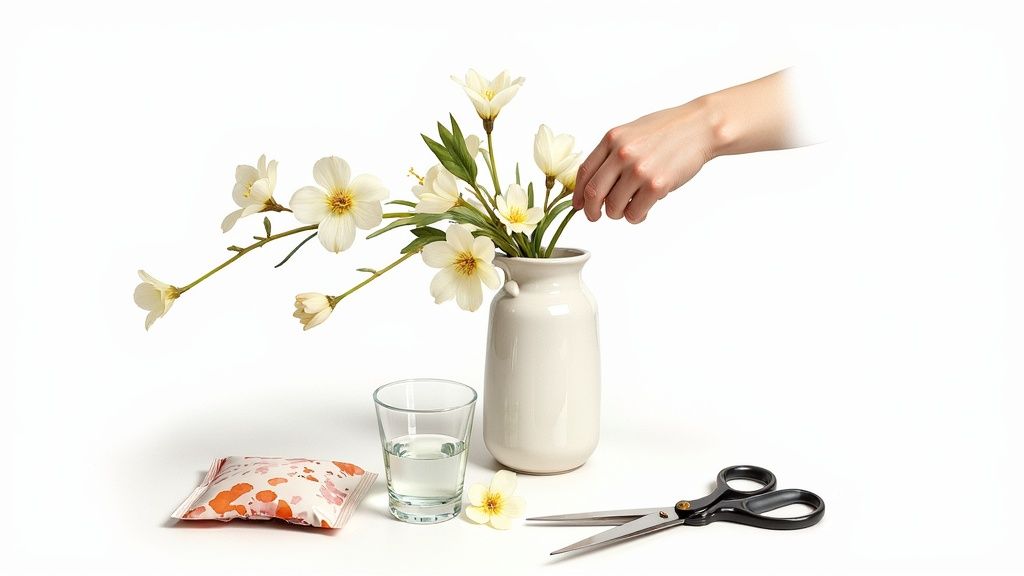
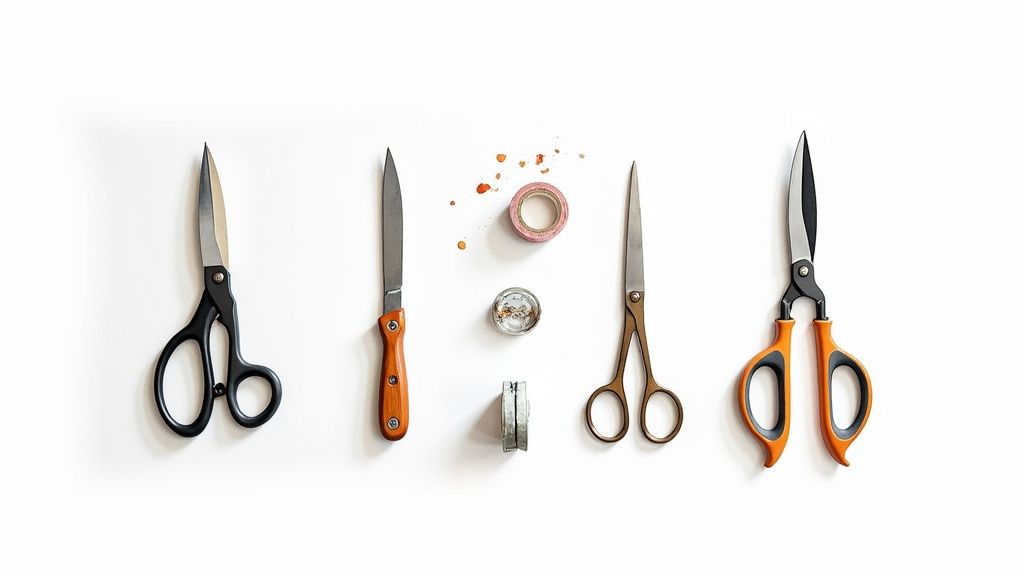
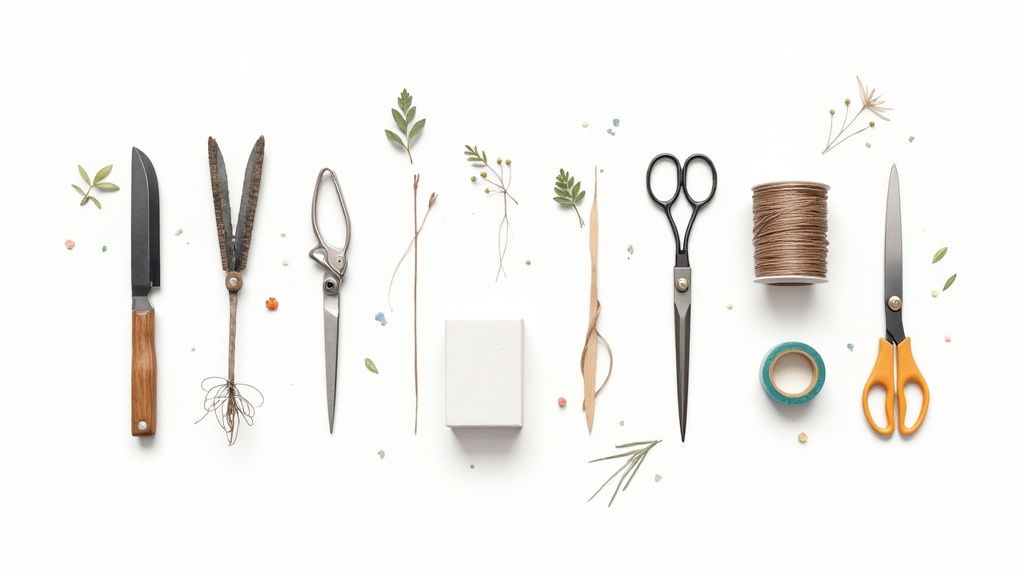
    Tulip prep tools for how to put tulips in a vase at home

    From Our Studio to Your Home

    We use tulips often because they look fresh and stylish in so many settings. They work for home styling, gifts, and large installs. We also design with tulips for weddings and events in Los Angeles, so we have seen what helps them stand tall and what makes them flop fast.

    Tulips keep growing after you cut them. They also bend toward light, which is part of their charm. With the right routine, that movement looks intentional instead of messy.

    If you want more beginner-friendly structure for building arrangements, our guide with simple flower arranging steps is a helpful next read.

    Why This Prep Work Matters

    Think of tulip prep like setting a table before guests arrive. You can skip it, but it shows. Conditioning is what helps tulips drink, stay clean, and hold their shape.

    • Hydration: Tulips drink a lot of water. If they start behind, they droop.
    • Cleaner water: Less bacteria means better water flow in the stem.
    • Better shape: Well-hydrated tulips “dance” instead of collapsing over the rim.

    Try to think like a florist. You are not just placing flowers in water. You are setting them up to perform well for days.

    The Unboxing and Prep Florists Never Skip

    The first few minutes after your tulips arrive matter most. It is tempting to unwrap and drop them straight into a vase. That usually leads to drooping stems and cloudy water.

    Unwrap them gently, then give them a quick reset. This is the same routine we follow in our studio before any tulips go into a finished design.

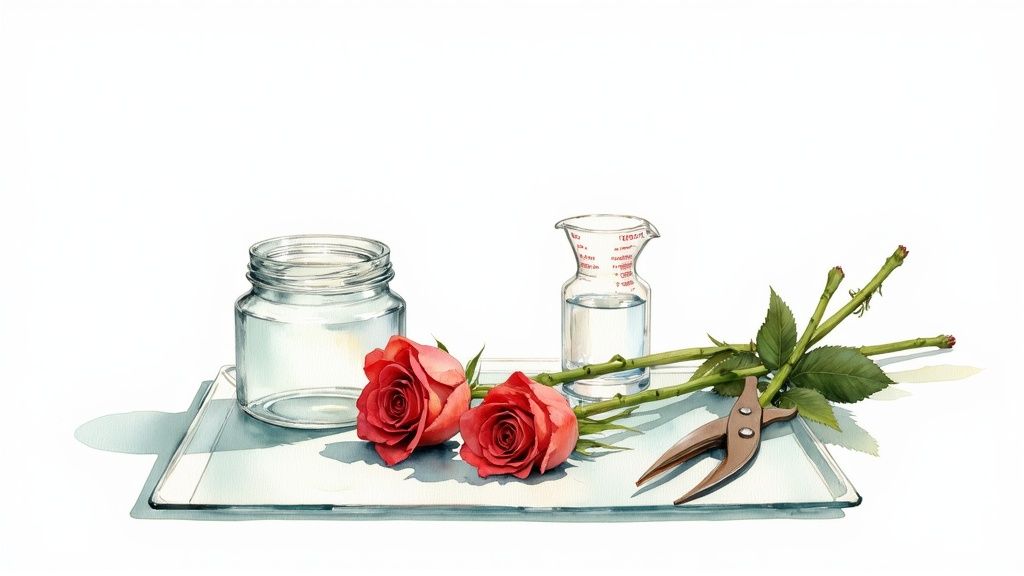
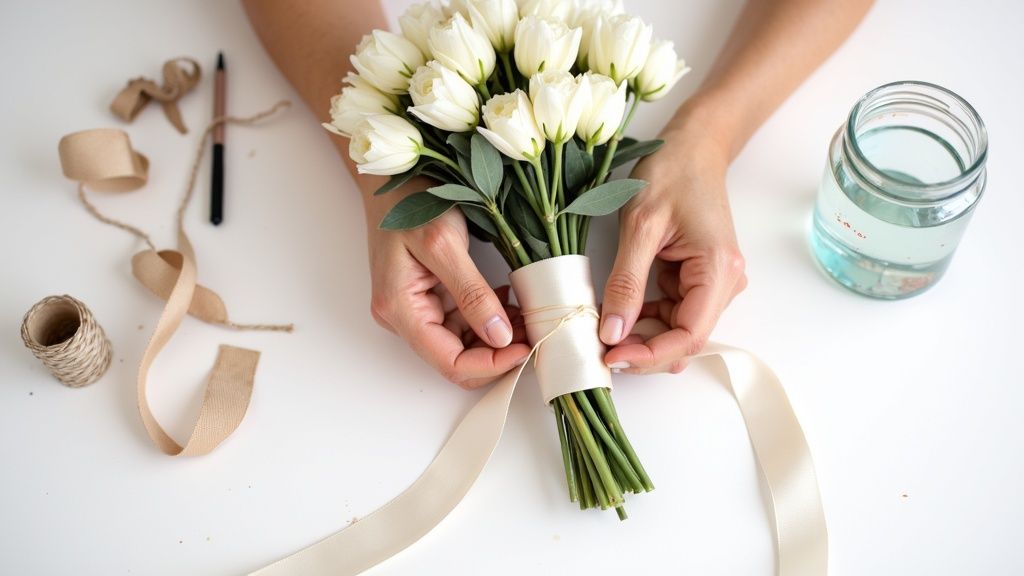
    Three-step tulip care process: unbox, remove lower leaves, and cut stems before arranging.

    It is a simple order, unbox, clean up, then cut. Do those three things first, every time.

    Remove Lower Leaves and Make a Fresh Cut

    Start by removing any leaves that would sit under the waterline. Leave the top leaves alone, they help the flower look full. Only remove what would be submerged.

    • It slows bacteria: Wet leaves break down fast and dirty the water.
    • It keeps stems drinking: Cleaner water helps prevent clogged stems.

    The fastest fix for drooping tulips is almost always a fresh cut. Stems seal over quickly when they sit out of water.

    Using sharp floral shears or a clean knife, cut at least one inch off each stem. Cut at a 45-degree angle. This increases the surface area for water intake and helps tulips rehydrate faster.

    If you want a deeper breakdown of technique and tool choice, read our guide on how to cut flower stems for longer vase life.

    Choosing a Vase That Supports Tulips

    A vase is not just decor. It is support. With tulips, support matters because stems are soft and they keep growing in water.

    Tulips also bend toward light (phototropism). That is normal. A good vase guides the stems so the bend looks graceful, not floppy.

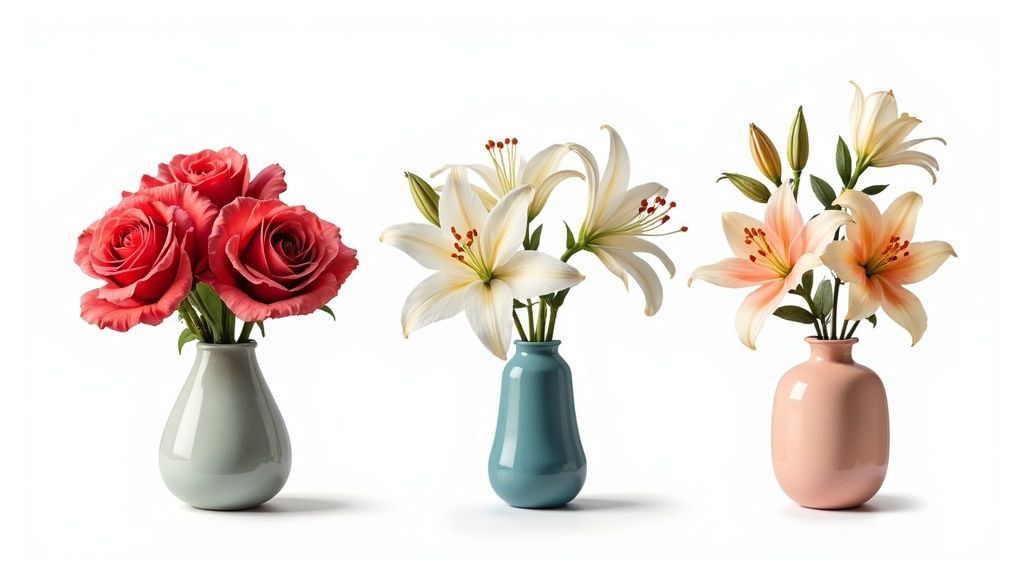
    Vase shape examples to support tulips and prevent drooping

    Pick a tall vase when you can. Aim for a vase that covers about half the stem height. This helps the stems stay upright as they stretch and move through the week.

    Match the Vase Shape to the Look You Want

    Vase shape controls the final silhouette. If you want a tight, modern look, you need a tighter opening. If you want a looser, airy look, give the blooms room to fan out.

    • Cylinder vases: Clean lines and strong support. Great for a simple bunch of one color.
    • Fluted or hourglass vases: A softer shape that lets tulips open wide and look fuller.
    • Pitchers or urns: Casual and charming. Opaque containers also hide stems for a more relaxed look.

    If you love a wide-mouth vase, add structure. Place clear floral tape across the top in a simple grid. It holds stems in place and keeps spacing even.

    If you are collecting vessels and want styling ideas, you can browse designer-approved vases for shape inspiration and design direction.

    Do not overcrowd the vase. Give each tulip space to open and move. For more styling ideas, see our ideas for vases in our journal.

    Water, Flower Food, and the Daily Routine

    Once you learn how to put tulips in a vase, the next step is keeping them looking good. Tulips do best with consistent care. Small daily habits beat one big “fix” later.

    Start with cold water. It helps tulips stay firm and slows how fast they open. Keep the water level modest, about three to four inches. Deep water can soften tulip stems and lead to rot.

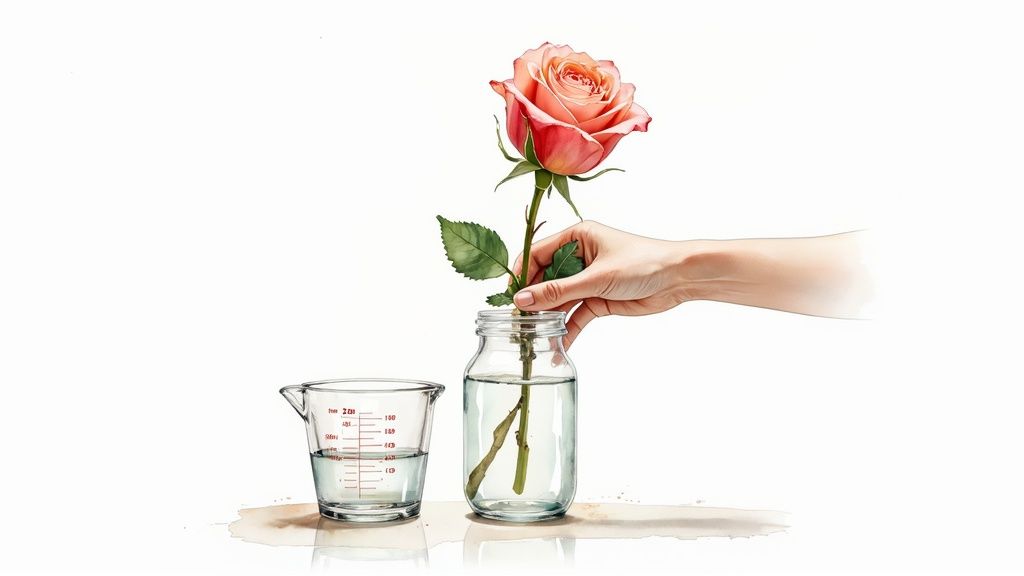
    Daily tulip vase care with cold water and flower food packet

    Do You Really Need Flower Food?

    Yes. If your bouquet came with a packet, use it. Flower food helps tulips last longer and keeps the vase water cleaner.

    • Sugar: Feeds the bloom.
    • Biocide: Helps limit bacteria and fungus in the water.
    • Acidifier: Helps stems take up water more easily.

    No packet? Do not stress. The best “replacement” is a daily water change and a clean vase.

    For a full tulip care checklist, read our guide on how to take care of tulips.

    Our simple daily routine: dump the water, rinse the vase, refill with cold water, then snip a quarter inch off the stems.

    Placement matters too. Keep tulips away from direct sun, heaters, vents, and appliances that give off warmth. Also keep them away from ripening fruit. Apples and bananas release ethylene gas, which speeds up aging.

    If you want a general guide you can use for any bouquet (not just tulips), save our flower care tips page for quick reference.

    Styling Tulips for Events and Gifting

    Tulips can feel minimal and modern, or lush and romantic. The difference is usually color, vessel choice, and how many stems you use.

    For a sleek look, go monochrome. One color of tulips in a clear vase feels intentional and clean. For a more layered look, mix varieties like fringed or parrot tulips with other seasonal blooms for texture.

    Tulips styled in a clear vase alongside a painted bouquet illustration.

    Quick Styling Ideas by Occasion

    When you match the tulip style to the moment, the arrangement feels “right” without trying too hard.

    • Large events: Use lots of stems and a tight color palette for impact and clarity.
    • Offices: Keep it simple with clean vases and one strong color story.
    • Personal gifts: Add a little softness by mixing tulips with one accent flower, or by choosing a gentle palette.

    If you are gifting and want something ready to drop into a vase, our seasonal hand-tied bouquet is designed to look full and natural with minimal fuss at home.

    Common Tulip Questions We Hear All the Time

    Tulips have personality. If you are learning how to put tulips in a vase, these are the issues most people run into first.

    Why Are My Tulips Drooping?

    Most drooping comes from thirst, a sealed stem end, or bending toward light. Start with the simple fix.

    Re-cut the stems at an angle and place them in cold water. If they firm up, it was hydration. If they still curve but feel firm, they are likely just leaning toward the light. Rotate the vase each day to help them stay balanced.

    A tall, supportive vase helps guide tulips upward so their natural bend looks graceful.

    Should I Put a Penny in the Water?

    This is a common myth. A penny will not keep water clean in a reliable way. The best habits are still the basics: clean vase, cold water, flower food (if you have it), and frequent water changes.

    How Do I Keep Tulips Fresh for a Wedding or Event?

    Plan for tulips to arrive one to two days before you need them. That gives you time to condition and watch how they open.
    • Store them in a cool, dim room until arranging time.
    • Change the water daily and keep the vase clean.
    • Keep them away from sun, heat, and ripening fruit.

    If you are also planning other florals for a weekend, our article on how long cut flowers last can help you time deliveries and prep.


    Final Thoughts

    Tulips do not need complicated tricks. They need clean water, a fresh cut, and a vase that supports their stems as they grow. Follow the steps above and your tulips should look lively for days, not hours.

    If you would rather have tulips (or seasonal florals with the same clean finish) designed and delivered for you, explore Fiore Designs for current arrangements, gifting, and delivery options.

  • Pink and White Wedding Bouquets

    Pink and White Wedding Bouquets

    Pink and white wedding bouquets never feel like a “safe” choice. They feel like romance you can hold in your hands. This classic pairing reads soft, elegant, and photo-ready, and it works with almost any dress and venue style.

    Pink brings warmth and tenderness. White adds a clean, fresh finish that feels like a new chapter. Together, they create a bouquet that looks timeless today and still looks beautiful years from now.

    If you already know you want pink and white wedding bouquets, the next step is picking your style, your flowers, and the right mix of shades. And after the wedding, you may even want to turn those blooms into a keepsake. Our guide on how to preserve your bouquet walks you through the most popular options.

    The timeless romance of pink and white

    Wedding flowers show up in every key moment. You carry your bouquet down the aisle, hold it for portraits, and see it in close-up photos all day. That’s why pink and white wedding bouquets stay so popular. They look classic without feeling old.

    This palette also gives you a lot of freedom. You can go airy and garden-inspired, clean and modern, or full and formal. The colors support your look instead of competing with it.

    At its heart, a pink and white bouquet tells a story of affection, tenderness, and the clean slate of a new life together.

    For couples planning a wedding in Los Angeles, we see this palette work beautifully in outdoor gardens, churches, modern venues, and black-tie ballrooms. It is easy to dress up, and easy to keep soft.

    • Grace and affection: often tied to soft pink tones.
    • Purity and new beginnings: represented by bright whites.
    • Timeless style: a look that won’t feel dated in photos.

    Choosing the right bouquet shape and style

    Your bouquet is the one accessory you hold most of the day. The shape should fit your dress, your height, and the mood of the wedding. It also needs to feel comfortable to carry.

    Loose and flowing designs feel romantic and relaxed. Tighter designs feel classic and polished. Below are three styles that work especially well for pink and white wedding bouquets.

    The most popular bouquet styles

    • Hand-tied: A hand-tied bouquet looks like it was gathered from a garden, then wrapped neatly. It’s great for romantic, rustic, and outdoor weddings. If you love this look for engagement photos, gifting, or rehearsal dinner flowers too, our Hand-tied Bouquets page shows the style in our signature seasonal approach.

    • Cascade: Cascade bouquets create a waterfall shape that drapes downward. They make a big statement and pair well with formal gowns and long veils. This style also looks dramatic in full-length photos.

    • Posy: A posy is small, round, and compact. It’s ideal for minimalist dresses, courthouse ceremonies, or any bride who wants a clean, simple bouquet that still feels special.

    When you’re unsure, start with your dress silhouette. Big skirt and heavy beading often look best with a more compact bouquet. Sleek, simple gowns can handle more volume and movement.

    Flat lay of flowers for pink and white wedding bouquets including peonies and roses

    The best flowers for pink and white wedding bouquets

    The flowers you choose set the texture and personality of your bouquet. Some blooms feel soft and cloud-like. Others look crisp and structured. A good mix of shapes keeps pink and white wedding bouquets from looking flat.

    It also helps to know what’s in season. You can still ask for favorites that are out of season, but it may affect price and quality. A florist can suggest look-alikes that keep the same mood.

    Pink and white wedding bouquet palette with blush, ivory, and greenery swatches

    Romantic peonies

    Peonies are famous for their full, ruffled petals. They add instant romance and a “luxury garden” feel. They are a top pick for late spring and early summer weddings.

    Blush varieties like ‘Sarah Bernhardt’ feel soft and classic. Bright white peonies like ‘Festiva Maxima’ look clean and bold in photos. Even a few peonies can add major volume.

    Because peony season is short, many couples love them even more. They feel rare and special, which fits the day.

    Elegant garden roses

    Garden roses offer a similar fullness to peonies, but they’re available more often throughout the year. They have high petal counts, rich scent, and a soft, layered center.

    They come in many pink and white tones, from pale blush to creamy ivory. This makes them perfect for building a bouquet with depth, not just two flat colors.

    Detailed ranunculus

    Ranunculus blooms look like delicate spirals. They add detail and a light, airy feel, especially in hand-tied bouquets. Their thin petals also photograph beautifully up close.

    Ranunculus are strongest in cooler seasons, often late winter through spring. If you’re planning a spring date, our guide to the best flowers for a spring wedding can help you build a seasonal “wish list” before you meet your florist.

    Soft lisianthus

    Lisianthus has a gentle, ruffled look, almost like a rose but lighter. It grows in clusters, which helps fill space without making the bouquet feel heavy.

    It’s also known for strong vase life. That makes it a smart choice for long wedding days, warm venues, and bouquets that need to look good from morning photos through the reception.

    Designing your pink and white color palette

    “Pink and white” sounds simple, but the best bouquets use many shades inside that idea. That’s what creates depth. It also helps your flowers look natural in photos instead of looking like two blocks of color.

    Think about the feeling you want. Warm and vintage? Clean and modern? Soft and dreamy? Your mix of pinks, whites, and greenery can steer the mood in a clear way.

    Shades that work well together

    Here are a few approaches that consistently look beautiful:

    • Soft and romantic: blush and dusty rose with ivory or cream.
    • Crisp and modern: bright pink with pure white for strong contrast.
    • Pink gradient: several pink shades with small pops of white to highlight the blend.

    If you want a bouquet that feels soft on camera, ask your florist for gentle transitions between tones. That usually means mixing a few pink varieties instead of using just one.

    Why greenery matters

    Greenery brings shape and contrast, and it helps pink and white wedding bouquets look fresh. It also frames your blooms so the light colors pop.

    Think of greenery like a picture frame. The right frame makes the colors stand out and the whole piece feel finished.

    Silvery eucalyptus can feel airy and modern. Deep green foliage like ruscus can make white flowers look brighter and cleaner. Your florist can suggest what fits your venue and dress style.

    Getting the proportions right

    Scale is part of the design. The bouquet should match your build and your dress, not fight it.

    If you’re petite or wearing a very detailed gown, a smaller posy or compact hand-tied bouquet often looks balanced. If you’re taller or wearing a clean, simple dress, a larger hand-tied or cascade bouquet can add the right amount of drama.

    How to budget for your wedding bouquet

    Floral pricing can feel confusing at first, especially when you start comparing photos online. The biggest price drivers are flower type, season, size, and labor. A bouquet with premium blooms and lots of detail will cost more than a simple design with in-season flowers.

    In general, for a premium, design-forward florist, a pink and white bridal bouquet often falls in the $250 to $450 range. That usually includes sourcing, conditioning, design time, and professional finishing.

    If you want more context for a full floral plan, our wedding flower cost breakdown explains what couples can expect across personal flowers, ceremony pieces, and reception designs.

    What’s trending (and why it affects budgets)

    Trends can shape demand, especially for “hero” blooms like peonies and garden roses. For couples who like seeing industry numbers, this report on wedding floral trend data shows what styles and flower types are getting the most attention right now.

    That said, the best budget plan is simple: prioritize what will be in your close-up photos. Your bouquet, your partner’s boutonniere, and your ceremony focal point tend to matter most.

    Tips to get the look you want

    • Choose in-season blooms: You’ll usually get better quality for the price.
    • Be open to swaps: A florist can match color and texture even if a flower is unavailable.
    • Plan double-duty moments: Your bouquet can move to the sweetheart table or cake table later.

    If you’re trying to stretch your floral budget across the whole event, our guide on save money on wedding flowers shares style-first ways to reduce costs without making things feel sparse.

    It also helps to plan for non-floral costs. A wedding vendor tipping guide can help you see the bigger picture of day-of spending. Here’s a wedding vendor tipping guide many couples find useful.

    Working with your florist to create the bouquet you want

    Your florist is the person who turns your inspiration into real flowers, with real stems, on a real schedule. The best results come from clear communication and a little flexibility.

    Bring photos you love, but also bring a few details about your wedding. Share your dress, your bridesmaid colors, and your venue style. Tell your florist what you want the bouquet to feel like in your hands, not just how it should look on a screen.

    If you want your bouquet and personal flowers to feel matched in photos, ask about coordinated pieces for your wedding party. Our bridal party flowers page shows how we keep everything consistent, from bridesmaids to boutonnieres.

    Questions worth asking in your consultation

    • How would you describe your design style?
    • Can you show examples of pink and white wedding bouquets you’ve made?
    • What flowers will be in season on my date?
    • How will my bouquet be delivered and kept fresh?

    The goal is a bouquet that feels like you. It should match your wedding style and still feel personal.

    If you’re building a full floral plan, from personal flowers to ceremony and tables, our wedding floral design services page outlines what full-service support can look like.

    And if you already know you want the reception to feel cohesive, it helps to plan that early. The bouquet can be designed with repurposing in mind, and our reception flower design page shares common ways couples carry the palette through dinner and dancing.

    Wedding bouquet questions we hear all the time

    Planning comes with lots of small decisions. Here are a few common questions about pink and white wedding bouquets, plus simple answers you can use right away.

    How far in advance should I book my wedding florist?

    A good rule is 9 to 12 months before the wedding, especially for popular dates. Booking early gives you time to talk through flower choices, shape, and color details without rushing.

    Can I get my favorite flowers if they’re out of season?

    Sometimes. It may cost more, and the quality may vary. Many couples get the same look by choosing in-season flowers with a similar shape and texture.

    Tip: Ask for your bouquet to be delivered in water, then kept cool and out of direct sun until photos. Heat and cars are the fastest way to wilt flowers.

    While you’re checking off planning details, you may also be thinking about gifts. This guide on wedding gifts in Australia offers etiquette ideas that can still be useful, even if your guest list is local.


    Ready to plan pink and white wedding bouquets that feel romantic, timeless, and fully “you”? Explore Fiore Designs’ wedding work and inquire about availability through our wedding floral design services.

  • Sunflower Arrangement Ideas for 2026

    Sunflower Arrangement Ideas for 2026

    Sunflowers are bright, bold, and instantly happy. But in 2026, the best sunflower arrangement ideas are not the basic grocery-store bouquet. They are clean, styled, and built to fit the room, the photos, and the moment.

    Below are eight design-forward ways to use sunflowers for weddings, corporate events, and gifting in Los Angeles. You will also find pairing ideas, vase notes, and florist tips we use in the studio. If you are planning around freshness and availability, start with our guide to flowers in season right now so your recipe stays realistic.

    Each concept can be scaled up or down. Some are simple enough for a dinner party. Others need a pro team for safety, timing, and mechanics.

    Classic sunflower centerpiece with mixed greenery in clear vase

    1. Classic Sunflower Centerpiece with Mixed Greenery

    The classic sunflower centerpiece still works for a reason. It puts the flower’s golden face front and center, then frames it with greens for depth. Use 5–7 sunflower stems as your main shape, then build a soft base with mixed foliage.

    This look fits almost anywhere. It works on guest tables at weddings, on a welcome table, or as a weekly refresh for a home. It also reads well in office settings because it feels tidy, not fussy.

    Pairing and styling suggestions

    Pick greens with different textures so the arrangement looks layered, not flat.

    • For a soft, draped effect: Silver dollar or seeded eucalyptus adds movement and a cooler green that balances the warm petals.
    • For a sleek, modern look: Italian ruscus gives you clean lines and height without taking over.
    • For a full, classic feel: Leather leaf fern builds a dense base and makes sunflower color pop.

    Pro tip: Choose the vase first. A low bowl creates a full, spread-out centerpiece that stays conversation-friendly. A clear cylinder vase feels taller and more modern. If you are planning reception tables, compare heights and styles with these wedding reception centerpiece ideas.

    2. Monochromatic Sunflower Wall Installation

    A sunflower wall is pure impact. It is built as a dense backdrop using dozens of sunflower stems in a frame with floral foam. When done well, it looks like a living wall of gold.

    This is one of the highest-impact sunflower arrangement ideas for photo moments. It works behind a ceremony, a step-and-repeat, or a branded entrance. If you are planning a large build, our event floral design team can help map the scale, timing, and venue rules.

    Monochromatic sunflower wall backdrop installation for event photos

    Pairing and styling suggestions

    The focus is depth, texture, and strong mechanics.

    • Create depth: Mix large classic sunflowers with smaller multi-bloom stems. Set larger faces slightly back, and bring smaller blooms forward.
    • Add subtle contrast: Add small amounts of smilax or Italian ruscus to soften edges. Keep it minimal so it stays “all sunflower.”
    • Use lighting: Aim uplights across the surface to bring out texture and shadows in the faces.

    Pro tip: Plan for hydration and heat. For events longer than eight hours, consider a light misting plan and extra replacement stems. Always confirm weight limits and wall conditions with the venue before you build.

    3. Sunflower and Wildflower Garden Mix

    This style feels like a late-summer field, but with intention. Sunflowers act as the anchor, while wildflowers bring movement and surprise. Think zinnias, dahlias, cosmos, celosia, and seasonal accents that change week to week.

    It is a favorite for romantic weddings, engagement parties, and bridal showers. It is also a strong choice for recurring deliveries, because it highlights what’s best in season. If you want a consistent rotation without re-ordering each time, our flower subscriptions are built for that kind of ongoing styling.

    Pairing and styling suggestions

    Mix forms and heights, but keep your color story tight so it feels designed.

    • For texture: Celosia adds a velvety shape, while cosmos adds airy, light movement.
    • For richer color: Zinnias and dahlias bring deeper tones. Warm yellow next to soft pinks or purples adds depth fast.
    • For structure: Build a loose greenery “grid” first, then place focal sunflowers, then fill with smaller blooms at varied heights.

    Pro tip: Hydrate everything before arranging. Fresh-cut stems, then let them drink in treated water for at least 2–4 hours. Mixed recipes last longer when every stem starts fully hydrated.

    4. Modern Minimalist Sunflower Statement Piece

    Minimalist sunflower designs are all about line and negative space. Instead of packing in stems, you use 3–5 premium sunflowers and let each one show its shape. The vase matters as much as the flowers.

    This look fits modern interiors and executive gifting. It also works in galleries and retail spaces where a single arrangement needs to read like a sculpture.

    Minimalist sunflower statement piece in sculptural ceramic vase

    Pairing and styling suggestions

    Keep companion elements simple, with one supporting texture at most.

    • For a sculptural feel: Add a few pieces of dried pampas grass for soft height and motion.
    • For cool-toned contrast: Use one or two silver dollar eucalyptus stems to create an off-center line.
    • For an architectural note: Curly willow adds graphic shape and makes the sunflowers feel more modern.

    Pro tip: In a minimalist design, the vase is half the arrangement. Choose ceramic, stone, or smoked glass with a strong silhouette. If you want the basics behind these choices, read our guide on what floral design is and how form and balance work.

    5. Sunflower Bridal Bouquet with Complementary Textures

    A sunflower bridal bouquet is joyful and confident. It can be the whole story, or it can be one bold accent among softer blooms. The best recipes add contrast with berries, textured greens, and a clean ribbon wrap.

    This style works for rustic settings, outdoor ceremonies, and couples who want color in photos. If you want your bouquet, personal flowers, and ceremony pieces to match, start with Fiore’s wedding floral design services so the whole weekend looks consistent.

    Pairing and styling suggestions

    Choose a direction first, then select textures that support it.

    • For rustic charm: Add craspedia, thistle, and solidago. Finish with twine or a simple linen ribbon.
    • For romantic softness: Pair smaller sunflowers with white roses or ranunculus, then add seeded eucalyptus for movement.
    • For a boho look: Add pampas grass, dried lunaria, and scattered wildflowers. Keep the shape slightly loose and asymmetrical.

    Pro tip: Test weight and balance before the wedding day. Sunflowers can be heavy. If the ceremony is outdoors in warm weather, a waterproof bouquet holder can help keep stems hydrated longer.

    6. Seasonal Sunflower Table Runner Installation

    A sunflower table runner turns a long table into one continuous floral moment. It is built in sections, then connected on-site so it looks like a single garden path down the table. Sunflowers are grouped in clusters so the runner has rhythm, not a repeating pattern.

    This is best for banquet tables at weddings, gala dinners, and milestone celebrations where the table is the main visual. Keep the height low enough for conversation, then add candles for glow.

    Pairing and styling suggestions

    Think in waves. Alternate focal clusters with smaller blooms and trailing greens.

    • Create flow: Change sunflower angles and heights, then tuck in smaller accents like craspedia or spray roses.
    • Add evening light: Place votives or taper candles throughout so the petals catch warm light after sunset.
    • Soften the edges: Let Italian ruscus or jasmine vine trail over the table sides for a relaxed finish.

    Pro tip: Build runners in modular sections for transport, speed, and freshness. Bring extra stems and a repair kit for quick fixes once place settings go down.

    7. Sunflower Gift Box Arrangement with Premium Packaging

    A gift box arrangement feels special before the flowers are even seen. Sunflowers sit in a structured box with floral foam, then details like tissue, a card, and careful spacing make it feel high-end. It is also easy for the recipient, because it arrives already styled.

    This format is popular for client and team gifts because the presentation is polished and travel-ready. For ongoing programs, ask about Fiore’s corporate gifting services so deliveries, message cards, and timing stay consistent.

    Sunflower gift box arrangement with premium packaging and tissue

    Pairing and styling suggestions

    Good mechanics make the box look clean and last longer.

    • Use asymmetry: Place larger sunflower faces slightly off-center, then build a visual line with smaller accents.
    • Secure the base: Soak foam fully so it is evenly hydrated, then tape it in place so it does not shift.
    • Finish like a gift: Add a care card and keep the top view tidy, with no broken petals or bruised greens.

    Pro tip: The unboxing matters. Pack with coordinating tissue to stop movement during delivery. If you want a ready-to-send bouquet option in the same spirit, our Hand-tied Bouquets are designed to look polished the moment they arrive.

    8. Sunflower Hanging Installation with Aerial Elements

    Hanging sunflowers change how a room feels. Instead of keeping flowers on the tables, you bring them overhead, and guests walk under the design. Blooms hang at different heights from a ceiling, beams, or a pergola to create a floating canopy.

    This is advanced work and should be handled by professionals with the right rigging plan and venue approvals. If you are considering overhead pieces for a wedding, start with our wedding floral installations page to see what’s possible.

    Pairing and styling suggestions

    Overhead work needs movement, balance, and safe mechanics.

    • For soft volume: Add amaranthus or wisteria for trailing lines and gentle motion.
    • For modern structure: Use geometric frames or linear flowers to add clean edges around sunflower faces.
    • For sparkle at night: Add small suspended glass orbs or discreet lights, placed so they do not distract in photos.

    Pro tip: Get written structural approval from the venue. Confirm load points, install timing, and a safe strike plan. If the build is outdoors, plan for wind with shorter hangs, stronger tie-offs, and a weather backup.

    8 Sunflower Arrangement Ideas Comparison

    Style Implementation complexity Resource requirements Expected outcomes Ideal use cases Key advantages
    Classic Sunflower Centerpiece with Mixed Greenery Low–Medium; simple arrangement of 5–7 stems Moderate: sunflowers, mixed greenery, vase, floral food Cheerful, versatile centerpiece; 10–14 day vase life Weddings, corporate desks, subscriptions, everyday events Recognizable, cost-effective, long-lasting
    Monochromatic Sunflower Wall Installation High; professional installation (4–6 hrs) High: dozens of stems, metal frame, floral foam, crew Dramatic, photographic backdrop; strong visual impact Luxury weddings, galas, branded event backdrops Photo-ready focal point; premium look
    Sunflower and Wildflower Garden Mix Medium–High; requires advanced design skills Moderate–High: multiple specialty blooms, varied sourcing Romantic garden feel; seasonal variation Wedding bouquets, intimate events, premium subscriptions Rich texture and color; never feels generic
    Modern Minimalist Sunflower Statement Piece Medium; precise, restraint-focused styling Low–Moderate: 3–5 premium stems, sculptural vase Sophisticated statement with negative space Corporate gifting, modern homes, galleries High impact with few stems; compact
    Sunflower Bridal Bouquet with Complementary Textures High; professional hand-tied construction required Moderate: 5–7 stems, complementary blooms, ribbon, holder Photogenic, wearable bridal focal piece Bridal bouquets, wedding ceremonies, styled shoots Bold photos; strong personal style
    Seasonal Sunflower Table Runner Installation High; modular build and 2–3 hrs per table install High: continuous foam sections, many stems, crew Dramatic linear table transformation; guest-friendly height Reception long tables, galas, fine dining events Big impact without blocking conversation
    Sunflower Gift Box Arrangement with Premium Packaging Low–Medium; assembly and careful packing Moderate: designer box, foam, tissue, care card, extras Gift-ready presentation; easy to place Corporate gifting, subscriptions, special occasions High perceived value; delivery-friendly
    Sunflower Hanging Installation with Aerial Elements Very High; rigging, safety checks, 6–8+ hrs Very High: rigging hardware, approvals, crew, hydration Immersive overhead transformation Grand ceremonies, luxury events, outdoor venues Rare vertical impact; strong media appeal

    Bring Your Sunflower Vision to Life with Fiore Designs

    Sunflowers can look classic, wild, modern, or dramatic. The difference is the recipe, the vessel, and how the design fits the space. Pick one of the sunflower arrangement ideas above, then adjust the scale to match your guest count and photo plan.

    If you are building for an event, think in zones. What do guests see first, what do they photograph, and what sits on the tables for hours. For gifting, think about what the recipient can set down and enjoy right away.

    Quick takeaways to remember

    • Match the setting: Low centerpieces are best for long conversations, while walls and hanging pieces are best for entrances and photo moments.
    • Mix textures, not clutter: A few strong supporting stems, like eucalyptus or ruscus, often look more premium than lots of filler.
    • Plan for time: Heat, transport, and setup windows change how long sunflowers will look their best.

    Ready to plan something bigger than a vase arrangement? Explore Fiore’s corporate event florals to start a design plan that fits your space, schedule, and guest experience.

  • Good Indoor Flowers for LA Homes

    Good Indoor Flowers for LA Homes

    The best good indoor flowers are the ones that fit your home and your routine. That might mean a peace lily that bounces back after a missed watering, or an orchid that keeps blooming long after a birthday or dinner party. When you match the plant to your light and habits, it stops being “one more thing to maintain” and starts feeling like an easy daily win.

    If you want an even faster shortlist, our team also put together a guide on the best indoor flowers for LA homes. This article goes deeper on choosing, caring for, and styling flowering plants that look good and last.

    Bring Nature Indoors with the Right Flowers

    In a busy city, home is where you reset. A few indoor flowering plants can shift the mood fast, even in small rooms. They add color, softness, and that “someone lives here” warmth that makes a space feel finished.

    This idea is often called biophilic design, which simply means bringing nature into the places where we spend our time. It is not about being trendy. It is about feeling better in your own space.

    Why Blooms Matter at Home

    Indoor flowers do more than look pretty. For many people, they are part decor and part self-care. They can also make a space feel welcoming when you are hosting.

    • Mood support: Colorful blooms can make a room feel calmer and more cheerful, especially in work-from-home spaces.
    • Cleaner-feeling air: Many popular houseplants are often chosen because they can help freshen a room and add humidity.
    • Personal style: Flowers show your taste. A simple orchid on a side table feels very different than a bright, playful begonia collection.
    Good indoor flowers benefits graphic for mood, air, and home style

    Choosing the right flowers is a lot like choosing art for your walls. They should fit your space, feel like you, and bring the room to life.

    If you are picking flowers for hosting or special moments, Fiore Designs can also help with event floral design that fits your space and your style.

    Match Indoor Flowers to Your Light

    If your indoor flowers keep fading, the issue is usually light, not effort. Most flowering houseplants have a “sweet spot,” and once you find it, care gets much easier. Start by noticing what kind of light you already have, then choose plants that like it.

    Try the quick “shadow test.” Hold your hand up near the plant’s spot during the brightest part of the day. A soft-edged shadow usually means bright, indirect light. A faint shadow often means low light.

    Shadow test showing bright indirect light for good indoor flowers

    Indoor Flower Picks by Light Level

    Light Level Best Flower Choices Care Difficulty Why People Love Them
    Bright Indirect Phalaenopsis Orchid, Freesia, African Violet Medium-Easy Long-lasting blooms and clean, polished look
    Medium Light Begonia, Cyclamen, Lipstick Plant Moderate Colorful flowers with interesting foliage
    Low Light Peace Lily, Anthurium, Bromeliad Easy Reliable indoors, great for desks and corners

    Flowers That Like Bright, Indirect Light

    Bright, indirect light is the goal for many “best indoor flowers” lists. Think near an east-facing window, or a few feet back from a bright south-facing window. You want a lot of light, but not hot sun on the leaves.

    • Phalaenopsis Orchid: Elegant, long-lasting, and surprisingly easy once you stop overwatering. The blooms can last for weeks to months.
    • Freesia: Loved for scent and color. Indoors, it does best when it gets strong light without harsh direct sun.
    • African Violet: Small but steady. It is a great choice for shelves and windowsills because it stays compact and blooms often.

    Champions of Low Light

    No big windows? You still have options. Low light can mean hallways, north-facing rooms, or corners that feel a bit dim. These indoor flowers can handle it better than most.

    • Peace Lily: A classic because it is easy to read. When it needs water, it droops a little, then perks up again after a drink.
    • Anthurium: Glossy leaves and bold, heart-shaped spathes that add a modern pop of color.
    • Bromeliad: A tropical statement plant with long-lasting color. Many types do well in lower light than you would expect.

    Best Options for Medium Light

    Medium light is common in apartments and open living rooms. It is bright enough to grow flowers, but not so intense that plants scorch. These flowering houseplants tend to do well in that middle zone.

    • Begonia: Great for texture and color. Many varieties have leaves that look like they were painted.
    • Cyclamen: A cool-season favorite with upright blooms in pinks, reds, and whites.
    • Lipstick Plant: A trailing plant with red tube-like flowers. It is fun in a hanging basket or on a high shelf.

    If you like changing your look through the year, seasonal flowers can help. This article on choosing winter flowers shares useful ideas for cooler months.

    Top Indoor Flowers for Busy Lifestyles

    There is no single “best” plant for everyone. The best good indoor flowers are the ones that match your schedule, your space, and how much attention you want to give. Here are ten favorites that work well indoors and look great styled in a home.

    Assorted good indoor flowers in pots lined up on a console table

    Indoor flowers are also popular because they fit modern living. The U.S. floriculture market reached USD 6.70 billion in 2023 and is projected to keep growing. If you like the data behind the trend, the U.S. floriculture market report breaks it down.

    1) Snake Plant (Modern Minimalist)

    Snake plants are known for strong, upright leaves that look sculptural. They can also flower indoors, but it is more of a bonus than a guarantee. They do well when you ignore them a bit, which is why they work for busy weeks.

    2) Anthurium (Touch of Luxury)

    Anthurium brings color without needing a huge pot or tons of sun. The shiny blooms last a long time, and the plant feels polished in a home office or entryway. It is also a strong pick when you need something giftable that looks high-end.

    For client thank-yous and office gifts, Fiore Designs offers corporate gifting with curated flowers that arrive ready to enjoy.

    3) Peace Lily (Effortless Classic)

    Peace lilies have clean white blooms and lush leaves. They are forgiving and good for beginners, as long as you do not keep the soil soggy. If you want a plant that “talks” to you, this is it.

    A well-chosen flowering plant becomes part of your routine. It marks small moments, makes a room feel calm, and adds beauty you notice every day.

    4) Begonia (Vibrant Artist)

    Begonias come in many looks, from soft and romantic to bold and graphic. If you like color and pattern, they are a great match. Give them steady light and careful watering, and they reward you with lots of interest.

    5) Phalaenopsis Orchid (Timeless Romantic)

    Phalaenopsis orchids look fancy, but they are not as hard as people think. The most common mistake is watering too often. Treat it like a slow, steady plant and it will keep you in blooms for a long time.

    6) Hoya (Trailing Beauty)

    Hoyas have thick leaves and grow well as a trailing plant. When they bloom, the flowers can be fragrant and star-shaped. Let the soil dry slightly between waterings and keep them in bright, indirect light.

    7) Bromeliad (Bold and Tropical)

    Bromeliads bring a bright focal point, and the color can last for months. Many grow well without constant attention. Water the “cup” (the center) lightly and keep them out of harsh sun.

    8) African Violet (Small Space Hero)

    If you want blooms in a small apartment, African violets can be a smart choice. They stay compact, fit on a windowsill, and can flower often. Water from the bottom when possible to keep leaves dry.

    9) Cyclamen (Seasonal Color)

    Cyclamen often looks best in cooler months. It likes bright light and cooler indoor temperatures, away from heating vents. When it rests, do not assume it is dead. Many come back when the season is right.

    10) Succulents (Low-Water Styling Option)

    Not every indoor plant needs flowers to feel special. A well-made succulent arrangement can be a clean, modern piece of living decor. If you want something low-water and design-forward, consider Fiore’s Succulent Garden.

    Indoor Flower Care Made Simple

    Indoor flower care gets easier when you stop following a strict schedule. Plants do not care what day it is. They care about light, water, and temperature.

    The biggest issue is usually watering too much. To avoid that, use the finger test. Press your finger about one inch into the soil. If it feels dry, water. If it feels damp, wait.

    Finger test for watering good indoor flowers in a potted plant
    • Step 1: Check soil moisture with your finger, not the calendar.
    • Step 2: Water slowly until excess drains out.
    • Step 3: Empty the saucer so roots do not sit in water.

    Humidity Help for Tropical Bloomers

    Many flowering houseplants prefer a bit more moisture in the air. If your home feels dry, a pebble tray can help. Place pebbles in a shallow tray, add water below the top of the stones, then set the pot on top.

    Grouping plants together can also help. They release moisture as they breathe, which can make a small “plant zone” feel more comfortable for tropical leaves.

    Feeding for More Blooms

    Flowers take energy. If you want repeat blooms, a light fertilizer routine helps, especially in spring and summer. Choose a balanced fertilizer, or one made for flowering plants with a little more phosphorus.

    • Follow the label, more is not better.
    • Rinse the soil with plain water now and then to reduce salt buildup.

    Common Problems and Quick Fixes

    Even experienced plant owners see yellow leaves or brown tips. Treat it like a clue, not a failure. Check water first, then light, then pests.

    Symptom Possible Cause Quick Fix
    Yellow leaves Overwatering or poor drainage Let soil dry, make sure pot drains
    Brown tips Dry air or irregular watering Add humidity, water more consistently
    Leaf spots Fungal issue or wet leaves Improve airflow, avoid splashing leaves

    If you also keep fresh bouquets at home, this guide on how to keep fresh flowers alive longer can help you get more days out of every delivery.

    Early action matters. When you notice a change fast, it is usually easy to fix.

    Style Indoor Flowers Like Decor

    Once your plants are healthy, styling is the fun part. Good indoor flowers can work like living decor. They bring color and shape, and they soften hard lines in modern rooms.

    Designers often start with one strong focal point. A single orchid on a console table can look clean and intentional. A bright anthurium on a desk can make a work space feel more inviting.

    Create a “Mini Indoor Garden” Grouping

    If you like a fuller look, group plants in threes. Mix heights and leaf shapes so your eye moves around. This also helps the plants a bit, since grouped plants can hold humidity better.

    A simple trio that works:

    • A tall snake plant for height and structure
    • A flowering anthurium for color and shine
    • A trailing hoya to drape over the edge
    Grouped good indoor flowers and plants styled together for a mini indoor garden

    Choose Pots That Match Your Room

    A planter is part of the design. A clean white ceramic pot feels modern. Terracotta feels warm and classic. Woven baskets add softness and texture.

    The right pot makes the whole plant look finished. It is the difference between “I bought a plant” and “I styled this space.”

    If you want your home to stay styled without extra errands, Fiore offers home flower delivery with a consistent, curated look.

    Common Questions About Good Indoor Flowers

    Picking indoor flowers is simple once you know what to look for. These are the questions we hear most often, with clear answers that help you choose with confidence.

    What are the easiest indoor flowers for beginners?

    Peace lilies are a top pick because they show you when they need water. African violets are also beginner-friendly if you give them bright, indirect light and avoid soaking the leaves. If you want an even simpler option, snake plants rarely complain.

    How do I help my plant bloom again?

    Start with light. Many indoor flowers stop blooming when light drops. Next, check watering, too much water is a common cause of stress. For some plants, like orchids, a short rest period with slightly cooler nights can also help trigger new blooms.

    Are indoor flowers safe for pets?

    Some are, and some are not. Peace lilies, for example, are toxic to cats and dogs if chewed. Pet-friendly choices often include African violets, many orchids, and hoyas.

    If you share your home with cats, this cat-safe bouquet guide is a helpful starting point for choosing flowers with less worry.

    Can I get indoor flowers delivered in Los Angeles?

    Yes. Starting with a healthy plant makes a big difference, especially with indoor flowering plants that need time to adjust. Fiore Designs delivers premium blooms and plant-forward gifts across Los Angeles, so your flowers arrive in great shape and ready to enjoy.

    Bring Home Indoor Flowers That Last

    Good indoor flowers should make your life easier, not harder. Pick plants that match your light, water only when the soil needs it, and style them like you would any other piece of decor. When you do, your home stays colorful and calm all year.

    Ready for long-lasting flowers without the guesswork? Explore Fiore Designs for curated blooms, plant-forward gifts, and styling support, including home flower delivery that keeps your space looking fresh.

  • 10 Types of Flower for Weddings & Events

    10 Types of Flower for Weddings & Events

    Flowers set the tone before guests even take their seats. The right types of flower can make a wedding feel romantic, make a brand dinner feel polished, or turn a simple room into a moment people remember. In 2026, the most requested designs are still built on a small group of blooms that look rich, photograph beautifully, and hold up through the day.

    This guide shares the 10 types of flower we reach for most often at Fiore Designs when a client wants a premium look. You will learn what each bloom does best, when it is at peak quality, and how to style it so it looks intentional instead of overdone.

    If you are planning an event, start with seasonality. It is the easiest way to get better flowers and fewer substitutions. For a quick overview, bookmark our flowers in season by month guide and use it as a planning tool.

    For each flower below, you will find:

    • Seasonality and sourcing: When quality is highest and what affects supply.
    • Styling and pairings: What looks best in bouquets, centerpieces, and installations.
    • Care and vase life: Simple steps that help flowers last through the event.
    • Scent and symbolism: Helpful when you want meaning, not just color.

    1. Garden Roses

    Garden roses, a luxury type of flower, with ruffled petals in bouquet

    Garden roses are the definition of romance. They open wide, show off ruffled petals, and often smell incredible. They also read “luxury” the second you see them, which is why they are a top choice for weddings and high-touch events.

    Unlike standard roses, garden varieties look more natural and less uniform. They have movement, soft edges, and that “just picked” feel. In designs, we treat them like lead actors, not background texture.

    Styling and sourcing insights

    Garden roses can carry a design all on their own. Give them space and let their shape show.

    • Pairings: Use trailing greens like jasmine vine, eucalyptus, or spirea. Keep other large focal blooms to a minimum.
    • Color palettes: Peach and cream varieties fit modern neutrals. Deeper tones can anchor fall and winter palettes.
    • Sourcing: For large events, order early to secure specific varieties and consistent opening stage.
    • Pricing: Label them clearly as garden roses or heirloom roses so clients understand the premium.

    Pro Tip: Condition garden roses as soon as they arrive. Give them a fresh cut, then let them drink for at least four hours in clean water. Our guide on how to care for fresh-cut flowers walks through the basics step-by-step.

    2. Peonies

    Peonies and ranunculus, popular types of flower for spring weddings

    Peonies are famous for a reason. Their blooms are big, plush, and camera-ready, even when you only use a few stems. That “full” look makes them a favorite for bridal bouquets, statement centerpieces, and seasonal gifts.

    The catch is timing. Peonies have a short main season, and quality can swing fast week to week. When they are perfect, they are hard to beat.

    Styling and sourcing insights

    Think of peonies as a limited-season feature. They are best when you plan ahead and build the design around them.

    • Pairings: Sweet pea, ranunculus, clematis, or soft greens keep the look airy. Avoid stacking too many heavy blooms together.
    • Color palettes: White and blush are timeless. Coral Charm starts bright and fades softer, which is great if you want a layered effect.
    • Sourcing: For peak dates, reserve peonies 4 to 6 weeks in advance.
    • Marketing: Promote “peony season” for a short window each year. It helps clients decide quickly.

    Pro Tip: Peonies often arrive tight. For event timing, hydrate them in lukewarm water 2 to 3 days ahead so they open on schedule. If you want meaning for vows or a card message, read our guide to peony flower meaning.

    3. Orchids (Phalaenopsis and Cymbidium)

    White orchid centerpiece showing a modern type of flower for events

    Orchids bring clean lines and modern drama. Phalaenopsis (moth orchids) feel sleek and minimal, while cymbidium sprays add texture and structure. Both last a long time compared to many soft garden flowers.

    Because orchids hold up well, they work especially well in spaces that need flowers to look good for days, like reception desks, hotel lobbies, and multi-day events. Their look is refined without needing lots of extra stems.

    Styling and sourcing insights

    Orchids already have strong shape. Keep the support ingredients simple.

    • Pairings: Italian ruscus, monstera, and other clean greens keep the style crisp. Avoid overly busy filler.
    • Color palettes: White phalaenopsis reads timeless. Green or burgundy cymbidiums add a bold accent.
    • Sourcing: Phalaenopsis stems suit gifts and smaller pieces. Cymbidiums are sturdier for event work.
    • Pricing: Talk about vase life. Clients understand value when flowers stay beautiful longer.

    Pro Tip: Orchids are sensitive to ethylene gas from ripening fruit. Keep arrangements away from fruit bowls to prevent early drop.

    4. Hydrangeas

    Hydrangeas adding volume, a versatile type of flower for wedding centerpieces

    Hydrangeas give instant fullness. One stem can fill space, soften hard edges, and make an arrangement look generous. Their cloud-like shape works well in both classic and modern designs.

    They come in whites, greens, pinks, purples, and blues. That color range makes hydrangeas easy to fit into many event palettes, from clean neutrals to summer color stories.

    Styling and sourcing insights

    Hydrangeas can be the focal flower or the base that supports the focal flowers. Either way, they need good hydration.

    • Pairings: Garden roses and ranunculus for romance. Orchids or calla lilies for a cleaner, more modern look.
    • Color palettes: White and antique green are the safest for timeless work. Blue and purple feel especially strong in summer.
    • Sourcing: Premium blues and purples tend to be most available in summer. For big installs, reserve early.
    • Pricing: Hydrangeas add volume fast, which helps create a lush look with fewer total stems.

    Pro Tip: Hydrangeas drink constantly. Re-cut stems at a 45-degree angle and refresh the water daily. For more general care habits, share how to make flowers last longer with clients or recipients.

    5. Ranunculus

    Ranunculus look delicate, but they make a big impact. Their layered petals feel romantic and detailed, like a tiny peony. They also come in a wide range of colors, from soft pastels to saturated jewel tones.

    They are popular in spring weddings and feminine designs, but they also work in clean, modern palettes when used in tight groupings. When they open well, they photograph beautifully.

    Styling and sourcing insights

    Ranunculus are a smart way to get a rich look without relying only on high-priced focal blooms.

    • Pairings: Anemones, sweet peas, tulips, and garden roses. Add airy texture like astilbe for softness.
    • Color palettes: Peach, butter yellow, blush, and white are spring staples. Cluster them for stronger impact.
    • Sourcing: California-grown stems are often fresher. For special colors, order 2 to 3 weeks ahead.
    • Marketing: Feature them heavily in spring collections and seasonal event proposals.

    Pro Tip: Strip lower foliage and hydrate stems in deep, cool water for at least two hours before designing. Clean water helps prevent petal damage.

    6. Dahlias

    Dahlias, a statement type of flower, in a fall event centerpiece

    Dahlias are late-summer to fall showstoppers. Their shapes range from neat pompoms to huge dinner-plate blooms. They add pattern and bold texture in a way most flowers cannot.

    Dahlias also come in almost every color except true blue. That range makes them easy to match with seasonal palettes, from warm neutrals to rich burgundy and rust.

    Styling and sourcing insights

    Dahlias are strong focal flowers. Let them be the “wow” and keep the support blooms lighter.

    • Pairings: Dusty miller, astilbe, eucalyptus, and other softer textures help highlight dahlia structure.
    • Color palettes: Café au lait and burgundy varieties are fall favorites. Hot pinks and corals bring energy to late-summer designs.
    • Sourcing: Specialty growers often have the best shapes and colors. Availability can change quickly with heat.
    • Marketing: Promote dahlias as a seasonal feature from late summer through early fall.

    Pro Tip: Dahlias have tender stems. After cutting, dip the bottom inch in hot (not boiling) water for about 10 seconds, then place in clean, cool water.

    7. Lisianthus

    Lisianthus can look like a rose from a distance, but it has its own charm. The petals are soft and ruffled, and one stem often carries multiple blooms and buds. It is elegant, but it also lasts well.

    That long vase life makes lisianthus a strong pick for weddings and events where flowers need to stay fresh from setup through the last toast. It is also a favorite for weekly deliveries because clients get more days out of the design.

    Styling and sourcing insights

    Lisianthus plays well with many flowers. It can support a focal bloom or stand on its own in a simpler arrangement.

    • Pairings: Silver dollar eucalyptus, spray roses, ranunculus, and soft grasses.
    • Color palettes: White and blush are classic. Purple and bi-color varieties add depth.
    • Sourcing: Look for strong stems and a good bud count for best value.
    • Positioning: Share it as a premium rose alternative, especially when longevity matters.

    Pro Tip: Remove any leaves below the waterline and hydrate in deep water for several hours. This helps buds open and keeps petals cleaner longer.

    8. Proteas

    Proteas are bold and sculptural. They bring a modern, editorial look and hold up extremely well, even in warm rooms. If you want a piece that feels artistic and unexpected, proteas deliver.

    They are also a smart choice for designs that need durability, like corporate gifting or arrangements that will travel. Their texture reads premium without needing a lot of extra ingredients.

    Styling and sourcing insights

    Proteas are best as the hero flower. Keep the palette and supporting textures intentional.

    • Pairings: Leucadendron, grevillea, and silver dollar eucalyptus. Avoid very delicate blooms that get lost next to protea scale.
    • Color palettes: Soft pinks and whites feel modern and calm. Reds create strong contrast for a more dramatic look.
    • Sourcing: Proteas often come through specialty channels. Confirm supply early for large orders.
    • Pricing: Emphasize uniqueness and vase life when explaining cost.

    Pro Tip: Proteas often last 10 to 14 days or more. That longevity is a strong selling point for recurring displays.

    9. Tulips (Premium Varieties)

    Premium tulips do not look like the grocery store bunch. Parrot, French, and double tulips have ruffles, twists, and larger heads that feel special. Their stems curve naturally, which adds movement to bouquets and centerpieces.

    Tulips are also one of the best ways to get a spring look that feels fresh and current. They work in modern designs, garden styles, and simple monochrome arrangements.

    Styling and sourcing insights

    Tulips change in the vase. That is part of the charm, but it helps to set expectations.

    • Pairings: Garden roses, sweet pea, and ranunculus for a textured spring mix. They also look beautiful arranged in one variety only.
    • Color palettes: Jewel tones feel dramatic. Soft doubles feel romantic and classic.
    • Sourcing: Peak season is usually February through May. Order early for specific cultivars.
    • Marketing: Run a spring tulip feature for a limited window when quality is best.

    Pro Tip: Tulips keep growing after they are cut, and they bend toward light. Re-cut stems often and keep water cool. For a deeper care checklist, see how to care for tulips.

    10. Amaryllis and Hippeastrum (Large-Bloom Varieties)

    Amaryllis, botanically hippeastrum, is a winter statement flower. Tall stems and big trumpet blooms make it feel festive and clean at the same time. It is a go-to for holiday events and winter parties because it reads dramatic with just a few stems.

    Amaryllis also works in modern designs. The lines are simple, and the bloom size brings scale without needing lots of filler.

    Styling and sourcing insights

    When you use amaryllis, build the recipe around it. Let it be the centerpiece of the story.

    • Pairings: Cedar, eucalyptus, branches, and winter greens. For softer looks, add white anemones or ranunculus.
    • Color palettes: Red and white are classic. Bi-color and peach tones help bridge late fall into winter.
    • Sourcing: Secure premium stems early for holiday dates, since availability tightens fast.
    • Pricing: Position as a premium seasonal statement flower for high-impact installs and gifts.

    Pro Tip: Remove stamens once the bloom opens to avoid pollen stains. If the head is heavy, add a thin stake inside the hollow stem for support.

    Top 10 Flower Types Comparison

    Flower Implementation Complexity Resource Requirements Expected Outcomes Ideal Use Cases Key Advantages
    Garden Roses High, delicate handling, advanced arranging High cost, advance premium sourcing, year-round availability Lush focal blooms, 7 to 10 day vase life, strong photo impact Luxury weddings, premium events, upscale subscriptions, corporate gifting Heirloom look and scent, reads instantly luxurious
    Peonies Medium to High, timing buds, heavy blooms Highly seasonal (peak spring), pre-order 4 to 6 weeks Large fragrant blooms, 5 to 7 day vase life, high demand Spring weddings, Mother’s Day, seasonal subscriptions Big bloom size and soft texture, premium feel fast
    Orchids Low to Medium, careful packaging Year-round supply, moderate to high cost Modern long-lasting displays, 2 to 4 week vase life Corporate gifting, subscriptions, modern events Long vase life, clean architectural lines
    Hydrangeas Medium, hydration and conditioning Year-round (best in summer), moderate pricing Full arrangements quickly, 7 to 10 day vase life Weddings, event centerpieces, subscriptions Big volume per stem, cost-effective fullness
    Ranunculus Medium, delicate petals, timing Seasonal (late winter through spring), accessible pricing Romantic detail, 5 to 7 day vase life Spring weddings, gifting, subscription boxes High perceived value, wide color range
    Dahlias Medium to High, special conditioning Seasonal (late summer to fall), specialty growers High-impact texture, 5 to 7 day vase life Late-summer and fall weddings, statement work Huge variety of shapes and colors
    Lisianthus Low to Medium, gentle handling Year-round availability, specialty sourcing at times Elegant and long-lasting, 7 to 10 day vase life Weddings, events, subscriptions, gifting Multiple blooms per stem, refined look
    Proteas Medium, specialty sourcing Often imported, high cost, limited suppliers Sculptural focal pieces, 10 to 14+ day vase life Modern/editorial events, gifting, statement pieces Very durable, distinctive texture
    Premium Tulips Medium, stems grow and bend Spring seasonal, moderate cost Movement and freshness, 5 to 7 day vase life Spring weddings, gifting, seasonal subscriptions High impact at moderate price
    Amaryllis / Hippeastrum Low to Medium, remove pollen Winter seasonal, plan ahead for holidays Bold winter statements, 7 to 10 day vase life Holiday events, winter parties, gifting Big blooms, clean lines, easy statement

    Bring Your Floral Vision to Life with Fiore Designs

    These 10 types of flower cover most “wow” moments we design, from romantic garden looks to clean modern installs. The best results come from matching the bloom to the job. Long-lasting flowers like orchids, proteas, and lisianthus work well for multi-day displays. Short-season favorites like peonies and dahlias shine when you plan the date around what is at its best.

    Budget matters too. If you are building a full floral plan, start with real numbers, then choose where you want the biggest impact. Our wedding flower cost breakdown explains what drives pricing and how to plan without surprises.

    If you want hands-on help, we offer wedding floral design services and event floral design for everything from centerpieces to large installations. We also create luxury gifts and recurring designs that keep spaces feeling fresh year-round.

    For a ready-to-go seasonal piece, our Designer’s Choice arrangement is an easy way to get the best blooms available that week, styled in our signature garden-inspired look.


    Want fresh flowers on repeat, without re-ordering every time? Explore our flower subscriptions for homes and offices, designed with seasonal flowers and delivered on a set schedule in Los Angeles.

  • Orchids for Mothers Day Gift Guide

    Orchids for Mothers Day Gift Guide

    If you want orchids for mothers day, you’re choosing a gift that keeps showing up. Orchids can bloom for weeks, sometimes months, and they look polished on a kitchen counter, desk, or entry table. It’s a simple way to say “thank you” without the gift fading fast.

    And if your mom loves living decor, orchids fit right in. They last longer than most cut bouquets and feel special without being fussy. For more ideas in this same category, see our guide to indoor flowering plants for gifts.

    Styled orchids for mothers day with moss, driftwood, and ceramic vessel

    Why an Orchid Feels Like a Bigger Gift

    Cut flowers are beautiful, but they have a short timeline. A potted orchid can bloom for a long stretch, then rest and bloom again later. That longer life makes it feel more personal, like a reminder that stays in her space.

    Orchids also look intentional. Their shape is clean and sculptural, so they work with many home styles, from modern to classic. Even one plant can feel like a finished piece.

    Meaning and symbolism

    Orchids often represent love, strength, beauty, and grace. Those are easy to connect to Mother’s Day, and they don’t need a long explanation on a card. The plant speaks for itself.

    With so many colors and forms, you can choose a variety that matches your mom’s personality. Some feel soft and calm, others feel bold and dramatic.

    An orchid is not just a gift for a day. Its long bloom time keeps your message of love and gratitude in her home for weeks, and often months.

    Why orchids are so popular on Mother’s Day

    Mother’s Day is the floral industry’s biggest holiday. While millions of cut flowers are sold, potted plants offer a longer-lasting option. Orchids lead the way in that category, which says a lot about what people want to give on a day that matters.

    The key is choosing a plant that is healthy from the start. A good orchid should have firm leaves, a strong stem, and buds that are still opening, not only fully open blooms.

    Choosing the Best Orchid for Your Mom

    Picking an orchid is not only about color. It helps to think about how she lives day to day. Does she want a low-effort plant, or does she enjoy caring for houseplants?

    Orchids come in thousands of species, but you do not need to know them all. Start with a few well-loved types and choose the look that fits her.

    If you’re ordering last-minute, a quick read of how to order flowers online can help you avoid common mix-ups, like missing unit numbers or delivery notes.

    Flowchart showing how to choose between orchids, bouquets, and personalized floral gifts.

    Top orchid varieties to gift

    • Phalaenopsis (Moth Orchid): A favorite for good reason. It has a clean arch of blooms and is often easier to care for indoors. Blooms can last a long time, which makes it a strong choice for Mother’s Day.

    • Cattleya (Corsage Orchid): Known for larger flowers and, in many cases, fragrance. This one feels bold and classic at the same time. If your mom loves statement pieces, it’s a great match.

    • Dendrobium: Often comes with multiple blooms along tall stems. It can feel cheerful and full, especially in a grouped arrangement. It’s a nice pick if you want height and lots of flowers.

    Quick gifting guide (variety, meaning, styling)

    Orchid Variety Best For Symbolism Styling Tip
    Phalaenopsis Classic, calm taste Love, beauty, grace White blooms in a simple ceramic pot with moss feels clean and peaceful.
    Cattleya Bold, expressive style Charm and confidence Let the flower stand out. Keep the container quiet and minimal.
    Dendrobium Cheerful, creative vibe Affection and warmth Group stems in an earthy container for a more natural, gathered look.

    A note on “orchid vs bouquet”

    If your mom loves fresh flowers but does not want to care for a plant, a bouquet can be the better fit. If she likes home decor that lasts and enjoys a simple routine, orchids for Mother’s Day are hard to beat.

    Many shoppers also choose a “designer’s pick” when they want something beautiful but do not want to overthink it. If you want a florist-made gift that changes with what looks best that week, consider our Designer’s Choice arrangement.

    How We Style Orchids So They Feel Finished

    A healthy orchid is already beautiful. Styling is what makes it feel like a true gift, not a grocery-store plant. The goal is simple: it should look complete the moment she opens the door.

    At Fiore, we focus on shape, texture, and balance. The vessel matters, and so do the details around the base.

    Watercolor illustration of white orchids styled in a moss-covered pot with natural wood accents.

    Start with the right vessel

    Plastic nursery pots are fine for growing, but they do not feel gift-ready. A ceramic pot, stone bowl, or glass container can change the whole look. It also helps the orchid blend into her home style.

    We choose containers based on the orchid’s height and bloom shape. A taller stem usually looks best in a low, stable vessel that feels grounded.

    A well-chosen vessel does more than hold a plant. It makes the orchid feel like it belongs in the room.

    Add natural texture (without clutter)

    Small natural touches make orchids feel like they came from a florist studio, not a shelf. We keep it clean and intentional.

    • Moss: Adds a soft, green finish at the base and helps hold moisture.
    • Branches: Adds shape and height, especially with curly willow or driftwood.
    • Stones: Adds contrast and a neat, finished edge.

    If you love tropical looks in general, our guide to tropical flowers that last longer has more ideas for bold, long-lasting blooms that photograph beautifully.

    Custom orchid designs for gifts and events

    Sometimes one orchid is perfect. Other times you want something bigger, like a grouped planting or a multi-orchid display. We can also create custom designs for corporate gifting and special occasions.

    We keep the design focused, so the orchid is still the hero. The goal is always to make it feel personal to the person receiving it.

    Simple Orchid Care Tips (That Actually Work)

    The best part of giving orchids for Mother’s Day is how long they can last. The next best part is that care is simpler than people expect. A few basics go a long way.

    How to water orchids for mothers day gift using sink soak and full drainage

    Watering: skip the ice cubes

    The ice cube trick is popular, but it can stress tropical roots over time. Orchids are used to warm rain and airflow. A cold shock is not how they grow in nature.

    A better rhythm is soak, drain, and then let it dry slightly before the next watering. For many common gift orchids, watering about every 7 to 10 days works well, but always check the potting mix first. If it still feels damp, wait.

    Easy method: set the orchid in the sink and run lukewarm water through the pot for about a minute. Then let it drain fully before placing it back into a decorative container.

    The most common orchid mistake is too much water. Orchids would rather be slightly dry than sit in water.

    Light: bright, indirect is best

    Orchids like bright light, but not harsh direct sun. Think of gentle light near a window, not full afternoon rays on the leaves.

    • East-facing window: Great for softer morning light.
    • Back from a south or west window: Bright, but less intense.
    • Sheer curtain: Helps soften strong sun.

    Leaf color is a helpful clue. Dark green can mean it needs more light. Yellowing or brown spots can mean too much direct sun.

    If you’re also caring for cut flowers at home, our flower care page covers simple habits that help bouquets last longer.

    Temperature and placement

    Most gift orchids are happiest at normal indoor temperatures. Keep them away from heater vents, blasting AC, or a drafty spot by a door. Stable conditions help blooms last longer.

    Also keep the plant in a place where it can be admired. Orchids are meant to be seen, not tucked away.

    What Makes Fiore Orchids Different

    Orchids look best when they are chosen with a trained eye. At Fiore Designs, we hand-pick plants and style them as finished gifts, not “plants in pots.” That care starts with how we source, and it ends with how we present the final piece.

    We also keep things practical. A Mother’s Day gift should arrive looking great and feel easy to enjoy right away.

    Hand selection at the Los Angeles Flower Market

    We do not rely only on bulk ordering. We look at plants in person and choose based on health, bloom count, and shape. That means better odds of longer blooms and a cleaner look when it is styled.

    We also keep an eye out for interesting colors and forms. If your mom has “seen it all,” a unique orchid variety can feel like a fresh surprise.

    Delivery that protects the plant

    Orchids are more delicate than they look. A good delivery setup keeps stems supported and blooms protected, especially during busy holidays.

    We offer same-day delivery across Los Angeles, and Mother’s Day is one of the fastest-selling weekends. If you can, order a few days early so you have the best selection and a better delivery window.

    Beyond Mother’s Day: Custom Gifts and Subscriptions

    An orchid is a strong one-time gift, but you can also turn that idea into an ongoing tradition. This works well for moms who love having fresh flowers in the house, or for families who want a simple way to celebrate more often.

    Custom floral work is also a good fit when you want a gift that matches a color palette, a home style, or a special milestone.

    Why a subscription feels so thoughtful

    A floral subscription keeps the “thank you” feeling going. Instead of one delivery, she gets a rhythm of fresh beauty in her home. It’s also easy for you, because you do not have to remember every date.

    If you are comparing options, our guide on how to choose a flower subscription explains what to look for, like schedule, style, and value.

    And if you want a simple breakdown of how weekly plans work, see weekly flower delivery basics.

    Why orchids work well in recurring gifts

    Orchids are known for bloom time, which makes them a smart choice for a recurring gift plan. One delivery can look good for weeks. That means each drop-off has a longer impact.

    The orchid industry’s growth also reflects that demand. The U.S. produces tens of millions of orchids each year. If you want a deeper look at this market, the AIPH orchid industry report shares helpful background.

    Set it up in a way that fits her life

    Subscriptions should feel easy, not complicated. We help you choose a schedule and a style that makes sense, whether that’s weekly, bi-weekly, or monthly.

    • Frequency: Weekly, bi-weekly, or monthly.
    • Style: A focus on orchids, or a rotating mix of seasonal blooms.
    • Planning: We handle curation and delivery, so it stays simple.

    You can learn more and set it up through Fiore subscription services.

    Orchids for mothers day plus seasonal flowers arranged for a recurring subscription gift

    Common Questions About Orchids for Mother’s Day

    These are the questions we hear most often during Mother’s Day week. A little clarity upfront helps you order with confidence and helps your mom enjoy the gift longer.

    Can I get same-day orchid delivery?

    Yes. We offer same-day delivery, but Mother’s Day is extremely busy. Ordering a few days early usually gives you the best variety and the best delivery window.

    How long will the blooms last?

    On a healthy orchid with basic care, blooms can last one to three months. Some last even longer. After blooming, many orchids can rebloom again later with continued care.

    Do you make custom orchid arrangements?

    Yes. If you have a specific look in mind, like a certain pot style, color palette, or multiple plants in one piece, we can design something custom. This is also popular for corporate gifting and event moments.

    Our approach is simple: choose great plants, then finish them like a true gift. The result is an orchid that looks special on day one and is easier to enjoy for the long run.


    Ready to Send a Mother’s Day Orchid?

    Orchids for Mother’s Day are a beautiful way to say “I love you” and “thank you” in one gesture. Choose a classic Phalaenopsis, a bold Cattleya, or a cheerful Dendrobium, then pair it with simple care so it lasts.

    When you’re ready, shop our orchids and gifts and we’ll help you send something that feels thoughtful, polished, and truly memorable.

  • What Do Lilies Represent?

    What Do Lilies Represent?

    Elegant, bold, and instantly recognizable, lilies do more than fill a room with beauty. If you have ever wondered what do lilies represent, the short answer is purity, love, and renewal. The fuller answer depends on the lily’s color, variety, and the moment you’re sending it for.

    That’s why lilies work for so many occasions. They can feel calm and respectful at a memorial, classic at a wedding, or confident in a congratulations gift. Below, you’ll find the most common lily meanings, plus simple ways to choose the right one.

    What do lilies represent by color: white, pink, red, orange, yellow

    The Timeless Symbolism of the Lily Flower

    The lily has been connected to faith, power, and new life for thousands of years. One of the earliest known images of a lily appears in a Minoan painting from Crete, Greece, dated to around 1580 B.C. That long history helped the lily become a lasting symbol across cultures.

    In Greek mythology, lilies were said to spring from the milk of Hera, queen of the gods. That story tied the flower to innocence and divine creation. Later, in Christian art, the white Madonna lily became linked to the Virgin Mary, representing chastity and grace.

    This history still shapes how people see lilies today. Lilies are among the world’s best-selling cut flowers, especially around holidays and life milestones. Their look is striking, but their meaning is what makes them feel personal.

    The lily’s meaning changes with the moment. It can share sympathy, celebrate pure love, or show admiration in a professional setting.

    That flexibility is why our designers at Fiore Designs return to lilies often. We use them to create arrangements that feel thoughtful, not generic, whether they’re headed to a home, a boardroom, or a celebration. If you’re sending flowers and want the steps to feel simple, our guide on how to send flowers to someone can help.

    Lily meanings at a glance

    Use this chart as a quick starting point. Color symbolism is not a strict rule, but it’s a helpful guide when you want your message to feel clear.

    Lily Color Primary Symbolism Ideal Occasion
    White Purity, innocence, sympathy Weddings, funerals, religious events
    Pink Admiration, femininity, love Anniversaries, thank you, romantic gestures
    Red Passion, desire, romance Valentine’s Day, anniversaries
    Orange Confidence, energy, warmth Celebrations, congratulations, get well
    Yellow Friendship, joy, gratitude Birthdays, appreciation gifts, friendship

    Once you know the color meaning, you can match it to the moment. That’s how a bouquet stops feeling like “just flowers” and starts feeling like a message.

    Tracing the Lily’s Royal and Sacred History

    Along with its spiritual ties, the lily has a long connection to royalty and status. For centuries, this flower was used as a sign of authority and honor, not only as decoration. The most famous example is the fleur-de-lis, a stylized lily linked to French monarchy and noble tradition.

    Its rise in European heraldry helped shape the lily’s “royal” reputation. It came to stand for leadership, virtue, and legitimacy, which is why it appeared on important objects and buildings for generations.

    The fleur-de-lis was not just an ornament. It signaled power, tradition, and a claim to authority.

    Over time, the symbol spread beyond flags and shields. It appeared on currency, carved stone, and official seals. Even today, the idea of the lily as a “prestige flower” still shows up in formal design and luxury events.

    Fleur-de-lis symbol and lily flower showing what lilies represent in royal history

    From royal symbols to modern events

    The lily’s reputation for elegance carries easily into modern celebrations. When you want a room to feel polished and intentional, lilies bring strong shape, clean lines, and instant presence.

    At Fiore Designs, we often use lilies when clients want a refined, high-impact look. Their form reads well across a space, and their meaning adds depth. This is especially helpful for formal gatherings and brand-forward moments, where the flowers need to look confident without feeling loud.

    How that history shows up in floral design

    Choosing lilies for an event is a style choice, but it’s also a meaning choice. Here are a few common ways lilies help tell the right story.

    • Corporate gifting: White or calla lilies can feel respectful and high-end. For teams that send gifts often, our corporate gifting services help keep presentation and delivery consistent.
    • Weddings: White lilies are classic for vows and commitment. Calla lilies feel modern and sculptural, which fits clean, editorial styling.
    • Large-scale events: Bold varieties like Stargazer lilies can create drama and height. For full-room styling, explore our event floral design services.

    Decoding Lily Meanings by Color

    All lilies share a core set of meanings, purity, renewal, love, and honor. Color is what makes the message specific. If you’ve been asking what do lilies represent in a gift, color is usually the first clue.

    Below are the most common color meanings, plus the moments they fit best. If you’re choosing for someone sensitive to fragrance, keep in mind that some lilies are strongly scented while others are mild.

    Lily meanings visual explaining what lilies represent: purity, love, passion, confidence, friendship

    White for purity and sympathy

    White lilies are the most traditional symbol of purity and innocence. They’re often chosen for weddings because they feel timeless, and they photograph beautifully in both bright and candlelit settings.

    They are also strongly linked to sympathy. Their calm look can bring comfort and a sense of peace when someone is grieving. If you’re sending flowers after a loss, our guide on flowers for a funeral explains what to send, where to send it, and what to write.

    White lilies can say what’s hard to put into words. They offer respect, care, and quiet support.

    Pink for admiration and gentle love

    Pink lilies are all about admiration, affection, and appreciation. Pale pink can feel soft and caring. Brighter pink feels celebratory and proud.

    They work well for anniversaries, thank-you gifts, and milestones. If you’re shopping for a partner, our best anniversary flowers guide can help you match blooms to the tone of your relationship.

    • Anniversaries: Pink Stargazer lilies make a confident romantic statement.
    • Thank you gifts: Soft pink lilies show gratitude without feeling too formal.
    • Congratulations: Bright pink lilies communicate pride and excitement.

    Red, orange, and yellow for bold feelings

    Red lilies signal passion and deep romance. They can feel dramatic and intense, which is why they’re popular for Valentine’s Day and major anniversaries.

    Orange lilies represent confidence and energy. They’re a strong choice when you want to celebrate progress, a new job, or recovery after a tough week.

    Yellow lilies symbolize friendship and joy. They’re a bright way to say “thank you,” “I’m thinking of you,” or “you’ve got this.”

    Exploring the Symbolism of Popular Lily Varieties

    Color gives the first layer of meaning. Variety adds the second. That matters because not all lilies feel the same in shape, scent, or message.

    Think of it this way. Color is the emotion, and the variety is the voice. Below are a few popular types and what they tend to represent.

    Popular lily varieties showing what do lilies represent by type: Easter, calla, tiger, stargazer

    Easter lilies for hope and new beginnings

    Easter lilies (Lilium longiflorum) are strongly tied to hope, purity, and spiritual renewal. Their trumpet shape and bright white color make them a clear symbol of rebirth.

    Many people connect them to spring and fresh starts. They are often used in religious settings and remembrance arrangements, especially when the goal is comfort and peace.

    Calla lilies for sophistication and marriage

    Calla lilies are not “true lilies” botanically, but they’re a staple in floral design. Their sleek shape feels modern, clean, and confident, which makes them popular for weddings and formal events.

    In the language of flowers, they’re linked to beauty, devotion, and commitment. If you want more detail, see our guide on what calla lilies symbolize.

    Calla lilies feel simple at first glance, but they make a strong statement. Their shape brings quiet drama to a bouquet or centerpiece.

    Tiger lilies for confidence and pride

    Tiger lilies are bright, spotted, and full of personality. They’re often connected to confidence, pride, and strength. They are great when you want to recognize someone for a big win.

    Because they draw the eye fast, they work well in celebratory designs. Just note that their bold look can feel less “soft and romantic,” which may or may not be what you want.

    Stargazer lilies for ambition and possibility

    Stargazer lilies are known for their upward-facing blooms and strong fragrance. They are often linked to ambition, prosperity, and big dreams.

    They make a meaningful gift for graduates, entrepreneurs, and anyone starting something new. Their look is confident, and their scent can fill a space quickly.

    Choosing the Right Lilies for Any Occasion

    Knowing what do lilies represent is helpful. Choosing the right lily for the moment is what makes the gesture feel truly thoughtful.

    Start with the setting. For example, fragrance matters. Oriental lilies can be powerfully scented, which is lovely in a home, but not always ideal in a hospital room or small office.

    Matching lilies to life’s big moments

    • Weddings: White lilies are classic for purity and commitment. Calla lilies bring a clean, modern look for couples who want something sleek.
    • Funerals and memorials: White lilies are traditional for peace and restored innocence. Soft, neutral palettes also feel calm and respectful.
    • Romantic gestures: Red lilies speak to passion. Pink lilies share admiration and devotion without feeling too intense.
    • Corporate moments: Orange or bold pink lilies can say “congratulations” with confidence. This can work well for promotions, launches, and team recognition.

    If you want a gift that still feels personal but does not require you to pick every stem, consider a designer-made bouquet. Our hand-tied bouquet is a popular choice because it’s seasonal, artful, and suited to many occasions.

    In Los Angeles, lilies are also popular for events because they read clearly in photos and hold their shape well through a long day. That makes them a smart pick when timing, heat, and guest flow all matter.

    Our team helps clients choose lilies based on meaning, scent, and the setting, so the final design feels right for the moment.

    Bringing Lily Symbolism into Your Home or Event

    Once you know what lilies represent, you can use that meaning in a simple, intentional way. Lilies pair well with many other blooms, so you can build a message that feels layered.

    For weddings, white lilies paired with roses can tell a clear story of purity and devotion. For congratulations, orange lilies mixed with bright yellow blooms can feel energetic and joyful.

    For business gifting, lilies can also help set the tone. The goal is not to send something flashy. It’s to send something polished, thoughtful, and well-made, especially when it’s tied to a relationship you value.

    The best arrangements do more than look pretty. They communicate a feeling the recipient understands right away.

    How to help your lilies last

    A few care steps can keep lilies looking fresh longer. This matters because the “meaning” of a gift lasts longer when the flowers do too.

    • Give stems a fresh cut: Trim about an inch off the bottom, cutting at a 45-degree angle.
    • Remove leaves below the waterline: This helps keep the vase water cleaner and slows bacteria growth.
    • Refresh water often: Change the water every two days and use flower food when available.

    If you want a deeper routine for extending vase life, read our guide on how to make flowers last longer.

    Your Lily Questions, Answered

    Lilies have a lot of history, and a lot of mixed assumptions. These are the questions we hear most often when people are choosing lilies for weddings, sympathy, and gifts.

    Are calla lilies true lilies?

    No. Calla lilies (Zantedeschia aethiopica) are not part of the Lilium genus, which includes varieties like Stargazer and Tiger lilies. In everyday floral shopping, though, they are grouped with lilies because of their name and trumpet shape.

    Are lilies only for funerals?

    No. White lilies are traditional for sympathy, but lilies are not “funeral-only” flowers. Color and context change everything.

    • Pink Stargazers can work for anniversaries and big goals.
    • Red lilies are romantic and bold.
    • Calla lilies are a modern wedding favorite.

    What does getting a lily as a gift mean?

    It usually means the sender chose a flower with a message. White lilies often communicate respect and peace. Yellow lilies tend to mean friendship and joy. Pink lilies often signal admiration and appreciation.

    When you’re unsure, look at the color, the occasion, and your relationship with the sender. That’s where the real meaning shows up.

    Conclusion: Choose lilies with meaning

    So, what do lilies represent? Most often, they represent purity, love, renewal, and honor. With the right color and variety, they can fit almost any moment, from a quiet gesture of support to a big celebration.

    If you want help choosing lilies that match the message you want to send, we’re here. Reach out to contact Fiore Designs, and we’ll help you select a design that feels thoughtful, personal, and beautifully made.

  • What Does the Calla Lily Symbolize?

    What Does the Calla Lily Symbolize?

    The calla lily has a calm, sculpted look, but its meaning can feel big. If you’ve ever wondered, what does the calla lily symbolize, the short answer is this: it’s tied to purity, passion, and rebirth. That mix is exactly why calla lilies show up at weddings, anniversaries, and memorials.

    In this guide, we’ll break down the flower’s core symbolism, what each color means, and how to choose calla lilies for real-life moments. If you’re planning personal flowers or full wedding decor, our wedding floral design services can help you build a look that matches the message.

    Close-up of calla lily shape showing purity and rebirth symbolism

    The Enduring Symbolism of the Calla Lily

    There’s a story in the calla lily’s shape. Its single, trumpet-like form opens with a clean, confident curve. That simple structure is a big part of why it symbolizes both beauty and strength.

    This mix of meaning is why calla lilies fit so many settings. In a wedding bouquet, crisp white callas read as pure and steady love. In an event arrangement, their smooth lines can feel modern, refined, and intentional.

    A Flower of Profound Duality

    The calla lily’s symbolism runs wide. It can feel joyful and bright, or quiet and respectful. Few flowers move between celebration and remembrance so naturally.

    That range makes it a smart choice for many occasions, including one-time gifts and recurring deliveries. If you like the idea of keeping the same “tone” in a space week after week, our flower subscription options can be tailored to the mood you want.

    At its heart, the calla lily is a flower of major life transitions. It stands for the purity of a new beginning and the honorable memory of a soul’s journey, capturing the full circle of life in its graceful form.

    To get a quick overview of its core meanings, this table breaks down the symbolism at a glance.

    Calla Lily Symbolism at a Glance

    Symbol Primary Occasion Brief Meaning
    Purity Weddings, baptisms Represents innocence, faithfulness, and a clean slate.
    Rebirth Funerals, Easter Symbolizes resurrection, new beginnings, and eternal life.
    Passion Anniversaries, romance Conveys deep love, admiration, and attraction.
    Majesty Corporate events, galas Signifies nobility, sophistication, and grand beauty.
    Gratitude Corporate gifting, thanks Expresses appreciation and heartfelt thanks with elegance.

    These themes get even richer when you look at history. The calla lily has carried meaning across myths, art, and religion for centuries.

    To really understand what a calla lily is “saying,” it helps to go back in time. Its symbolism didn’t start on social media. It was shaped by stories that lasted for generations.

    The story often begins with the Romans. They linked the calla lily to Venus, their goddess of love and beauty. In the legend, Venus becomes jealous of the flower’s clean beauty and “marks” it with a bold yellow spike (the spadix). That story helped connect the calla lily to desire and passion.

    From Pagan Passion to Christian Purity

    As Christianity spread, the calla lily’s meaning shifted. The same flower connected to sensuality became a symbol of faith and holiness. It was tied to the Virgin Mary, and its white petals came to represent purity and chastity.

    This contrast is part of the flower’s appeal. The calla lily can hold two messages at once, innocence and desire. That’s why it works for both sacred wedding vows and romantic anniversary gifts.

    The calla lily’s journey from a symbol of Venus’s sensuality to an icon of the Virgin Mary’s purity shows just how much meaning one flower can carry.

    A Flower with a Coded Language

    The Victorian era made flower symbolism even more popular. People used floriography, a “language of flowers,” to share feelings they couldn’t say out loud. The calla lily often appeared in these coded bouquets, signaling admiration and attraction.

    Many guides from that period highlight its two-sided meaning. You can read more about the rich history and usage of calla lilies on woodflowers.com in their piece on history and usage of calla lilies.

    Today, that history still matters. When a designer chooses calla lilies, they’re choosing a flower that people recognize and feel something about, even if they can’t name the symbolism right away. In Los Angeles, we often see callas used when clients want a clean look that still feels emotional and personal.

    Decoding the Language of Calla Lily Colors

    The calla lily’s shape tells one story. Its color tells another. If you’re asking, “what does the calla lily symbolize,” color is where the message becomes more specific.

    White is the classic choice, and it’s still the most common. It represents innocence, purity, and commitment, which is why it’s a wedding staple. It also feels calm in sympathy work, where people want something peaceful and respectful.

    Calla lily colors showing meanings by shade, white yellow pink purple maroon

    A Spectrum of Meaning

    Calla lilies come in many colors, and each one shifts the tone. When you pick a shade on purpose, the arrangement feels more personal.

    • White calla lilies: Purity, devotion, and new beginnings. A timeless look for ceremonies and thoughtful sympathy flowers.
    • Yellow calla lilies: Joy, gratitude, and friendship. Great for a thank-you gift or a client appreciation moment.
    • Pink calla lilies: Admiration, gentleness, and warm affection. A sweet choice for anniversaries or a “thinking of you” gift.
    • Purple calla lilies: Royalty, charm, and deeper passion. Bold for formal events and milestone celebrations.
    • Black (deep maroon) calla lilies: Mystery, elegance, and strength. Popular in modern, dramatic arrangements.

    How to Choose a Color That Feels Right

    Start with the relationship and the setting. A romantic partner can handle a deeper color story, like purple or burgundy. A workplace gift usually reads best in clean whites, yellows, or a refined mix.

    It also helps to consider the overall palette of the event. If you want ideas that translate well to real tablescapes and attire, you can browse top wedding color schemes for inspiration.

    Color symbolism can overlap across flowers, too. If you’re comparing options, Fiore’s rose color meanings guide is a helpful reference for how shade changes message in another classic bloom.

    Season matters as well. Availability shifts, and the freshest choices tend to last longer and look better on day one and day five. For planning, our guide to flowers in season can help you set realistic expectations.

    Celebrating Life’s Milestones with Calla Lilies

    Knowing the meaning is helpful. Using that meaning well is what makes the gift land. Calla lilies are especially strong for milestone moments because they look intentional even in simple designs.

    For weddings, calla lilies are a natural fit. White callas can communicate “clean and classic” without feeling old-fashioned. Their long stems also work beautifully in modern bouquet shapes and minimal centerpieces.

    From Joyful Vows to Solemn Farewells

    Calla lilies also show up in sympathy flowers. Their form feels calm and structured, and many people see their trumpet shape as a symbol of peace and transition. White callas, in particular, are often chosen for services where the family wants a quiet, respectful look.

    If you’re choosing flowers for a funeral or memorial and want help with style and etiquette, Fiore’s funeral flowers guide lays out thoughtful options and what they communicate.

    This connection to rebirth is also tied to the flower’s natural growth cycle. Callas return from bulbs, which makes them a fitting symbol for renewal. You can learn more about the rich history and symbolism of the calla lily on lotusfun.com in their overview of history and symbolisms of the calla lily.

    The calla lily’s presence at both weddings and funerals highlights its dual role. It celebrates new beginnings and honors goodbyes with the same quiet grace.

    Marking Anniversaries and Corporate Success

    Calla lilies are also the traditional flower for the 6th wedding anniversary. They represent a kind of beauty that gets stronger with time.

    For professional settings, callas look polished without feeling loud. Color choice is where you can guide the message.

    • Yellow calla lilies for gratitude: A refined way to thank a client or recognize great work.
    • Purple calla lilies for achievement: Great for promotions, launches, and big wins.
    • White calla lilies for respect: A classic choice for retirement tributes and formal acknowledgments.

    If you’re sending flowers from a team or brand, Fiore’s corporate gifting program is built for clean presentation and reliable delivery.

    The Art of Designing with Calla Lilies

    Calla lilies styled as a modern centerpiece for weddings and milestone events

    Calla lilies have a strong silhouette. That makes them easy to design with, but also easy to “overdo” if the rest of the arrangement fights their shape. The best designs give callas room to be the focal point.

    They can stand alone in a vase, or they can add structure inside a softer mix. Either way, they bring a modern feel fast.

    Modern Minimalism with Calla Lilies

    Calla lilies are made for minimal design. One stem in the right vase looks intentional and high-end. Three stems can feel like a full statement without filler.

    This style works well for a lobby, front desk, or entry table. It also makes a strong gift when you want something clean and confident.

    Lush and Organic Compositions

    Callas also work in garden-inspired designs. Pair them with peonies, hydrangeas, or airy greens, and their smooth texture becomes a contrast point. They help the eye move through the arrangement.

    For a romantic look, deeper calla colors can be tucked into a fuller mix. Burgundy callas add drama without taking over the whole design.

    The key to designing with calla lilies is balance. Their clean lines stand out most when the rest of the arrangement supports them, not competes with them.

    Designing the Perfect Bridal Bouquet

    Calla lilies are especially good in bouquet shapes that highlight their stems and curves. Here are a few styles where they shine:

    • Cascading bouquets: A flowing line of callas feels dramatic and polished.
    • Pageant-style (arm-sheaf) bouquets: Long-stem callas look classic and regal cradled in the arm.
    • Round bouquets: Callas add structure and a modern edge, even in a traditional shape.

    If you’re creating your own bouquet, Fiore’s DIY guide on how to create a bridal bouquet breaks down the steps and mechanics.

    Common Calla Lily Questions

    Even after you learn the symbolism, there are still practical choices to make. These are the questions people ask most when they want calla lilies to feel “right” for the moment.

    Can You Mix Different Colors of Calla Lilies?

    Yes. Mixing colors is one of the easiest ways to make an arrangement feel personal.

    Try white with pink for a soft wedding-day message, purity plus admiration. For a business milestone, yellow with purple can read as gratitude plus success.

    When Is the Right Time to Give Calla Lilies?

    Calla lilies work best when the moment matters. Their look is bold enough to feel special, but clean enough to fit many styles.

    • Weddings: Especially in white, for purity and commitment.
    • Anniversaries: A meaningful option, and the traditional flower for the 6th anniversary.
    • Funerals and memorials: White callas can feel calm and hopeful, tied to peace and rebirth.
    • Corporate gifting and events: Their structured shape reads professional and refined.

    The strongest floral gift is one where the symbolism matches the moment. Calla lilies are at their best during major turning points, like beginnings, milestones, and farewells.

    How Do I Keep My Calla Lilies Looking Fresh?

    Calla lilies often last 7 to 10 days in a vase with basic care. Start with a clean vase and fresh water. Then trim about an inch off the stems at a 45-degree angle.

    Change the water every two days, and remove any leaves that sit below the water line. For a simple walkthrough that applies to most cut flowers, see Fiore’s guide on cut stems for longer vase life.

    Calla lily care steps with clean vase, trimmed stems, and fresh water

    Conclusion: Let the Calla Lily Speak for You

    So, what does the calla lily symbolize? It’s a rare flower that can hold purity, passion, and rebirth in the same clean shape. That’s why it works for weddings, anniversaries, professional gratitude, and remembrance.

    If you want a designer-made arrangement that feels personal and polished, Fiore’s hand-tied bouquet is a beautiful option for gifting. For larger moments and full-room styling, we can help you plan flowers that match your message from the start.

    Ready to send something meaningful? Explore Fiore at Fiore Designs.

  • July Flower of the Month Guide

    July Flower of the Month Guide

    July brings heat, long days, and big moments. It also brings two official birth blooms, which means you get two totally different styles to work with. This guide to the July flower of the month covers the bold, joyful larkspur and the calm, meaningful water lily.

    Whether you are planning a birthday surprise, flowers for a wedding, or a corporate gesture, these stems give you strong symbolism and clear design direction. If you need flowers fast, start with our same-day flower delivery basics so you know what to expect when timing matters.

    July flower of the month comparison of larkspur and water lily shapes

    July’s two birth flowers: larkspur and water lily

    July is one of the few months with two official birth flowers. Larkspur (often sold as delphinium in floral design) brings height and color. Water lilies bring quiet beauty and a clean, modern shape.

    They also create two very different moods. Larkspur feels festive and airy. Water lilies feel still, polished, and intentional.

    How to choose the right July flower

    If you want a flower that fills a room and reads beautifully from across the space, larkspur is usually the answer. If you want a flower that feels like a small piece of art, water lilies can be the perfect detail.

    Both can work for gifts and events. The best choice depends on the setting, your message, and how long you need the flowers to hold.

    July flowers at a glance

    Use this quick comparison to pick the bloom that matches your moment.

    Attribute Larkspur (Delphinium) Water Lily (Nymphaea)
    Vibe Joyful, light, celebratory Serene, pure, reflective
    Form Tall spires with many florets Round bloom with layered petals
    Colors Pinks, purples, blues, whites Whites, pinks, yellows, blues
    Best for Centerpieces, arches, height, garden-style bouquets Floating moments, modern bouquets, intimate focal points
    Symbolism Positivity, open heart, strong bonds Purity, rebirth, majesty

    Larkspur meaning, story, and color symbolism

    Larkspur is July’s “joy” flower. It is tall, bright, and full of motion. In a bouquet, it instantly adds height and a light, celebratory feel.

    Larkspur color meanings shown in pink, white, purple, and blue blooms

    The name “larkspur” is linked to the shape of the flower, which can resemble a bird’s claw. The name Delphinium comes from the Greek word for dolphin, since the unopened bud was said to look like a dolphin’s nose.

    What larkspur colors mean

    Larkspur meaning changes based on color. That is part of what makes it so useful for custom gifting and event work. You can keep the message soft, romantic, or formal just by changing the shade.

    • Pink larkspur: Affection, with a playful, changeable edge. Great for romantic palettes and birthday designs.
    • White larkspur: Pure joy and a free-spirited feel. A strong fit for new beginnings and congratulations.
    • Purple larkspur: First love and a gentle heart. Beautiful for anniversaries and intimate events.
    • Blue larkspur: Dignity and grace. Ideal when you want a clean, respectful tone for clients or colleagues.

    In Victorian flower traditions, larkspur was tied to an open heart and lightness. It shared love and attachment without feeling heavy.

    Why larkspur works so well in arrangements

    Larkspur carries a lot of feeling without trying too hard. Its structure also makes design easier. One stem can add height, movement, and color, which helps a bouquet feel finished.

    For corporate moments, larkspur is also a smart way to send something that feels celebratory but still refined. If you are planning recognition gifts, our guide to employee recognition gift ideas has more ways to match flowers to the occasion.

    Water lily meaning, history, and modern symbolism

    The water lily is July’s calmer twin. It opens like a perfect rosette and floats with a kind of quiet confidence. Because it rises from deep water and blooms clean on the surface, it has long been tied to purity, renewal, and personal growth.

    Water lily floating arrangement idea for July flower of the month designs

    It is also a flower people remember. Even one bloom can feel special, especially in a simple bowl, fountain, or modern bouquet where it has room to stand on its own.

    A sacred symbol in many cultures

    Water lilies have been respected across cultures for thousands of years. In ancient Egypt, the Blue Water Lily (Nymphaea caerulea) was linked to the sun god Ra and the cycle of life. In Buddhist and Hindu traditions, water lilies symbolize purity and spiritual awakening.

    For more background on this symbolism, you can read about the deep spiritual roots of these July flowers.

    The water lily’s rhythm of closing at night and reopening with the sun helped it become a symbol of renewal and rebirth.

    From ancient meaning to fine art

    The water lily also has a strong link to art. Claude Monet painted water lilies again and again, capturing reflections, light, and shadow on the water’s surface. That legacy still shapes how many people see the flower today.

    In event design, using water lilies can feel like placing living art into the space. The effect is simple, but it never feels ordinary.

    Design ideas for July flowers

    Symbolism is a nice bonus. Design is what your guests will feel in the room. Larkspur and water lilies give you two different design directions, so you can match the flowers to the energy of the day.

    Fiore Designs creates floral work for weddings and events across Los Angeles, and July blooms can fit anything from bright and celebratory to quiet and minimal.

    Big impact design with larkspur

    Larkspur’s best feature is height. It draws the eye up and makes arrangements feel taller and more dramatic, even when the recipe is simple.

    • Ceremony arches and statement pieces: Grouped larkspur creates a lush look that still feels airy.
    • Tall centerpieces: Great in rooms with higher ceilings, since the spires add scale without feeling bulky.
    • Aisle clusters: Small groupings can create a meadow-like walkway and guide attention forward.

    When you design with larkspur, treat it like structure. The line of the stem does the work, and the florets add softness.

    Refined, modern moments with water lilies

    Water lilies are not a “fill the room” flower. They shine in smaller, thoughtful placements. They work best where guests can see them close-up.

    They also need the right setting. If the venue has a pool, fountain, or water feature, water lilies feel natural and intentional.

    • Floating bowls for cocktail hour: A clean, modern look that feels calm and high-end.
    • Small focal arrangements: Ideal for a welcome table or a quiet lounge corner.
    • Modern bridal bouquet detail: One water lily can become the main statement, especially with minimal supporting stems.

    If you are planning a larger build-out, our event floral design services page explains what full-service support can look like for scale, timing, and setup.

    Sourcing and caring for July blooms

    Summer flowers can be stunning, but warm days are not always easy on stems. Good sourcing helps, and good care helps even more. A few simple habits can keep your arrangement looking fresh longer.

    Care tools for larkspur including clean vase, shears, and flower food

    If you want a quick refresher that works for most bouquets, start with our simple flower care tips.

    How to care for larkspur at home

    Larkspur can last more than a week in a vase when it is conditioned well. The goal is steady water uptake from bottom to top, since there are so many small florets along the stem.

    • Recut stems right away: Trim at least one inch off the bottom. A fresh cut helps the stem drink.
    • Use flower food: It keeps water cleaner and supports bloom life.
    • Keep it cool: Avoid direct sun, heat, and ripening fruit, which can speed up aging.

    If you want a more detailed step-by-step, read our guide on how to cut stems correctly.

    With larkspur, clean water and a fresh cut matter. Those tiny florets need steady hydration, or the top blooms fade first.

    How to handle water lilies

    Water lilies are delicate and short-lived once cut. They can also close up at night. That is normal behavior, but it surprises people when they see it for the first time.

    They need water right away and do best in floating designs. Their hollow stems and sensitivity make them tricky for standard vase arrangements. That is why they are most common in event work, where timing and setup can be controlled.

    July flower of the month FAQs

    These are the questions we hear most often when people are choosing July flowers for gifts, weddings, and events.

    Are larkspur and delphinium the same flower?

    They are closely related and the names are often used interchangeably. In floral work, the difference usually comes down to the type and the look you need.

    • Larkspur often refers to annual varieties (Consolida). They can look softer and more airy.
    • Delphinium often refers to perennial varieties. They tend to be fuller, taller, and more dramatic.

    For design, we choose based on scale and the vibe of the event.

    Can water lilies be included in a flower subscription?

    Because they are so delicate and have a short cut life, water lilies are not a good match for recurring subscriptions. They need special handling and are best for a one-time moment.

    If you want a modern, seasonal bouquet that holds up well, a Hand-tied bouquet is a strong option for weekly gifting, birthdays, or office delivery.

    Is larkspur safe around pets?

    No. All parts of the larkspur plant are toxic to pets and people if ingested. If you have pets or small children at home, place arrangements well out of reach.

    If you want peace of mind, ask for a pet-safer recipe. There are many beautiful alternatives that still give height and color.

    Which July flower is better for a birthday gift?

    Larkspur is the classic choice when you want something happy, colorful, and clearly “birthday.” Water lilies feel more rare and artistic, and they are best when you can enjoy them right away.

    Think about the person. Do they like bright and cheerful, or clean and modern? Both flowers can feel personal when the palette matches their style.

    Bring July flowers into your next celebration

    The July flower of the month gives you two moods in one. Larkspur brings height, color, and joy. Water lilies bring calm, meaning, and an artful finish.

    If you want help choosing stems, colors, and scale for a gift, wedding, or event, we would love to design something that fits your moment. Reach out to wedding floral design for full wedding planning, or request a custom July design for a one-time order or event inquiry.

  • How to Keep Gerbera Daisies Blooming All Season

    How to Keep Gerbera Daisies Blooming All Season

    Gerbera daisies look like pure happiness, until they stop flowering. If you want to keep gerbera daisies blooming all season, focus on four basics: light, smart watering, fast-draining soil, and quick deadheading. When those pieces stay steady, these bold blooms can keep coming in pots and can also last longer as cut flowers.

    If you also keep gerberas around the house as cut stems, start with Fiore’s flower care tips. A good care routine is the fastest way to get more days out of any bouquet.

    Four steps to keep gerbera daisies blooming: light, water, soil, deadheading.

    The Simple Secret to Repeat Gerbera Daisy Blooms

    It happens all the time. You buy a gerbera daisy covered in flowers, then the plant goes quiet a few weeks later. Most of the time, the plant is not “done”, it’s just missing one need.

    In our studio, we think about longevity every day. The same habits that keep event flowers looking fresh can help a potted gerbera keep producing buds. You do not need fancy tools, you just need a steady routine.

    Why Gerberas Stop Blooming

    Gerberas are heavy bloomers, which means they use a lot of energy. When they do not get enough light, or their roots stay wet, they switch from “flower mode” to “survival mode.” Once you fix the cause, many plants start sending up new stems again.

    One of the most common reasons potted Gerberas stop flowering is low light. If your plant looks healthy but refuses to bloom, check the sun first.

    The Four Pillars of Gerbera Daisy Care

    Think of repeat blooms as a loop. Light builds energy, watering protects roots, soil supports drainage and nutrients, and deadheading tells the plant to make more flowers.

    Keep these four steps consistent, and you will usually see new buds within a few weeks during the growing season.

    Gerbera Daisy Blooming Quick Care Cheat Sheet

    Use this as your quick reference for keeping gerbera daisies blooming in pots, and for getting longer life from cut stems.

    Care Factor Best Target Why It Matters
    Light 6 to 8 hours of sun, plus afternoon shade in hot areas More light means more energy for buds and blooms.
    Watering Deep, then let the top inch dry before watering again Wet roots and a wet crown often cause rot and fewer flowers.
    Soil Fast-draining, airy mix, pH 5.5 to 6.5 Roots need air as much as they need water.
    Feeding Balanced liquid feed every 2 to 4 weeks in spring and summer Supports continuous blooming without stressing the plant.
    Deadheading Remove spent blooms at the base of the stem Stops seed making and keeps energy going into new buds.

    Setting the Stage for Happy Gerbera Daisies

    Gerberas are not hard, but they are picky about the basics. A small change in light or watering can be the difference between one round of flowers and steady blooming.

    Start by checking the spot where your plant lives. Most bloom problems come from light, airflow, or wet soil around the crown.

    Finding the Right Light

    For best results, give gerbera daisies strong light for most of the day. Outdoors, they usually do well with morning sun and some shade later in the day. Indoors, a bright east window is often a sweet spot.

    If your plant only gets weak light, blooms slow down. A full-spectrum LED grow light can help. Set it about 12 inches above the plant for 8 to 10 hours a day, and keep the schedule consistent.

    If you enjoy long-lasting indoor color, you may also like our guide to indoor flowering plants. Some blooming houseplants stay showy for weeks with less fuss.

    The Art of Smart Watering

    Overwatering is the most common gerbera daisy mistake. Gerberas hate sitting in soggy soil, and they also hate water collecting where the stems meet the soil.

    Skip the calendar and use the touch test. Push a finger about an inch into the soil. If it is dry, water. If it still feels cool and damp, wait a day or two and check again.

    Bottom-watering tip
    Set the pot in a sink or deep saucer with a few inches of water for 20 to 30 minutes. Let the soil soak water through the drainage holes, then drain well. This keeps the crown drier and supports healthier roots.

    Temperature, Humidity, and Airflow

    Gerbera daisies like the same temperatures most people like, around 65 to 75°F (18 to 24°C). Try not to place them where they get sudden blasts from heaters, AC vents, or drafty doors.

    They enjoy some humidity, but stale, damp air can lead to mildew. Give them breathing room. If you group plants together, keep space between pots so air can move.

    Soil and Nutrients That Support More Blooms

    When gerbera daisies struggle, the problem is often below the soil line. Their roots need moisture, but they also need air. If the mix stays heavy and wet, blooms can slow down fast.

    Fast drainage is not optional with gerberas. The goal is a mix that drains quickly, but still holds enough moisture for the roots to drink between waterings.

    Well-draining soil mix with perlite for healthy gerbera daisy roots and blooms.

    Crafting an Airy, Fast-Draining Soil Blend

    You can make a simple home mix that works well for potted gerbera daisies. Aim for a light texture that does not pack down.

    • 50% peat moss: Holds some moisture and keeps the mix slightly acidic.
    • 30% perlite: Adds air pockets and helps water drain fast.
    • 20% compost: Adds organic matter and gentle nutrients.

    If you buy potting soil instead, look for mixes labeled “well-draining” and amend with perlite. Also make sure the pot has drainage holes.

    Feeding Gerbera Daisies for Steady Flowering

    Gerbera daisies bloom best when they get regular, light feeding during spring and summer. A balanced liquid fertilizer works well. Dilute it to half-strength so you do not push fast, weak growth.

    Simple feeding schedule
    Feed every 3 to 4 weeks in spring and summer. In fall, reduce feeding. In winter, stop if the plant slows down and rests.

    If you are growing gerberas as part of a seasonal flower moment at home, steady feeding plus steady light is what keeps the color coming. For fresh blooms without the plant care, a flower subscription service can keep your space styled week after week.

    Repotting Once a Year

    Repotting is an easy way to help keep gerbera daisies blooming. Soil compresses over time, and nutrients get used up. Fresh mix gives roots new room and better airflow.

    Repot in spring, just one pot size up. When you set the plant in the new pot, keep the crown slightly above the soil line. Burying the crown can lead to rot and fewer blooms.

    How to Prune and Deadhead for More Gerbera Blooms

    If you want more flowers, deadheading is your best tool. It is simple, and it works because it changes what the plant spends energy on.

    When a bloom fades, the plant starts focusing on making seeds. When you remove the spent bloom, the plant is more likely to send up a new bud instead.

    Deadheading a spent gerbera daisy bloom by cutting the stem at the base.

    How to Deadhead Gerbera Daisies (Step-by-Step)

    Do not just pull petals off. Remove the full stem so it does not rot near the crown.

    • Wait for the right stage: Deadhead when petals start to fade or droop.
    • Trace the stem down: Follow the flower stem to where it meets the crown.
    • Cut cleanly: Use clean scissors or snips and cut as close to the base as you can without cutting new growth.

    Regular deadheading can lead to noticeably more blooms over the season, because the plant stays focused on making new flowers instead of seeds.

    Light Cleanup for Health

    Every week or two, remove yellow leaves and any damaged foliage. This keeps the base of the plant cleaner and improves airflow.

    Better airflow helps prevent fungal problems. It also keeps the crown drier, which matters a lot for gerbera daisies.

    Making Cut Gerbera Daisies Last Longer in a Vase

    Gerbera daisies are a favorite in centerpieces because they read as bright and clean from across a room. They also have softer stems than many flowers, so good conditioning matters.

    If you are caring for a mixed bouquet, our guide on how to care for fresh cut flowers is a solid routine to follow. It pairs well with the gerbera-specific tips below.

    Recutting cut gerbera daisy stems at an angle for longer vase life.

    First-Hour Prep

    Start with a clean vase. Then recut each stem by about an inch using a sharp knife or clean shears.

    Cut at a 45-degree angle. This gives more surface area for water uptake and helps keep the stem from sealing against the bottom of the vase.

    With careful conditioning and clean water, cut gerberas can last much longer than a few days. The biggest problems are bacteria in dirty water and blocked stems.

    Water Level, Flower Food, and Stem Support

    Gerberas often do better in a lower water level than other flowers. Too much water can soften the stem and cause the flower head to droop. Aim for just enough water to cover the bottom of the stems, then refresh it often.

    Use the flower food packet if you have one. It helps feed the bloom and slows bacterial growth. Change the water every two days, and recut stems when you do.

    If you are curious what is realistic for vase life, see how long cut flowers last. It helps you plan for weekends, parties, and photo days.

    Where to Place Your Arrangement

    Keep your vase out of direct sun and away from heat sources. Heat speeds up water loss, and flowers fade faster.

    Also keep flowers away from ripening fruit. Fruit releases ethylene gas, which can age flowers quickly.

    If you want a florist-made arrangement delivered ready to enjoy, our hand-tied bouquet is designed for strong vase impact and easy at-home care.

    Troubleshooting Common Gerbera Daisy Problems

    Even with good habits, gerbera daisies can hit bumps. The good news is most issues have a clear cause, and small changes can help.

    Use the checks below to spot the problem fast and get blooms back on track.

    Why Are Gerbera Daisy Leaves Turning Yellow?

    Yellow leaves are usually a watering issue. Most often it is too much water. Soggy soil can lead to root problems, which shows up as yellowing on the lower leaves.

    Let the soil dry before watering again. If the plant looks limp and the soil stays wet for days, you may need to repot into a drier mix.

    For more recovery steps, this guide on saving overwatered plants explains what to do next.

    What to Do When Blooms Stop

    If your gerbera daisy stops blooming, check three things first: light, feeding, and deadheading.

    • Light: Make sure it still gets strong light for at least 6 hours. Seasonal sun shifts can change indoor light a lot.
    • Food: During spring and summer, feed every 2 to 4 weeks.
    • Deadheading: Remove spent blooms down at the base so the plant keeps sending up new stems.

    A steady routine matters. Many plants restart blooming a few weeks after you move them to better light and clean up old stems.

    Common Pests (Aphids, Spider Mites, Whiteflies)

    Gerbera daisies can attract pests, especially when the plant is stressed. Check the underside of leaves and around new growth.

    For a small pest issue, rinse the plant with a firm spray of water. For a bigger problem, insecticidal soap or neem oil can help. Apply in the evening so the leaves do not scorch.

    Keeping Gerberas Beautiful, From Pots to Centerpieces

    Gerbera daisies reward consistent care. Give them strong light, let the soil dry slightly between waterings, use a fast-draining mix, and keep deadheading. Those habits are what keep gerbera daisies blooming for the long run.

    If you are planning flowers for a celebration, gerberas also shine in cheerful table designs and bridal party details. Fiore offers full-service wedding florals in Los Angeles, with designs built to look fresh, photo-ready, and intentional.

    Need help choosing flowers that last, or want a recurring delivery that stays fresh in your space? contact Fiore and we will point you to the right next step.